Loading…
← All schools
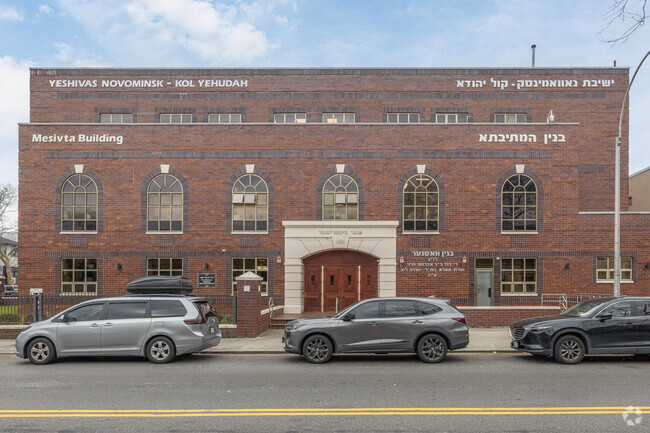
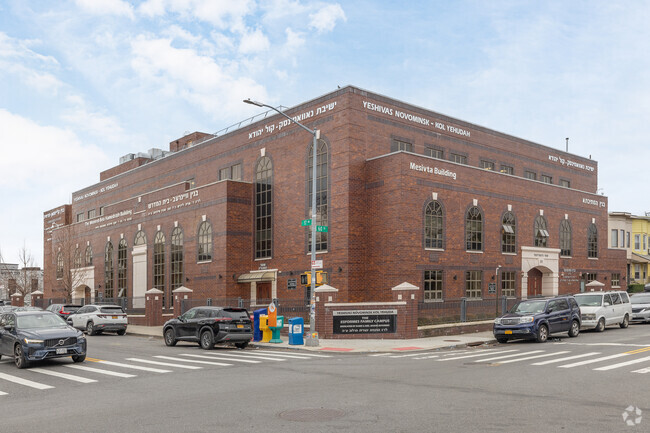
Yeshivas Novominsk
Brooklyn, NYprivate nonprofityeshivasnovominsk.com
- Acceptance rateThe share of applicants a college admits in a given year. A 10% acceptance rate means it admits about 1 in 10 applicants.
- 90%
- Undergrad enrollment
- 157
- Net priceWhat a family actually pays after grants and scholarships are subtracted from the sticker price — usually far less than the published cost.
- $7,032
- In-state tuition
- $8,640
- Out-of-state tuition
- $8,640
- Net Price
- $9,267
- Retention Rate
- 83%
- Specialization
- Philosophy & Religious Studies (100% of degrees)
- Acceptance Rate
- 78-90%
- Graduation Rate
- 65% (varies by source)
- Student Body Size
- 157
- Student-Faculty Ratio
- 27:1
- Average Financial Aid Award
- $8,176
Quick answers
- What is the acceptance rate at Yeshivas Novominsk?
- Yeshivas Novominsk's acceptance rate is approximately 90% (Brooklyn, NY), based on the most recent figures we compiled from public and primary sources.
- How much does Yeshivas Novominsk cost?
- At Yeshivas Novominsk, the average net price (after aid) is about $7,032 per year. Actual cost varies with financial aid and residency.
- How many undergraduates attend Yeshivas Novominsk?
- Yeshivas Novominsk enrolls approximately 157 undergraduate students.
- Where is Yeshivas Novominsk located?
- Yeshivas Novominsk is located in Brooklyn, NY.
Yeshivas Novominsk is a Chassidic Jewish yeshiva in Brooklyn with a singular focus: training future rabbis, Jewish educators, and community leaders through intensive Talmudic study. With an acceptance rate hovering around 90%, it’s among the most accessible religious colleges in the U.S., though its 27:1 student-faculty ratio and 65% graduation rate reflect its niche, rigorous environment. The school’s $8,176 average aid package makes it financially accessible for its tight-knit, devout student body.
Admissions
Yeshivas Novominsk is one of the least selective higher education institutions in the U.S., with Acceptance rateThe share of applicants a college admits in a given year. A 10% acceptance rate means it admits about 1 in 10 applicants. ranging from 78% to 90.38% across sources. In the 2024-2025 cycle, 52 students applied, and 47 were admitted. The school doesn’t require SAT/ACT scores or publish GPA expectations, focusing instead on alignment with its religious mission. Notably, there’s no application fee—a rarity even among religious colleges.
Sources
- Common Data Set: Home
- [PDF] Common Data Set 2022-2023 - Vaughn College
- Columbia University's Common Data Set
- [PDF] Common Data Set 2024-2025 - CCNY - CUNY
- Common Data Set - Westminster University
- Common Data Set | Office of Institutional Research - Brown University
- Yeshivas Novominsk Acceptance Rate and SAT/ACT Scores
- Yeshivas Novominsk Admissions: SAT, ACT & GPA Requirements
- Yeshivas Novominsk Admissions - BigFuture College Search
- Yeshivas Novominsk - Tuition and Acceptance Rate - Peterson's