Loading…
← All schools
Wilkes-Barre Area Career and Technical Center Practical Nursing
Wilkes Barre, PApublicwbpracnsg.com
- Acceptance rateThe share of applicants a college admits in a given year. A 10% acceptance rate means it admits about 1 in 10 applicants.
- 79%
- Undergrad enrollment
- 85
- Net priceWhat a family actually pays after grants and scholarships are subtracted from the sticker price — usually far less than the published cost.
- $19,937
- Location
- 350 Jumper Rd., Wilkes-Barre, PA
- Annual Tuition
- $26,600
- Program Length
- 1,564 hours (full-time)
- Total Students
- 85
- Acceptance Rate
- 79.2%
- Application Fee
- $25
- Graduation Rate
- 52%
- Single Program Offered
- Licensed Practical Nurse Training
Quick answers
- What is the acceptance rate at Wilkes-Barre Area Career and Technical Center Practical Nursing?
- Wilkes-Barre Area Career and Technical Center Practical Nursing's acceptance rate is approximately 79% (Wilkes Barre, PA), based on the most recent figures we compiled from public and primary sources.
- How much does Wilkes-Barre Area Career and Technical Center Practical Nursing cost?
- At Wilkes-Barre Area Career and Technical Center Practical Nursing, the average net price (after aid) is about $19,937 per year. Actual cost varies with financial aid and residency.
- How many undergraduates attend Wilkes-Barre Area Career and Technical Center Practical Nursing?
- Wilkes-Barre Area Career and Technical Center Practical Nursing enrolls approximately 85 undergraduate students.
- Where is Wilkes-Barre Area Career and Technical Center Practical Nursing located?
- Wilkes-Barre Area Career and Technical Center Practical Nursing is located in Wilkes Barre, PA.
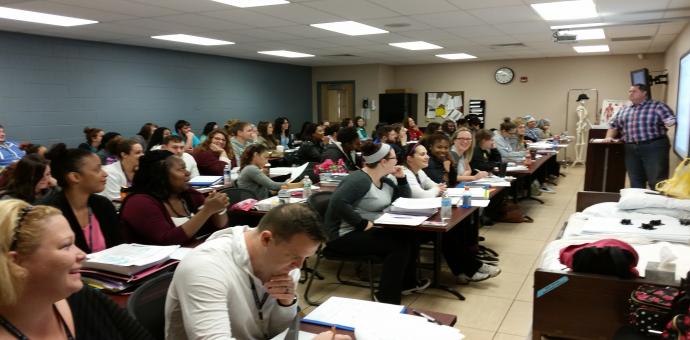
Wilkes-Barre Area Career and Technical Center Practical Nursing is a hyper-focused vocational school that turns out licensed practical nurses (LPNs) with a no-nonsense, hands-on approach. With a 79% acceptance rate and a 52% graduation rate, it attracts career-changers and local students seeking an affordable, accelerated path into healthcare—though its single-program intensity isn’t for the academically faint-hearted.
Admissions
Getting into Wilkes-Barre’s Practical Nursing program is somewhat competitive, with a 79.2% Acceptance rateThe share of applicants a college admits in a given year. A 10% acceptance rate means it admits about 1 in 10 applicants. (42 admits from 53 applicants in 2024). The school evaluates applicants individually, offering advanced placement for some based on prior experience or credits. A $25 non-refundable application fee is required, payable by cash, check, or card. Notably, this isn’t a traditional college—it’s a single-program institution exclusively training LPNs, so applicants should be laser-focused on nursing.
Academics
The only major here is Licensed Practical Nurse Training—a 1,564-hour, full-time program blending classroom instruction and clinical rotations. The curriculum is designed for efficiency, with no electives or general education requirements. Graduates are eligible to sit for the NCLEX-PN exam. The program’s suggests a rigorous pace; students who thrive tend to be those who can handle concentrated, technical coursework without the cushion of a broader college experience.
Sources
- Wilkes-Barre Area Career and Technical Center Practical Nursing
- Wilkes-Barre Area Career & Technical Center Practical Nursing ...
- Welcome To The Official Wilkes-Barre Area Career & Technical ...
- Wilkes-Barre Area Career & Technical Center - Practical Nursing
- Wilkes-Barre Area Career and Technical Center Practical Nursing
- Wilkes-Barre Area Career and Technical Center Practical Nursing
- [PDF] PROGRAM CATALOG - wbactc.org
- Wilkes-Barre Area Career and Technical Center Practical Nursing
- Practical Nursing Program at the Wilkes-Barre Area CTC | Plains PA