Loading…
← All schools
West Liberty University
West Liberty, WVpublicwww.westliberty.edu/
- Acceptance rateThe share of applicants a college admits in a given year. A 10% acceptance rate means it admits about 1 in 10 applicants.
- 97%
- SAT 25th-75th percentileThe middle range of SAT scores for admitted students: a quarter scored below the low number and a quarter scored above the high number.
- 890–1123
- Undergrad enrollment
- 1,511
- Net priceWhat a family actually pays after grants and scholarships are subtracted from the sticker price — usually far less than the published cost.
- $15,366
- In-state tuition
- $8,893
- Out-of-state tuition
- $17,442
- Top Majors
- Education, Biology, Parks/Recreation
- Campus Vibe
- Rural, tight-knit
- Avg. ACT Score
- 17–24
- Acceptance Rate
- 70–97%
- In-State Tuition
- $8,893
- Net Price After Aid
- $14,203
- 6-Year Graduation Rate
- 61%
Quick answers
- What is the acceptance rate at West Liberty University?
- West Liberty University's acceptance rate is approximately 97% (West Liberty, WV), based on the most recent figures we compiled from public and primary sources.
- What SAT score do you need for West Liberty University?
- Admitted students at West Liberty University typically score 890–1123 on the SAT (the middle-50% range). Scores outside this band are still admitted, especially with strong applications.
- How much does West Liberty University cost?
- At West Liberty University, the average net price (after aid) is about $15,366 per year. Actual cost varies with financial aid and residency.
- How many undergraduates attend West Liberty University?
- West Liberty University enrolls approximately 1,511 undergraduate students.
- Where is West Liberty University located?
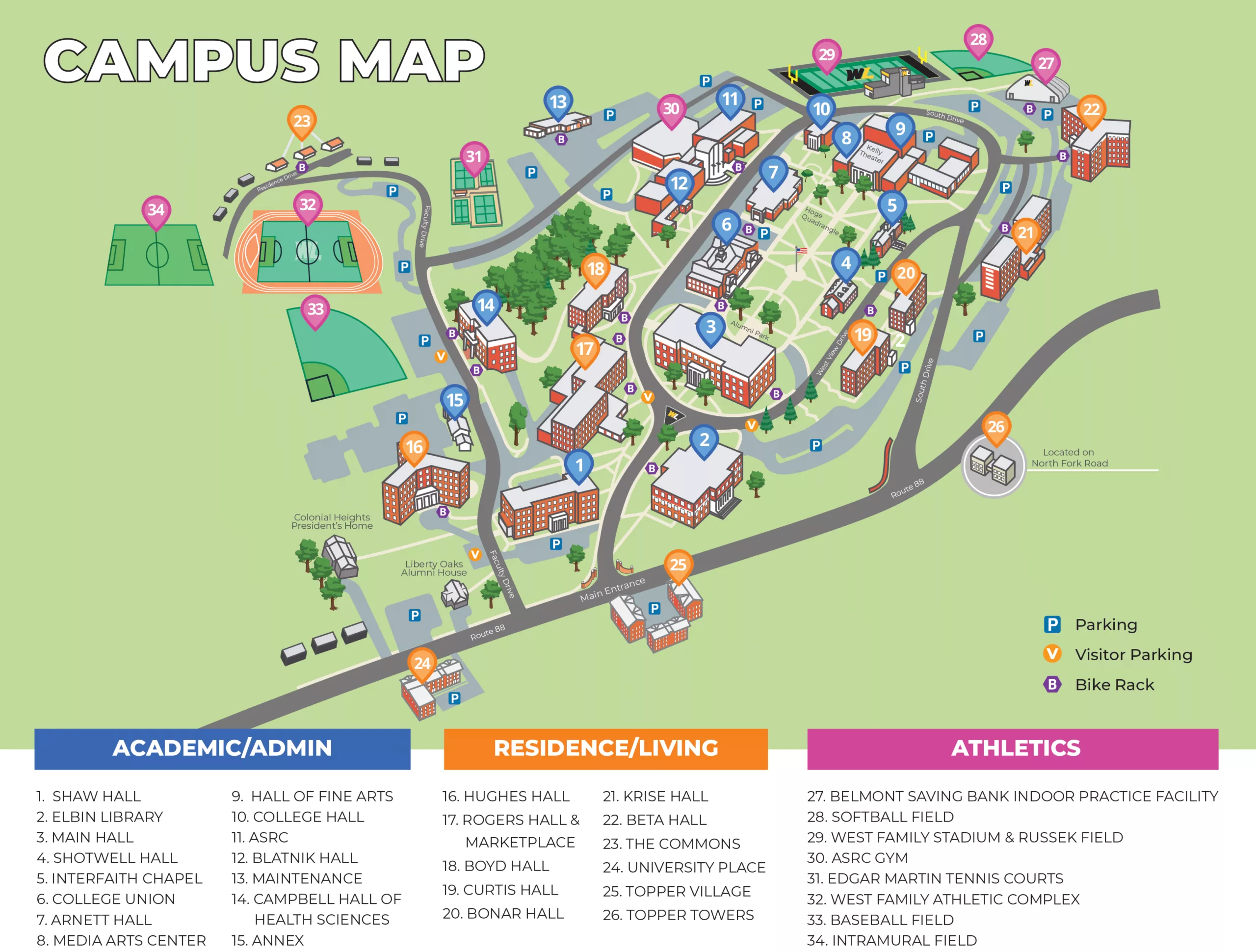
- West Liberty University is located in West Liberty, WV.
West Liberty University, perched on a hilltop in rural West Virginia, is a public institution with a strikingly high acceptance rate (upwards of 97%) and a tight-knit, small-town campus vibe. Known for its affordability and hands-on faculty, it specializes in education, biology, and parks/recreation programs, though its 61% graduation rate lags behind national averages. The school’s rural setting—just an hour from Pittsburgh—offers a quiet, community-focused college experience.
Admissions
West Liberty University is among the least selective public universities in the region, with Acceptance rateThe share of applicants a college admits in a given year. A 10% acceptance rate means it admits about 1 in 10 applicants. ranging from 70.63% to 97% across sources—a near-open admissions policy. The average admitted freshman has an ACT score between 17–24 and a GPA of at least 2.0, with no SAT requirement emphasized. Notably, female applicants face almost no barrier to entry: 98% of the 804 women who applied in one cycle were admitted (compared to 72% overall in other reports). The university does not publish rigorous Holistic admissionsA review that weighs the whole applicant — grades, essays, activities, and context — rather than relying on test scores and GPA alone. criteria beyond these baseline metrics.
Sources
- Common Data Set - University Effectiveness - West Liberty University
- [PDF] Common Data Elements: - West Liberty University
- West Liberty University - DFR Report HTML - Department of Education
- Reports/Data - University Effectiveness - West Liberty University
- West Liberty University - Tuition and Acceptance Rate - Peterson's
- West Liberty University Admissions - US News Best Colleges
- West Liberty University SAT Scores and GPA - PrepScholar
- West Liberty University Admissions - BigFuture College Search
- Admissions Criteria for Freshmen - West Liberty University
- West Liberty University Tuition, Acceptance Rate, & Academics - Sallie