Loading…
← All schools
Wellesley College
Wellesley, MAprivate nonprofitwww.wellesley.edu/
- Acceptance rateThe share of applicants a college admits in a given year. A 10% acceptance rate means it admits about 1 in 10 applicants.
- 14%
- SAT 25th-75th percentileThe middle range of SAT scores for admitted students: a quarter scored below the low number and a quarter scored above the high number.
- 1460–1560
- Undergrad enrollment
- 2,300
- Net priceWhat a family actually pays after grants and scholarships are subtracted from the sticker price — usually far less than the published cost.
- $25,496
- In-state tuition
- $67,176
- Out-of-state tuition
- $67,176
- Median SAT
- 1470–1550
- Campus Housing
- 91% of students live on campus
- Acceptance Rate
- 13.7% (Class of 2029)
- Notable Alumnae
- Hillary Clinton, Madeleine Albright, Diane Sawyer
- Student-Faculty Ratio
- 7:1
- 4-Year Graduation Rate
- 86%
- Average Need-Based Aid
- $66,603
- Median Debt at Graduation
- $10,000
Quick answers
- What is the acceptance rate at Wellesley College?
- Wellesley College's acceptance rate is approximately 14% (Wellesley, MA), based on the most recent figures we compiled from public and primary sources.
- What SAT score do you need for Wellesley College?
- Admitted students at Wellesley College typically score 1460–1560 on the SAT (the middle-50% range). Scores outside this band are still admitted, especially with strong applications.
- How much does Wellesley College cost?
- At Wellesley College, the average net price (after aid) is about $25,496 per year. Actual cost varies with financial aid and residency.
- How many undergraduates attend Wellesley College?
- Wellesley College enrolls approximately 2,300 undergraduate students.
- Where is Wellesley College located?
- Wellesley College is located in Wellesley, MA.
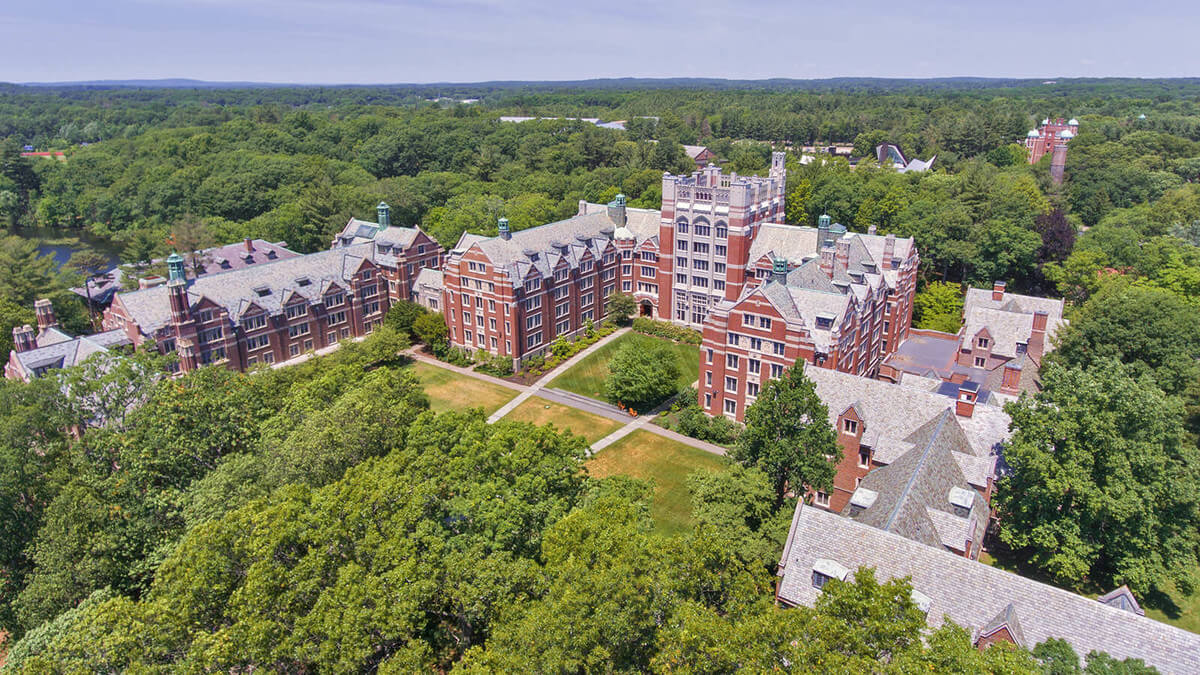
Wellesley College isn't just a women's college—it's a powerhouse that consistently produces some of the most influential female leaders in the world. With a fiercely intellectual culture, a 7:1 student-faculty ratio, and a campus so picturesque it could double as a botanical garden, Wellesley offers an education that's as rigorous as it is transformative. Its graduates earn PhDs in STEM at higher rates than any other liberal arts college, and with a median debt at graduation of just $10,000, it delivers elite outcomes without the elite financial burden.
Admissions
Getting into Wellesley is a feat—only 13.7% of applicants were admitted to the Class of 2029, making it more selective than many Ivy League schools. The middle 50% SAT range for admitted students is 1470–1550 (EBRW: 730–770, Math: 730–790), though 58% of enrolling first-years submitted test scores. Waitlisted hopefuls face brutal odds: just 2.62% of the 1,299 students waitlisted in 2023 ultimately gained admission. The college draws applicants from all 50 states and internationally, with recent admits hailing from 47 U.S. states.
Academics
Sources
- Publicly Available Data - Wellesley College
- [PDF] Common Data Set 2025-2026
- [PDF] cds_2022-2023-final.pdf - Wellesley College
- [PDF] A. General Information
- Common Data Set: Home
- The Common Data Set: What It Is & How to Use It In College ...
- Admission & Aid - Wellesley
- Wellesley College Admissions - BigFuture College Search
- Welcome, class of 2029! - Wellesley College
- Wellesley SAT Scores and GPA - PrepScholar