Loading…
← All schools
Wabash College
Crawfordsville, INprivate nonprofitwww.wabash.edu/
- Acceptance rateThe share of applicants a college admits in a given year. A 10% acceptance rate means it admits about 1 in 10 applicants.
- 63%
- SAT 25th-75th percentileThe middle range of SAT scores for admitted students: a quarter scored below the low number and a quarter scored above the high number.
- 1060–1270
- Undergrad enrollment
- 866
- Net priceWhat a family actually pays after grants and scholarships are subtracted from the sticker price — usually far less than the published cost.
- $24,336
- In-state tuition
- $50,800
- Out-of-state tuition
- $50,800
- Type
- Private all-male liberal arts college
- Avg ACT
- 26 (22–28 range)
- Avg GPA
- 3.5–3.7
- Avg SAT
- 1166 (1070–1267 range)
- Location
- Crawfordsville, IN
- Acceptance Rate
- 63%
- Graduation Rate
- 77%
- On-Campus Housing
- 99% of students
- Most Popular Major
- Philosophy, Politics, and Economics
- Undergrad Enrollment
- ~900
- Net Price (After Aid)
- $25,540
- Student-Faculty Ratio
- 9:1
- Median Earnings (Post-6Yrs)
- $68,626
Quick answers
- What is the acceptance rate at Wabash College?
- Wabash College's acceptance rate is approximately 63% (Crawfordsville, IN), based on the most recent figures we compiled from public and primary sources.
- What SAT score do you need for Wabash College?
- Admitted students at Wabash College typically score 1060–1270 on the SAT (the middle-50% range). Scores outside this band are still admitted, especially with strong applications.
- How much does Wabash College cost?
- At Wabash College, the average net price (after aid) is about $24,336 per year. Actual cost varies with financial aid and residency.
- How many undergraduates attend Wabash College?
- Wabash College enrolls approximately 866 undergraduate students.
- Where is Wabash College located?
- Wabash College is located in Crawfordsville, IN.
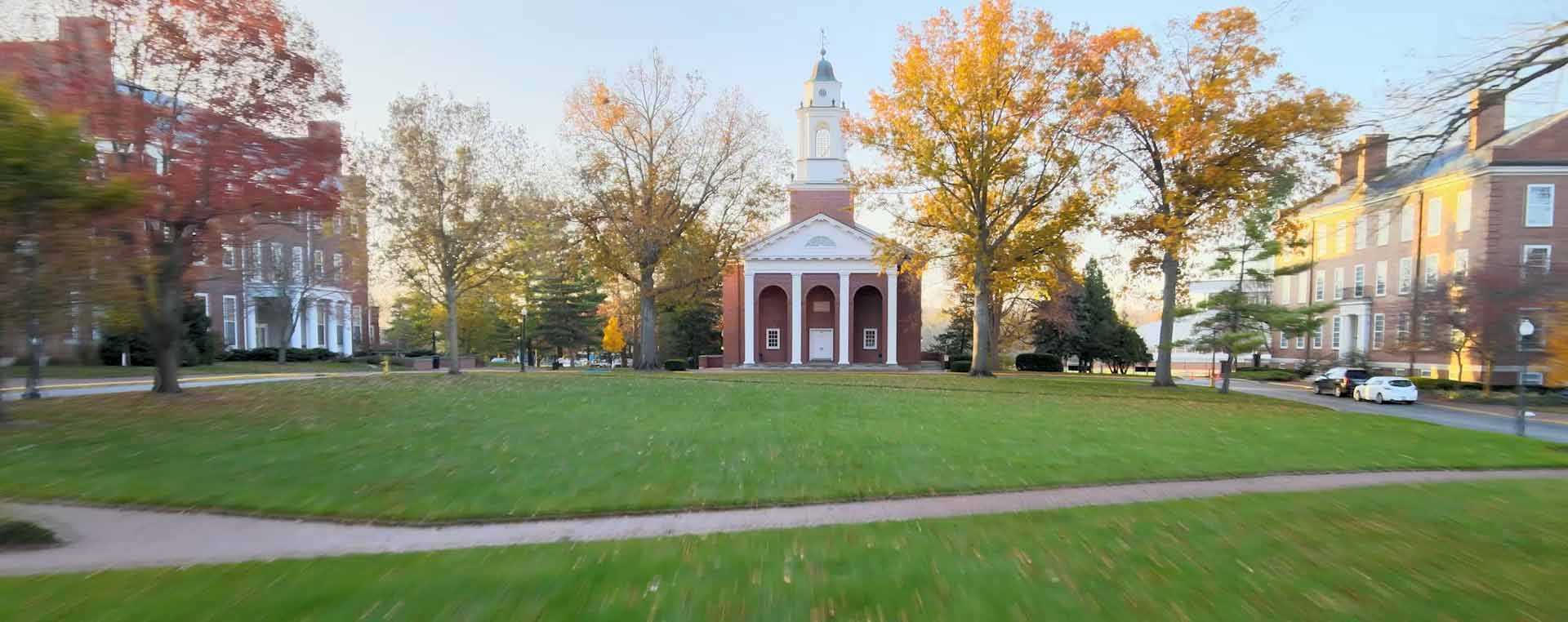
Wabash College is a fiercely traditional, all-male liberal arts college in rural Indiana where brotherhood isn’t just a slogan—it’s the bedrock of campus life. With a 9:1 student-faculty ratio, a 77% graduation rate, and a 'Gentleman’s Rule' that substitutes for a formal code of conduct, Wabash cultivates an intense, self-governing intellectual community where Philosophy, Politics, and Economics majors dominate and graduates earn median salaries 13% above the national average for liberal arts colleges.
Admissions
Wabash’s admissions process leans moderately selective, with a 63% Acceptance rateThe share of applicants a college admits in a given year. A 10% acceptance rate means it admits about 1 in 10 applicants. that belies its academic rigor. Admitted students typically post SAT scores between 1070–1267 (average 1166) or ACT composites of 22–28 (average 26), with an average high school GPA of 3.5–3.7. The college practices a 'three possible decisions' policy—accept, deny, or waitlist—and requires admitted students to withdraw applications from other schools. Notably, 65.7% of enrollees receive financial aid, with average packages covering significant costs.
Sources
- Common Data Set | Wabash College
- [PDF] Common Data Set 2022-2023 - Wabash College
- Common Data Set: Home
- [PDF] 2010-11 Common Data Set.pdf - Wabash College
- Common Data Set: University Enrollment
- Wabash College - IPEDS - Department of Education
- Wabash College Admissions - BigFuture College Search
- Wabash College Tuition, Acceptance Rate, & Academics - Sallie
- Wabash College SAT Scores and GPA - PrepScholar
- Wabash College Acceptance Rate
- Wabash College - Tuition and Acceptance Rate - Peterson's