Loading…
← All schools
Virginia Military Institute
Lexington, VApublicwww.vmi.edu/
- Acceptance rateThe share of applicants a college admits in a given year. A 10% acceptance rate means it admits about 1 in 10 applicants.
- 71%
- SAT 25th-75th percentileThe middle range of SAT scores for admitted students: a quarter scored below the low number and a quarter scored above the high number.
- 1050–1270
- Undergrad enrollment
- 1,527
- Net priceWhat a family actually pays after grants and scholarships are subtracted from the sticker price — usually far less than the published cost.
- $17,113
- In-state tuition
- $21,046
- Out-of-state tuition
- $52,638
- Net Price
- $17,229
- Avg ACT Range
- 24–31
- Avg SAT Range
- 1090–1270
- Notable Alumni
- Gen. George Marshall (Nobel Prize), CEOs, Marine Corps officers
- Acceptance Rate
- 71%
- Graduation Rate
- 77%
- ROTC Participation
- ~25%
- Avg High School GPA
Quick answers
- What is the acceptance rate at Virginia Military Institute?
- Virginia Military Institute's acceptance rate is approximately 71% (Lexington, VA), based on the most recent figures we compiled from public and primary sources.
- What SAT score do you need for Virginia Military Institute?
- Admitted students at Virginia Military Institute typically score 1050–1270 on the SAT (the middle-50% range). Scores outside this band are still admitted, especially with strong applications.
- How much does Virginia Military Institute cost?
- At Virginia Military Institute, the average net price (after aid) is about $17,113 per year. Actual cost varies with financial aid and residency.
- How many undergraduates attend Virginia Military Institute?
- Virginia Military Institute enrolls approximately 1,527 undergraduate students.
- Where is Virginia Military Institute located?
- Virginia Military Institute is located in Lexington, VA.
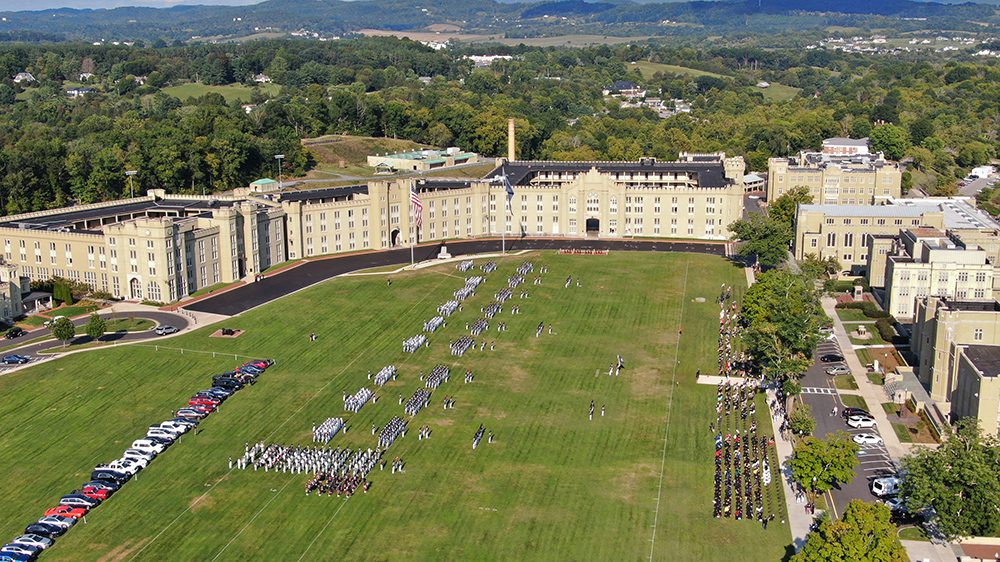
Virginia Military Institute (VMI) is a public senior military college in Lexington, VA, where cadets endure a spartan lifestyle marked by rigorous academics, strict discipline, and an honor-bound culture. With a 71% acceptance rate and a focus on leadership development, VMI graduates boast strong outcomes, particularly in engineering and international relations, with median early-career earnings of $77,000.
Admissions
VMI's admissions process is moderately selective, with a 71% acceptance rate for the Class of 2026 (down from 73% in prior years). The middle 50% of admitted students scored between 1090–1270 on the SAT or 24–31 on the ACT, with an average high school GPA of 3.59. Rigor of coursework and class rank weigh heavily, reflecting VMI's emphasis on discipline and academic preparedness. Applications are due by February 1, and waitlisted students are occasionally admitted. Notably, only about 1,200 applicants compete for roughly 850 spots annually, making it less cutthroat than service academies but still demanding.
Sources
- Common Data Sets - Virginia Military Institute
- [PDF] Common Data Set 2023-2024 - Virginia Military Institute
- [PDF] Common Data Set 2013-2014 - Virginia Military Institute
- What are my chances of getting into the Virginia Military Institute ...
- [PDF] Enrollment Data Analysis - The Cadet Foundation
- Common Data Set - Analytics & Institutional Effectiveness
- Virginia Military Institute Admissions - BigFuture College Search
- Virginia Military Institute Admissions - US News Best Colleges
- Virginia Military Institute SAT Scores and GPA - PrepScholar