Loading…
← All schools
Utica University
Utica, NYprivate nonprofitutica.edu
- Acceptance rateThe share of applicants a college admits in a given year. A 10% acceptance rate means it admits about 1 in 10 applicants.
- 92%
- SAT 25th-75th percentileThe middle range of SAT scores for admitted students: a quarter scored below the low number and a quarter scored above the high number.
- 990–1250
- Undergrad enrollment
- 2,278
- Net priceWhat a family actually pays after grants and scholarships are subtracted from the sticker price — usually far less than the published cost.
- $19,108
- In-state tuition
- $26,930
- Out-of-state tuition
- $26,930
- Location
- Utica, NY
- Avg ACT Range
- 19-26 (or 23-32)
- Avg SAT Range
- 990-1250
- Tuition (2023)
- $28,480
- % Receiving Aid
- 84%
- 6-Year Grad Rate
- 56.9%
- Early Acceptance Rate
- 97.6%
- Avg First-Year Aid Award
- $7,870
- Median Debt at Graduation
- $17,538
- Undergrad Acceptance Rate
- 86-92%
- Median Early-Career Earnings
- $36,427
Quick answers
- What is the acceptance rate at Utica University?
- Utica University's acceptance rate is approximately 92% (Utica, NY), based on the most recent figures we compiled from public and primary sources.
- What SAT score do you need for Utica University?
- Admitted students at Utica University typically score 990–1250 on the SAT (the middle-50% range). Scores outside this band are still admitted, especially with strong applications.
- How much does Utica University cost?
- At Utica University, the average net price (after aid) is about $19,108 per year. Actual cost varies with financial aid and residency.
- How many undergraduates attend Utica University?
- Utica University enrolls approximately 2,278 undergraduate students.
- Where is Utica University located?
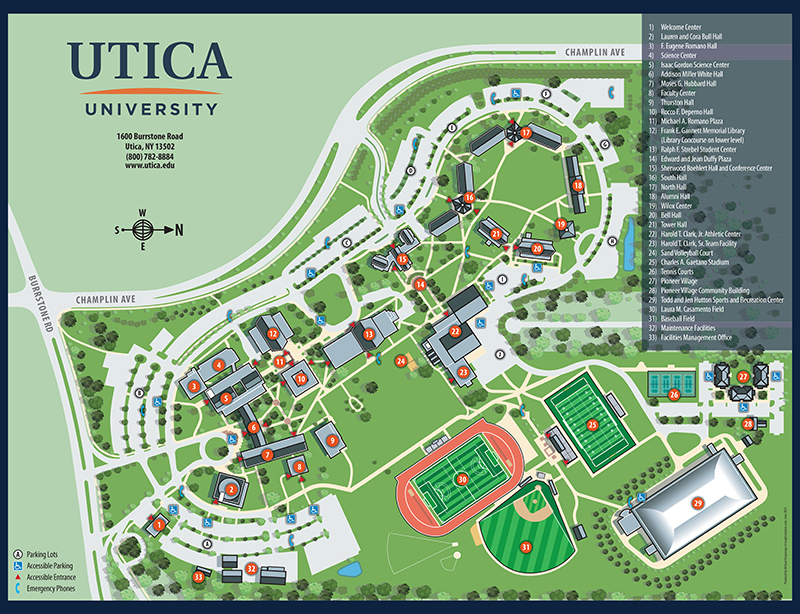
- Utica University is located in Utica, NY.
Utica University is a small, accessible private school in upstate New York with an acceptance rate hovering around 87-92%, offering pragmatic programs (including nursing and criminal justice) with a focus on affordability. While not academically selective, it delivers solid outcomes—56.9% graduation rate, $36K early-career earnings—and a tight-knit campus vibe where two-thirds of students live off-campus.
Admissions
Utica University is decidedly not a selective school, with Acceptance rateThe share of applicants a college admits in a given year. A 10% acceptance rate means it admits about 1 in 10 applicants. ranging from 86.78% to 92% depending on the year and data source. The admissions process is rolling, and the school is Test-optionalA policy where you choose whether to submit SAT or ACT scores. If you don't, the rest of your application carries more weight.. Admitted students typically have SAT scores between 990-1250 or ACT scores of 19-26 (though some sources cite a higher ACT range of 23-32). Minimum requirements include a 2.0 high school GPA, though a 3.0 GPA is noted as more competitive. Early applicants enjoy a 97.6% acceptance rate, making Utica a safe bet for those who apply early.
Sources
- Common Data Sets - Utica University
- [PDF] Common Data Set 2021-2022 - Utica University
- Common Data Set: Home
- Utica University - Data USA
- Common Data Set Repository - College Transitions
- Utica University - Profile, Rankings and Data | US News Best Colleges
- Utica University Admissions - US News Best Colleges
- Utica College SAT Scores and GPA
- Utica University - Admissions Chances & Data - College Raptor
- Utica University Admissions - BigFuture College Search
- Utica University (Utica) - The Princeton Review College Rankings ...