Loading…
← All schools
University of Wisconsin-Milwaukee
Milwaukee, WIpublicuwm.edu/
- Acceptance rateThe share of applicants a college admits in a given year. A 10% acceptance rate means it admits about 1 in 10 applicants.
- 91%
- Undergrad enrollment
- 16,758
- Net priceWhat a family actually pays after grants and scholarships are subtracted from the sticker price — usually far less than the published cost.
- $15,014
- In-state tuition
- $10,398
- Out-of-state tuition
- $22,398
- Mascot
- Panthers (D1 Horizon League)
- Student Orgs
- 300+
- Avg Net Price
- $16,499
- Total Programs
- 209
- Acceptance Rate
- 95%
- 6-Year Grad Rate
- 51%
- Notable Programs
- Freshwater Sciences, Nursing, Architecture
- Student-Faculty Ratio
- 17:1
Quick answers
- What is the acceptance rate at University of Wisconsin-Milwaukee?
- University of Wisconsin-Milwaukee's acceptance rate is approximately 91% (Milwaukee, WI), based on the most recent figures we compiled from public and primary sources.
- How much does University of Wisconsin-Milwaukee cost?
- At University of Wisconsin-Milwaukee, the average net price (after aid) is about $15,014 per year. Actual cost varies with financial aid and residency.
- How many undergraduates attend University of Wisconsin-Milwaukee?
- University of Wisconsin-Milwaukee enrolls approximately 16,758 undergraduate students.
- Where is University of Wisconsin-Milwaukee located?
- University of Wisconsin-Milwaukee is located in Milwaukee, WI.
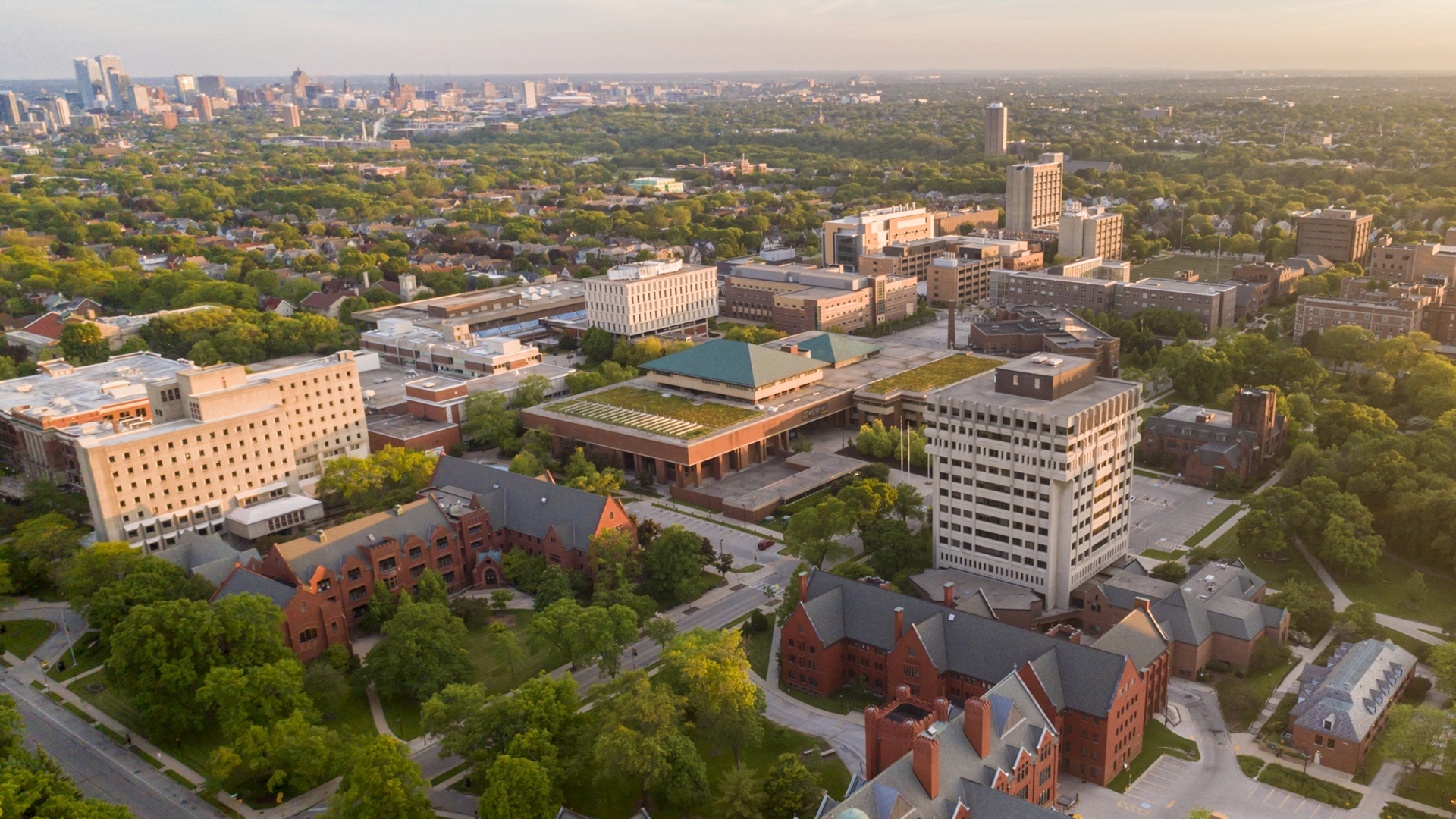
The University of Wisconsin-Milwaukee (UWM) is a public urban research university that thrives on accessibility and practical education. With an acceptance rate hovering around 95%, it’s a school where nearly everyone gets in—but where standout programs in health sciences, business, and engineering, plus a bustling student union and 300+ clubs, create a lively, if sometimes uneven, college experience. UWM grapples with middling graduation rates (51%) but offers a relatively affordable net price ($16,499) for a university with robust research opportunities and deep Milwaukee roots.
Admissions
UWM is the definition of an open-access institution, with an Acceptance rateThe share of applicants a college admits in a given year. A 10% acceptance rate means it admits about 1 in 10 applicants. of 95.3% (per College Board) and 91% (Niche). The university describes itself as 'moderately selective,' but the numbers suggest otherwise—nearly all applicants who meet basic requirements get in. Test scores are optional (ACT range: 18–25, SAT: 990–1180), and the focus is on high school completion (4 core units required). The August 1 deadline is forgiving, and the vibe is decidedly non-elitist—this is a school that prioritizes access over exclusivity.
- Acceptance Rate: ~95% (varies slightly by source)
- Test-Optional: ACT/SAT not required
- Application Deadline: August 1 (rolling admissions)
- Typical Admitted Student Profile: Middle 50% ACT 18–25, SAT 990–1180
Sources
- Common Data Set (CDS) - UW-Milwaukee
- [PDF] 2023-2024 Common Data Set Template - UW-Milwaukee
- [PDF] Common Data Set 2021-2022 - UW-Milwaukee
- Common Data Set - UW-Parkside
- Common Data Set - Data, Academic Planning & Institutional Research
- Common Data Set 2021-2022 for University of Wisconsin - Milwaukee
- University Of Wisconsin-Milwaukee Admissions - BigFuture
- University of Wisconsin - Milwaukee SAT Scores and GPA
- University of Wisconsin - Milwaukee Admissions & Acceptance - Niche