Loading…
← All schools
University of Saint Mary
Leavenworth, KSprivate nonprofitwww.stmary.edu/
- Acceptance rateThe share of applicants a college admits in a given year. A 10% acceptance rate means it admits about 1 in 10 applicants.
- 87%
- SAT 25th-75th percentileThe middle range of SAT scores for admitted students: a quarter scored below the low number and a quarter scored above the high number.
- 806–1028
- Undergrad enrollment
- 925
- Net priceWhat a family actually pays after grants and scholarships are subtracted from the sticker price — usually far less than the published cost.
- $22,519
- In-state tuition
- $35,380
- Out-of-state tuition
- $35,380
- Avg. ACT Score
- 18-23
- Avg. SAT Score
- 1040-1210
- Campus Housing
- 42% of students
- Popular Majors
- Health Professions, Business, Computer Info Systems
- Acceptance Rate
- 87-89%
- Avg. High School GPA
- 2.89-3.18
- Student-Faculty Ratio
- 11:1
Quick answers
- What is the acceptance rate at University of Saint Mary?
- University of Saint Mary's acceptance rate is approximately 87% (Leavenworth, KS), based on the most recent figures we compiled from public and primary sources.
- What SAT score do you need for University of Saint Mary?
- Admitted students at University of Saint Mary typically score 806–1028 on the SAT (the middle-50% range). Scores outside this band are still admitted, especially with strong applications.
- How much does University of Saint Mary cost?
- At University of Saint Mary, the average net price (after aid) is about $22,519 per year. Actual cost varies with financial aid and residency.
- How many undergraduates attend University of Saint Mary?
- University of Saint Mary enrolls approximately 925 undergraduate students.
- Where is University of Saint Mary located?
- University of Saint Mary is located in Leavenworth, KS.
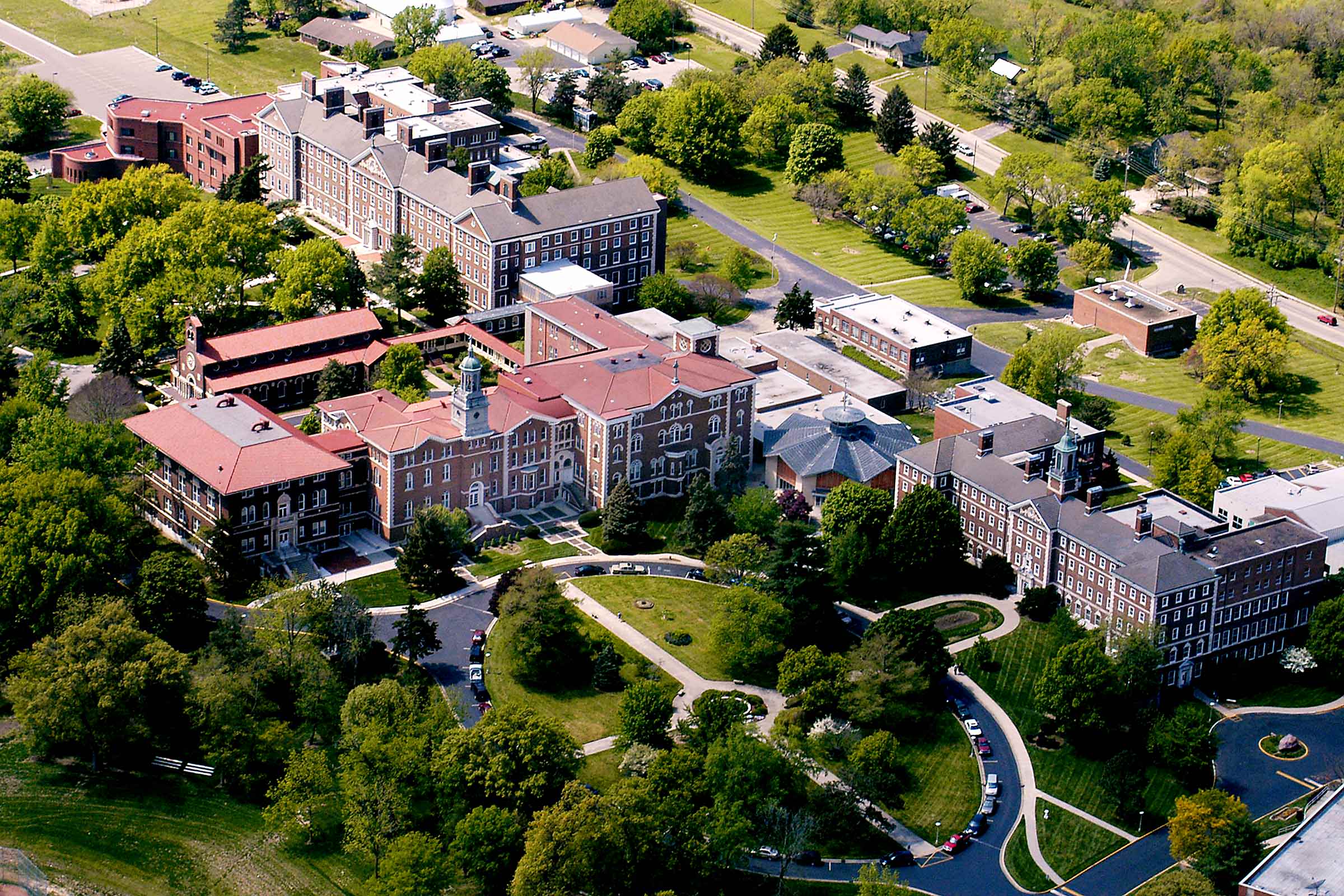
The University of Saint Mary in Leavenworth, Kansas, is a small, welcoming Catholic university where nearly 90% of applicants get in—but those who stay find a tight-knit community and practical programs in health sciences, business, and computer information systems. With an average financial aid package covering most of the $30K+ tuition, it's a pragmatic choice for students seeking personalized attention and career-ready degrees.
Admissions
Getting into the University of Saint Mary isn't the hard part—the school admits 87-89% of applicants, making it one of the more accessible private colleges in the Midwest. Mid-range SAT scores for admitted students fall between 1040-1210, while ACT scores typically range from 18-23. High school GPAs hover around 2.89-3.18, suggesting the university prioritizes accessibility over exclusivity. There's no early decision option, but the rolling admissions process means applicants get decisions quickly. Notably, 85% of first-year students receive Need-based aidFinancial aid awarded based on your family's ability to pay, as measured by forms like the FAFSA, rather than on achievements., softening the financial barrier to entry.
Academics
Sources
- Common Data Set - Saint Mary's College of California
- Common Data Set - Saint Mary's College
- Common Data Set – Office of Institutional Research & Planning
- [PDF] Common Data Set 2022-2023 - St. Mary's University
- Mount Saint Mary's University - IPEDS
- [PDF] Common Data Set 2022-2023 - Saint Mary's College of California
- University of Saint Mary Admissions - US News Best Colleges
- St. Mary's University Admissions - BigFuture College Search
- Class Profile | Saint Mary's College
- Saint Mary's College of California SAT Scores and GPA