Loading…
← All schools
University of Oregon
Eugene, ORpublicuoregon.edu
- Acceptance rateThe share of applicants a college admits in a given year. A 10% acceptance rate means it admits about 1 in 10 applicants.
- 88%
- SAT 25th-75th percentileThe middle range of SAT scores for admitted students: a quarter scored below the low number and a quarter scored above the high number.
- 1130–1360
- Undergrad enrollment
- 20,497
- Net priceWhat a family actually pays after grants and scholarships are subtracted from the sticker price — usually far less than the published cost.
- $22,182
- In-state tuition
- $16,137
- Out-of-state tuition
- $44,598
- Location
- Eugene, OR (90min to Portland)
- Campus Vibe
- Outdoorsy, sports-centric, activist
- Acceptance Rate
- 88.3%
- Notable Programs
- Business, Journalism, Product Design
- Median Class Size
- 20 students
- In-State Tuition (2024)
- $13,209
- Six-Year Graduation Rate
- 74.36%
Quick answers
- What is the acceptance rate at University of Oregon?
- University of Oregon's acceptance rate is approximately 88% (Eugene, OR), based on the most recent figures we compiled from public and primary sources.
- What SAT score do you need for University of Oregon?
- Admitted students at University of Oregon typically score 1130–1360 on the SAT (the middle-50% range). Scores outside this band are still admitted, especially with strong applications.
- How much does University of Oregon cost?
- At University of Oregon, the average net price (after aid) is about $22,182 per year. Actual cost varies with financial aid and residency.
- How many undergraduates attend University of Oregon?
- University of Oregon enrolls approximately 20,497 undergraduate students.
- Where is University of Oregon located?
- University of Oregon is located in Eugene, OR.
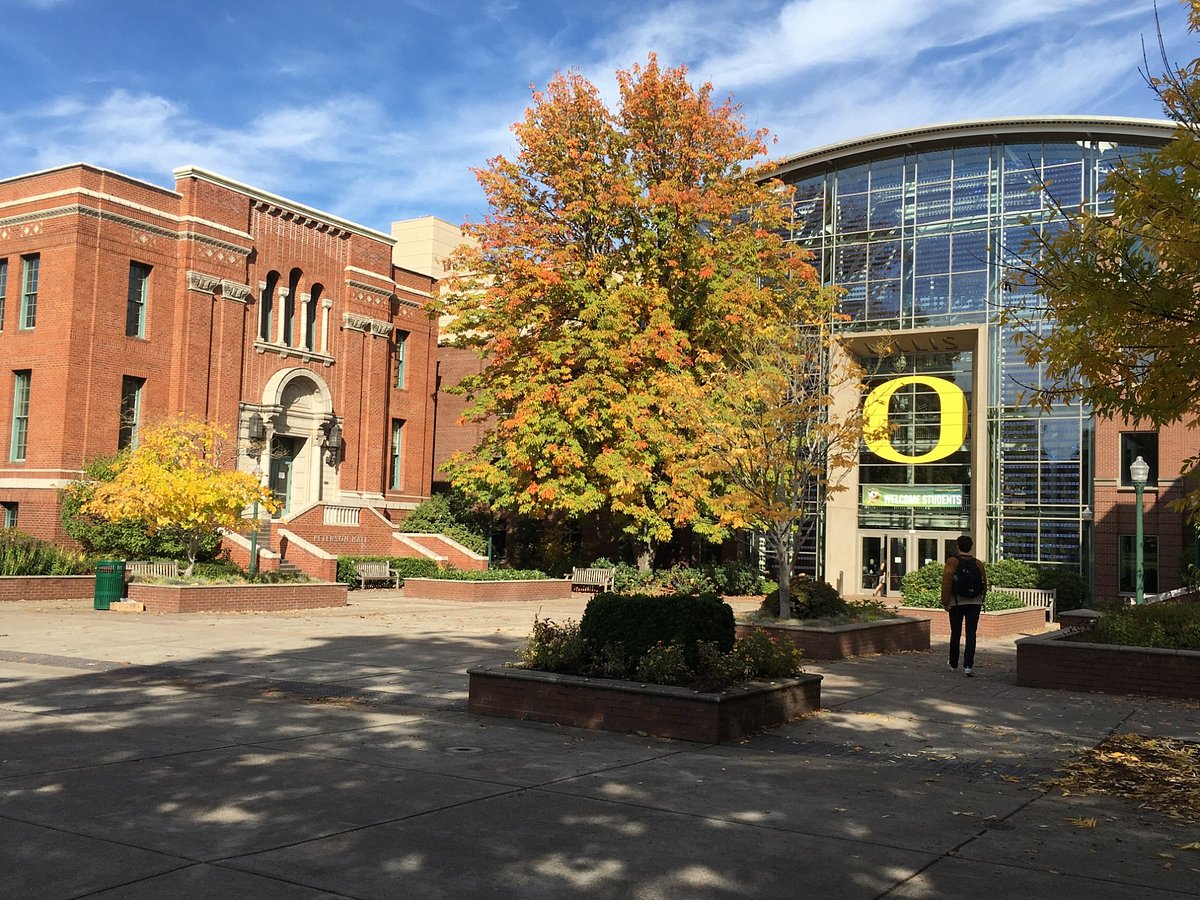
The University of Oregon is a West Coast public research university with a laid-back, outdoorsy vibe and a strong emphasis on undergraduate teaching. Known for its top-ranked journalism and product design programs, the UO balances academic rigor with a spirited Ducks athletics culture—all set against the lush backdrop of Eugene's bike-friendly campus and Pacific Northwest scenery.
Admissions
The University of Oregon is moderately selective, with an 88.3% acceptance rate (fall 2023). Test-optionalA policy where you choose whether to submit SAT or ACT scores. If you don't, the rest of your application carries more weight. since 2021, admitted students typically have SAT scores between 1130–1360 or ACT composites of 23–30. The median class size is 20 students, with only 140 out of 1,583 undergraduate classes exceeding 100 students per term. Admissions emphasizes Holistic admissionsA review that weighs the whole applicant — grades, essays, activities, and context — rather than relying on test scores and GPA alone., with no strict GPA cutoff, though competitive applicants often exceed a 3.5 unweighted GPA.
Sources
- Common Data Set | Office of Institutional Research
- Common Data Set: Home
- Common data set - Institutional Research - Oregon State University
- UO Overview - Office of Institutional Research | University of Oregon
- [PDF] Common Data Set 2024-2025 - Western Oregon University
- University of Oregon 2026 Common Data Set: Visualized - GradGPT
- University of Oregon Admissions - BigFuture College Search
- University of Oregon SAT Scores and GPA - PrepScholar
- UO Facts | Admissions
- University of Oregon - Tuition and Acceptance Rate - Peterson's
- University of Oregon Acceptance rate And SAT Requirements - Turito