Loading…
← All schools
University of Massachusetts-Lowell
Lowell, MApublicwww.uml.edu/
- Acceptance rateThe share of applicants a college admits in a given year. A 10% acceptance rate means it admits about 1 in 10 applicants.
- 83%
- SAT 25th-75th percentileThe middle range of SAT scores for admitted students: a quarter scored below the low number and a quarter scored above the high number.
- 1180–1370
- Undergrad enrollment
- 11,434
- Net priceWhat a family actually pays after grants and scholarships are subtracted from the sticker price — usually far less than the published cost.
- $17,163
- In-state tuition
- $16,966
- Out-of-state tuition
- $36,264
- Avg GPA
- 3.715
- Net Price
- $17,240
- Mid 50% ACT
- 25-32
- Mid 50% SAT
- 1180-1370
- Test-Optional
- 72% applicants
- Acceptance Rate
- 83%
- 6-Year Grad Rate
- 63-65%
- On-Campus Housing
Quick answers
- What is the acceptance rate at University of Massachusetts-Lowell?
- University of Massachusetts-Lowell's acceptance rate is approximately 83% (Lowell, MA), based on the most recent figures we compiled from public and primary sources.
- What SAT score do you need for University of Massachusetts-Lowell?
- Admitted students at University of Massachusetts-Lowell typically score 1180–1370 on the SAT (the middle-50% range). Scores outside this band are still admitted, especially with strong applications.
- How much does University of Massachusetts-Lowell cost?
- At University of Massachusetts-Lowell, the average net price (after aid) is about $17,163 per year. Actual cost varies with financial aid and residency.
- How many undergraduates attend University of Massachusetts-Lowell?
- University of Massachusetts-Lowell enrolls approximately 11,434 undergraduate students.
- Where is University of Massachusetts-Lowell located?
- University of Massachusetts-Lowell is located in Lowell, MA.
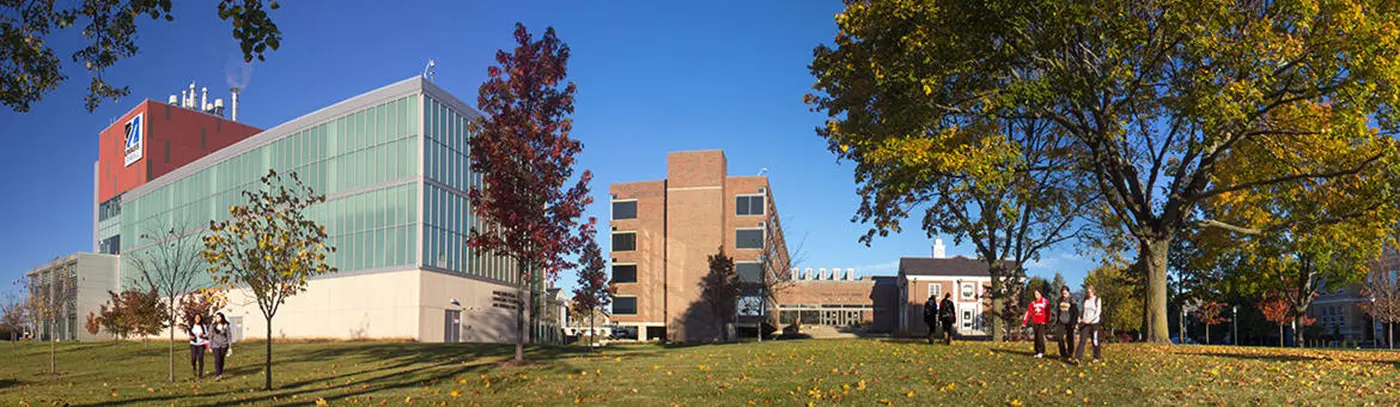
UMass Lowell is a public research university that punches above its weight, combining the resources of a state flagship with the scrappy, career-focused energy of a polytechnic. Known for standout engineering, computer science, and health sciences programs, it delivers strong ROI—graduates earn $85K on average within a year—while maintaining an 83% acceptance rate that makes it accessible. The campus vibe is work-hard, play-hard, with 40% of students living on a riverside campus that blends historic mill buildings with cutting-edge labs.
Admissions
UMass Lowell is a high-access, moderately selective institution with an 83% acceptance rate, making it one of the more attainable options in the UMass system. The middle 50% of admitted students for Fall 2025 had a 3.715 average GPA, 1290 SAT, or 27 ACT, though 72% applied test-optional. Deadlines are rolling, but priority dates are July 25 for fall and December 12 for spring—late enough to accommodate late-deciding applicants. Notably, the Reddit community suggests mechanical engineering admits can sometimes slide in with a 2.7 GPA and 1290 SAT, hinting at program-specific flexibility.
Sources
- Common Data Set | Data Analytics and Institutional Research
- [PDF] UMass Lowell Common Data Set 2023-2024 4/12/2024 1
- Common Data Set : University Analytics and Institutional Research
- Common Data Set: Home
- The Common Data Set: What It Is & How to Use It In College ...
- Common Data Set | UMass Dartmouth
- University of Massachusetts Lowell SAT Scores and GPA
- University of Massachusetts--Lowell Admissions
- Academic Requirements - Undergraduate Admissions - UMass Lowell
- University of Massachusetts Lowell Admissions - BigFuture