Loading…
← All schools
University of Maryland-College Park
College Park, MDpublicwww.umd.edu/
- Acceptance rateThe share of applicants a college admits in a given year. A 10% acceptance rate means it admits about 1 in 10 applicants.
- 45%
- SAT 25th-75th percentileThe middle range of SAT scores for admitted students: a quarter scored below the low number and a quarter scored above the high number.
- 1400–1530
- Undergrad enrollment
- 30,760
- Net priceWhat a family actually pays after grants and scholarships are subtracted from the sticker price — usually far less than the published cost.
- $15,678
- In-state tuition
- $11,809
- Out-of-state tuition
- $41,186
- Avg ACT
- 32–35
- Avg SAT
- 1410–1520
- Net Price
- $16,210
- Acceptance Rate
- 44.8%
- Graduation Rate
- 86%
- In-State Tuition
- $10,490
- Avg GPA (weighted)
- 4.44
- Out-of-State Tuition
Quick answers
- What is the acceptance rate at University of Maryland-College Park?
- University of Maryland-College Park's acceptance rate is approximately 45% (College Park, MD), based on the most recent figures we compiled from public and primary sources.
- What SAT score do you need for University of Maryland-College Park?
- Admitted students at University of Maryland-College Park typically score 1400–1530 on the SAT (the middle-50% range). Scores outside this band are still admitted, especially with strong applications.
- How much does University of Maryland-College Park cost?
- At University of Maryland-College Park, the average net price (after aid) is about $15,678 per year. Actual cost varies with financial aid and residency.
- How many undergraduates attend University of Maryland-College Park?
- University of Maryland-College Park enrolls approximately 30,760 undergraduate students.
- Where is University of Maryland-College Park located?
- University of Maryland-College Park is located in College Park, MD.
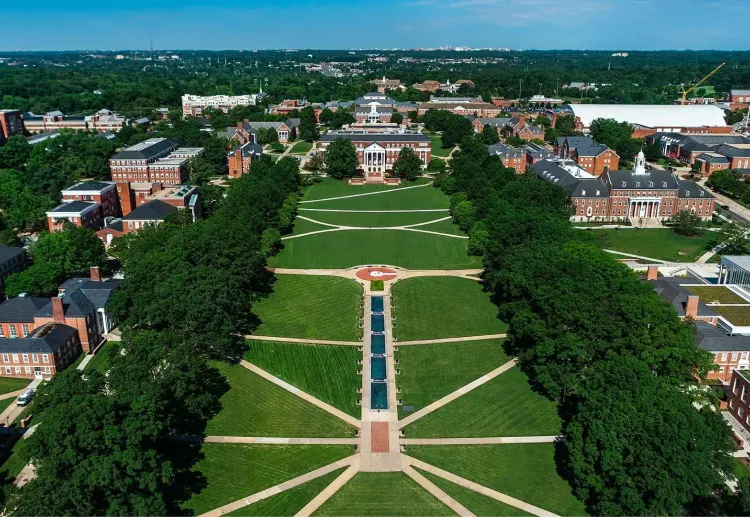
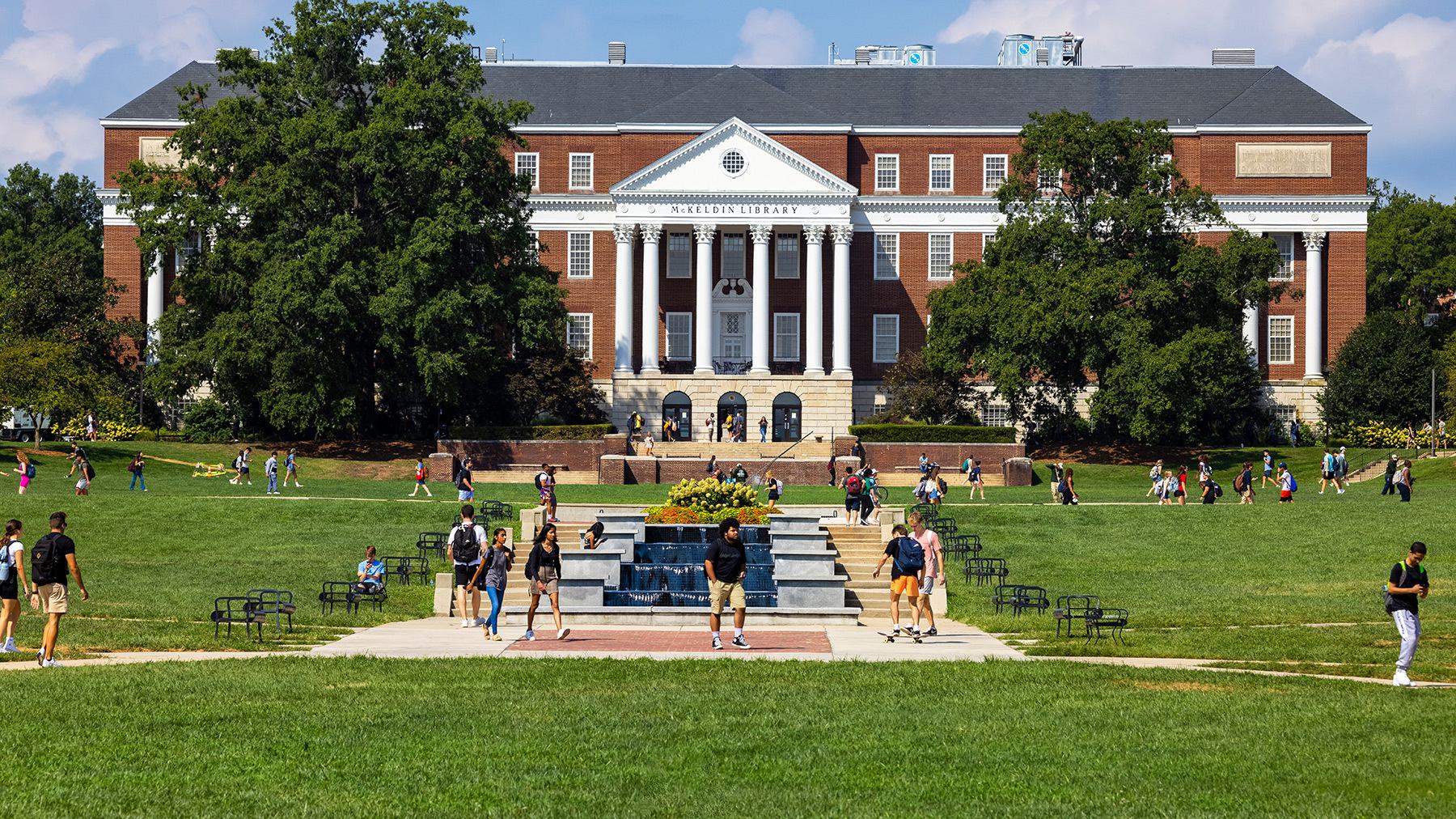
The University of Maryland-College Park is a powerhouse public research university with a suburban-DC location that punches far above its weight in tech, engineering, and policy fields. With a 45% acceptance rate and SATs in the 1410–1520 range, it attracts high-achieving students who want Big Ten energy alongside serious academics—especially in computer science (Sergey Brin’s alma mater) and aerospace (NASA partnerships). Terps graduate at an 86% rate into strong salaries, with many leveraging the school’s D.C. adjacency for internships and jobs.
Admissions
UMD is selective but not cutthroat, with a 44.8% Acceptance rateThe share of applicants a college admits in a given year. A 10% acceptance rate means it admits about 1 in 10 applicants. for Fall 2025 (66,000 applications for 5,028 spots). The middle 50% SAT range is 1410–1520, ACT 32–35, and weighted GPAs average 4.44. Test-optionalA policy where you choose whether to submit SAT or ACT scores. If you don't, the rest of your application carries more weight. since 2021, the university emphasizes Holistic admissionsA review that weighs the whole applicant — grades, essays, activities, and context — rather than relying on test scores and GPA alone.—95% of admitted students had GPAs above 3.75. Enrollment YieldThe share of admitted students who actually choose to enroll. Colleges watch it closely, which is why some weigh how interested you seem. is 23%, suggesting many admitted students treat UMD as a safety or target school. Notably, the admit rate varies significantly by program, with computer science and engineering being most competitive.
Sources
- Common Data Set (CDS) - [email protected] - University of Maryland
- Common Data Set
- University of Maryland, College Park 2026 Common Data Set
- IRPA | University of Maryland
- Common Data Set Repository - College Transitions
- Common Data Set for UMD? - Reddit
- [PDF] UMD Undergraduate Application Summary - Fall 2025
- University of Maryland: College Park Admissions - BigFuture
- Prospective Students - UMD Admissions - University of Maryland
- How to Get In: University of Maryland SAT Scores and GPA
- SAT and ACT Scores for University of Maryland - College Park