Loading…
← All schools
University of Maryland-Baltimore County
Baltimore, MDpublicumbc.edu/
- Acceptance rateThe share of applicants a college admits in a given year. A 10% acceptance rate means it admits about 1 in 10 applicants.
- 72%
- SAT 25th-75th percentileThe middle range of SAT scores for admitted students: a quarter scored below the low number and a quarter scored above the high number.
- 1240–1420
- Undergrad enrollment
- 10,701
- Net priceWhat a family actually pays after grants and scholarships are subtracted from the sticker price — usually far less than the published cost.
- $16,467
- In-state tuition
- $13,256
- Out-of-state tuition
- $31,275
- Avg HS GPA
- 4.06
- Avg Net Price
- $17,704
- Acceptance Rate
- 72%
- In-State Tuition
- $13,539
- Avg SAT (Middle 50%)
- 1240–1420
- Out-of-State Tuition
- $30,622
- Undergrad Enrollment
- ~11,000
- Student-Faculty Ratio
Quick answers
- What is the acceptance rate at University of Maryland-Baltimore County?
- University of Maryland-Baltimore County's acceptance rate is approximately 72% (Baltimore, MD), based on the most recent figures we compiled from public and primary sources.
- What SAT score do you need for University of Maryland-Baltimore County?
- Admitted students at University of Maryland-Baltimore County typically score 1240–1420 on the SAT (the middle-50% range). Scores outside this band are still admitted, especially with strong applications.
- How much does University of Maryland-Baltimore County cost?
- At University of Maryland-Baltimore County, the average net price (after aid) is about $16,467 per year. Actual cost varies with financial aid and residency.
- How many undergraduates attend University of Maryland-Baltimore County?
- University of Maryland-Baltimore County enrolls approximately 10,701 undergraduate students.
- Where is University of Maryland-Baltimore County located?
- University of Maryland-Baltimore County is located in Baltimore, MD.
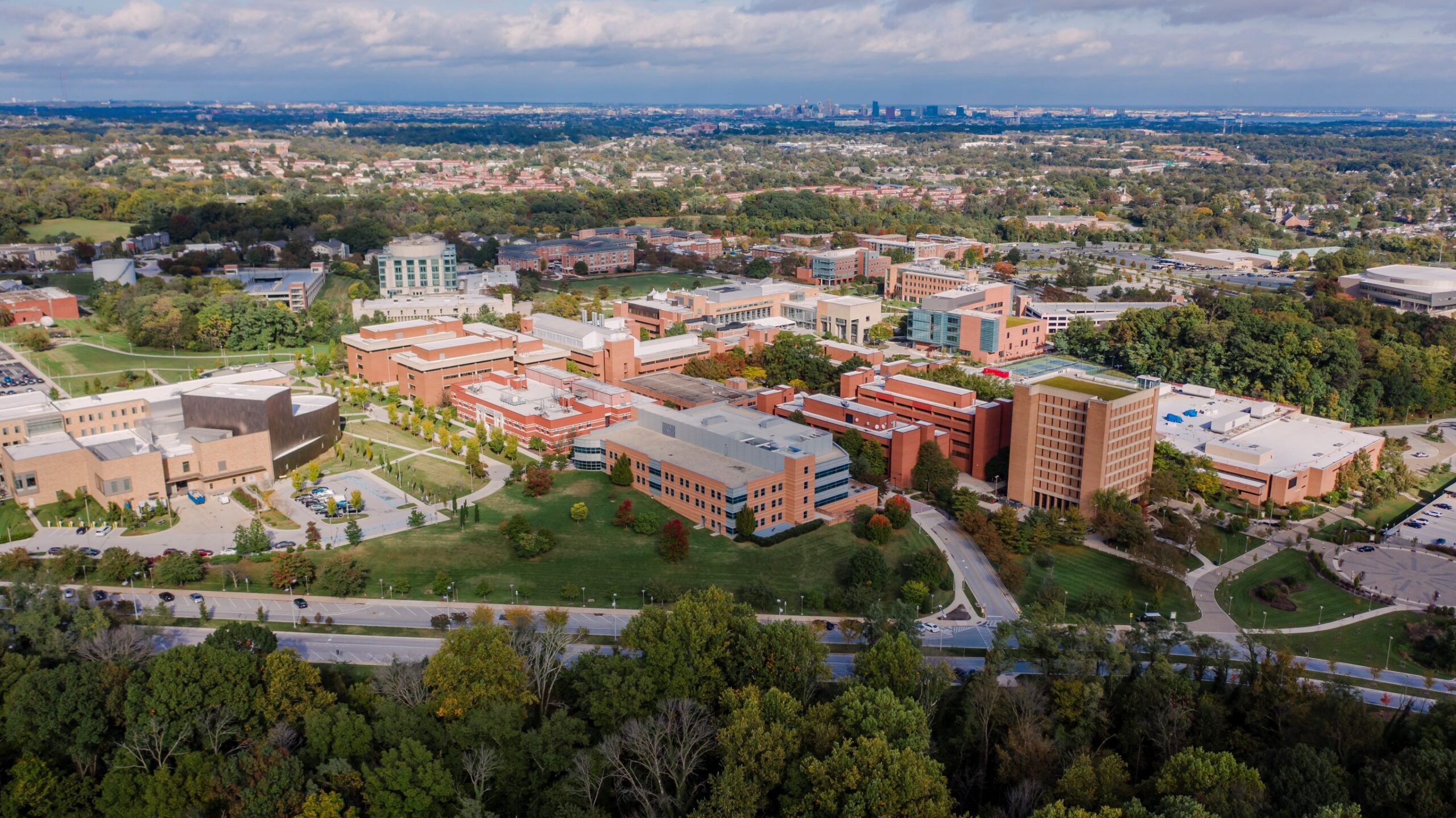
UMBC is a public research university that punches above its weight, known for its strong STEM programs, diverse student body, and a scrappy underdog spirit. With a 72% acceptance rate, it's accessible yet rigorous, offering a collaborative, 'do-it-yourself' campus culture where students carve their own paths.
Admissions
UMBC is moderately selective, with a 72% acceptance rate (61.1% for early applicants). The middle 50% of admitted first-years boast an average high school GPA of 4.06 and SAT scores between 1240–1420 (or ACT scores of 25–31). Notably, 79% of admitted students had a GPA of 3.75 or higher, signaling a preference for strong academic performers. The university uses the Common Application and has a regular decision deadline of February 1.
Academics
UMBC offers 100+ majors, minors, and certificates across three undergraduate schools: Arts, Humanities & Social Sciences; Engineering & Information Technology; and Natural & Mathematical Sciences. The university is particularly strong in STEM, with notable programs in computer science, biology, and engineering. A pervades, with opportunities for undergraduates to engage in cutting-edge projects. The Princeton Review notes UMBC attracts students who want 'research opportunities, but may also want a smaller school feel.'
Sources
- Common Data Set
- Common Data Set (CDS) - [email protected] - University of Maryland
- Common Data Set: Home
- [PDF] Common Data Set 2024-2025 - Loyola University Maryland
- Common Data Set Repository - College Transitions
- University of Maryland Baltimore County - U.S. News & World Report
- University of Maryland: Baltimore County Admissions - BigFuture
- UMBC SAT Scores and GPA - PrepScholar
- University of Maryland Baltimore County Admissions
- First-Year Students - UMBC: University Of Maryland, Baltimore County
- UMBC: Acceptance Rate, SAT/ACT Scores, GPA - ThoughtCo