Loading…
← All schools
University of Colorado Denver/Anschutz Medical Campus
Denver, COpublicwww.ucdenver.edu/
- Acceptance rateThe share of applicants a college admits in a given year. A 10% acceptance rate means it admits about 1 in 10 applicants.
- 75%
- SAT 25th-75th percentileThe middle range of SAT scores for admitted students: a quarter scored below the low number and a quarter scored above the high number.
- 980–1220
- Undergrad enrollment
- 10,519
- Net priceWhat a family actually pays after grants and scholarships are subtracted from the sticker price — usually far less than the published cost.
- $11,900
- In-state tuition
- $10,383
- Out-of-state tuition
- $29,391
- Avg. ACT Range
- 19-26
- Avg. SAT Range
- 980-1220
- Acceptance Rate
- 77.8%
- Avg. High School GPA
- 3.54
- 4-Year Graduation Rate
- 47-48%
- PA Program Selectivity
- 2% acceptance (44/2155)
- Medical Campus Programs
- 6 schools
Quick answers
- What is the acceptance rate at University of Colorado Denver/Anschutz Medical Campus?
- University of Colorado Denver/Anschutz Medical Campus's acceptance rate is approximately 75% (Denver, CO), based on the most recent figures we compiled from public and primary sources.
- What SAT score do you need for University of Colorado Denver/Anschutz Medical Campus?
- Admitted students at University of Colorado Denver/Anschutz Medical Campus typically score 980–1220 on the SAT (the middle-50% range). Scores outside this band are still admitted, especially with strong applications.
- How much does University of Colorado Denver/Anschutz Medical Campus cost?
- At University of Colorado Denver/Anschutz Medical Campus, the average net price (after aid) is about $11,900 per year. Actual cost varies with financial aid and residency.
- How many undergraduates attend University of Colorado Denver/Anschutz Medical Campus?
- University of Colorado Denver/Anschutz Medical Campus enrolls approximately 10,519 undergraduate students.
- Where is University of Colorado Denver/Anschutz Medical Campus located?
- University of Colorado Denver/Anschutz Medical Campus is located in Denver, CO.
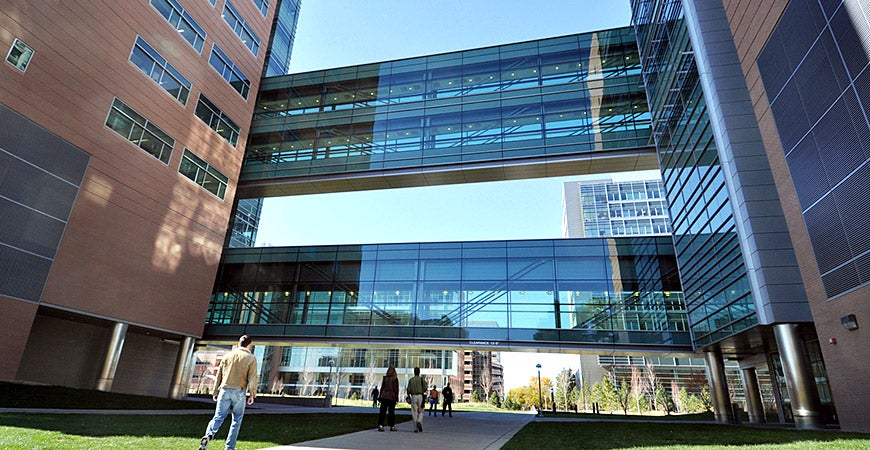
The University of Colorado Denver/Anschutz Medical Campus is a powerhouse for health sciences, blending an urban commuter-school vibe with cutting-edge medical training. With a 77.8% acceptance rate for undergraduates but hyper-competitive programs like its PA school (just 44 spots for 2,155 applicants), it’s a study in contrasts—accessible yet elite where it counts. The Anschutz campus dominates as the Rocky Mountain region’s largest academic health center, while CU Denver’s downtown location attracts non-traditional students seeking flexibility.
Admissions
CU Denver/Anschutz operates on a split personality: moderately selective for undergraduates (77.8% Acceptance rateThe share of applicants a college admits in a given year. A 10% acceptance rate means it admits about 1 in 10 applicants.) but fiercely competitive for health professions. The mid-50% SAT range for admitted undergrads falls between 980-1220, with ACT scores typically 19-26 and an average high school GPA of 3.54. However, the Anschutz Medical Campus operates on another plane entirely—its Physician Assistant program admitted just 44 students from a pool of 2,155 applicants for the 2025 class. Each Anschutz school sets its own admissions standards, with medical programs requiring separate applications.
Sources
- Institutional Data - CU Denver
- [PDF] Common Data Set 2024-2025 - CU Denver
- Common Data Set - Data & Analytics - University of Colorado Boulder
- [PDF] Common Data Set 2021-2022 - CU Denver
- How To Use a Common Data Set - The College Solution
- [PDF] Common Data Set 2022-2023
- University of Colorado Denver/Anschutz Medical Campus ...
- University of Colorado Denver/Anschutz Medical Campus - Sallie
- Anschutz Medical Campus - CU Denver