Loading…
← All schools
University of Charleston
Charleston, WVprivate nonprofitwww.ucwv.edu/
- Acceptance rateThe share of applicants a college admits in a given year. A 10% acceptance rate means it admits about 1 in 10 applicants.
- 62%
- Undergrad enrollment
- 2,259
- Net priceWhat a family actually pays after grants and scholarships are subtracted from the sticker price — usually far less than the published cost.
- $22,107
- In-state tuition
- $33,800
- Out-of-state tuition
- $33,800
- Type
- Private University
- Location
- Charleston, WV
- Test Policy
- Test-Blind (SAT/ACT optional)
- Acceptance Rate
- 64.5%
- Average Net Price
- $22,107
- Undergrad Enrollment
- ~1,100
- Student-Faculty Ratio
- 15:1
- 4-Year Graduation Rate
- 39%
- Financial Aid Recipients
- 100%
- Median Early-Career Earnings
- $69,000
Quick answers
- What is the acceptance rate at University of Charleston?
- University of Charleston's acceptance rate is approximately 62% (Charleston, WV), based on the most recent figures we compiled from public and primary sources.
- How much does University of Charleston cost?
- At University of Charleston, the average net price (after aid) is about $22,107 per year. Actual cost varies with financial aid and residency.
- How many undergraduates attend University of Charleston?
- University of Charleston enrolls approximately 2,259 undergraduate students.
- Where is University of Charleston located?
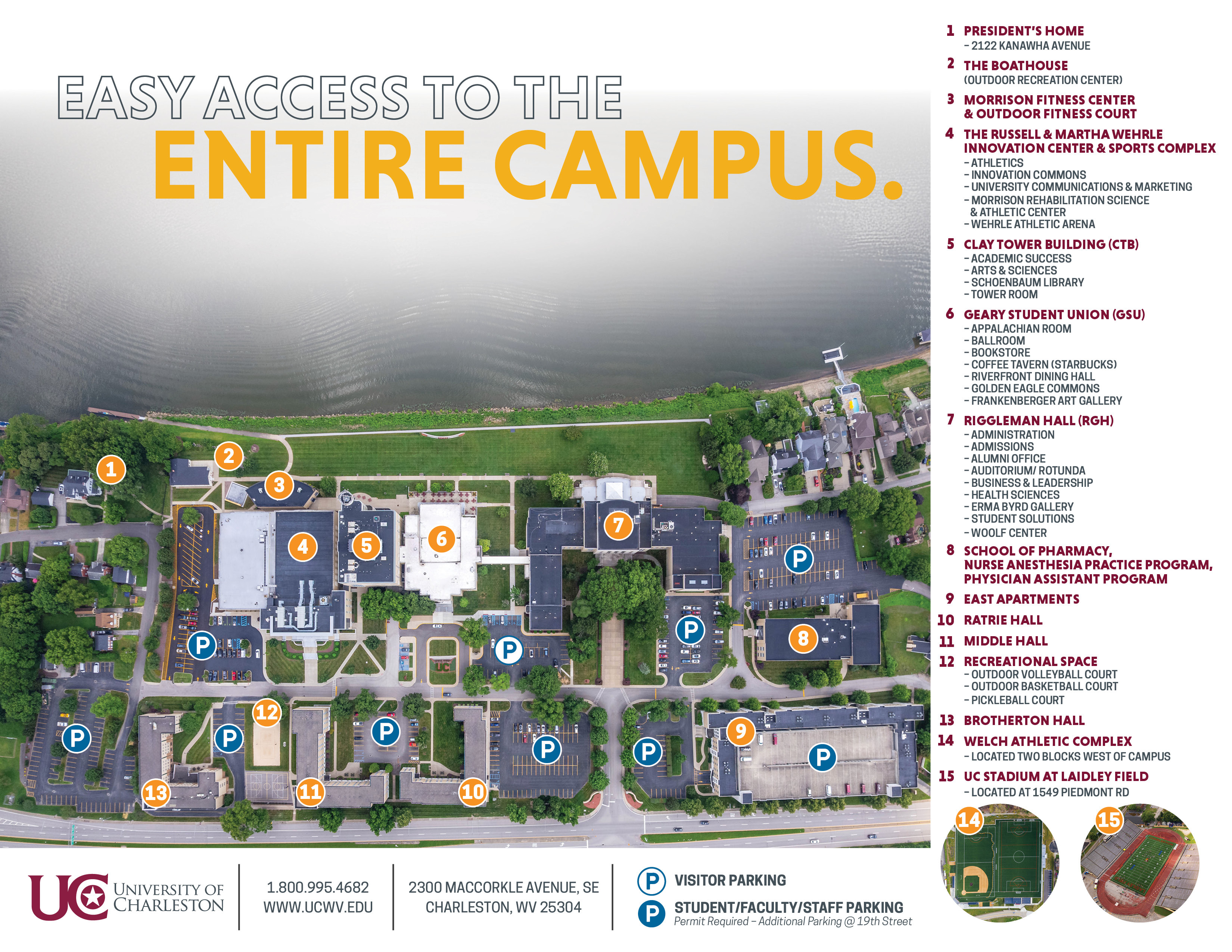
- University of Charleston is located in Charleston, WV.
The University of Charleston (UC) is a private West Virginia institution that punches above its weight in career outcomes, with undergraduates leading the state in early-career earnings. Its test-blind admissions and 15:1 student-faculty ratio create an accessible yet personalized environment, while campus life thrives on tight-knit community bonds and leadership opportunities.
Admissions
UC maintains a moderately selective admissions process with a 64.5% acceptance rate (sources vary slightly between 62-65%), making it accessible yet competitive. Notably, the university operates a test-blind policy—neither SAT nor ACT scores are required for general admission, though applicants may submit them for scholarship consideration. The median academic profile of enrolled students hovers around a 1210-1260 SAT range and 26 ACT, though these figures are less emphasized under the current policy. UC prioritizes Holistic admissionsA review that weighs the whole applicant — grades, essays, activities, and context — rather than relying on test scores and GPA alone., weighing factors like high school GPA (typically 3.0+ for competitive applicants), extracurricular involvement, and personal statements. Transfer students face similar standards, with particular attention paid to college-level coursework completion.
Sources
- Common Data Set - College of Charleston
- [PDF] Common Data Set 2024-2025 - College of Charleston
- Common Data Set: Home
- Common Data Set Repository - College Transitions
- Common Data Set - GradGPT
- [PDF] Common Data Set 2023-2024
- University of Charleston Admissions - BigFuture College Search
- College of Charleston Class of 2028 First-Year Student Profile
- University of Charleston SAT Scores and GPA
- Undergraduate Degree Requirements - University of Charleston