Loading…
← All schools
University of California-San Diego
La Jolla, CApublicwww.ucsd.edu/
- Acceptance rateThe share of applicants a college admits in a given year. A 10% acceptance rate means it admits about 1 in 10 applicants.
- 27%
- Undergrad enrollment
- 34,948
- Net priceWhat a family actually pays after grants and scholarships are subtracted from the sticker price — usually far less than the published cost.
- $12,470
- In-state tuition
- $16,758
- Out-of-state tuition
- $50,958
- Test Policy
- Test-blind (SAT/ACT not considered)
- Notable Fact
- Home to 8 Nobel laureates on faculty
- Acceptance Rate
- 26.8%
- Graduation Rate
- 88%
- Undergrad Majors
- 160+
- Mid-Career Salary
- $106,000
- Net Price (In-State)
- $14,882
- Average GPA (Admitted)
- 3.75+ (82% of admits)
Quick answers
- What is the acceptance rate at University of California-San Diego?
- University of California-San Diego's acceptance rate is approximately 27% (La Jolla, CA), based on the most recent figures we compiled from public and primary sources.
- How much does University of California-San Diego cost?
- At University of California-San Diego, the average net price (after aid) is about $12,470 per year. Actual cost varies with financial aid and residency.
- How many undergraduates attend University of California-San Diego?
- University of California-San Diego enrolls approximately 34,948 undergraduate students.
- Where is University of California-San Diego located?
- University of California-San Diego is located in La Jolla, CA.
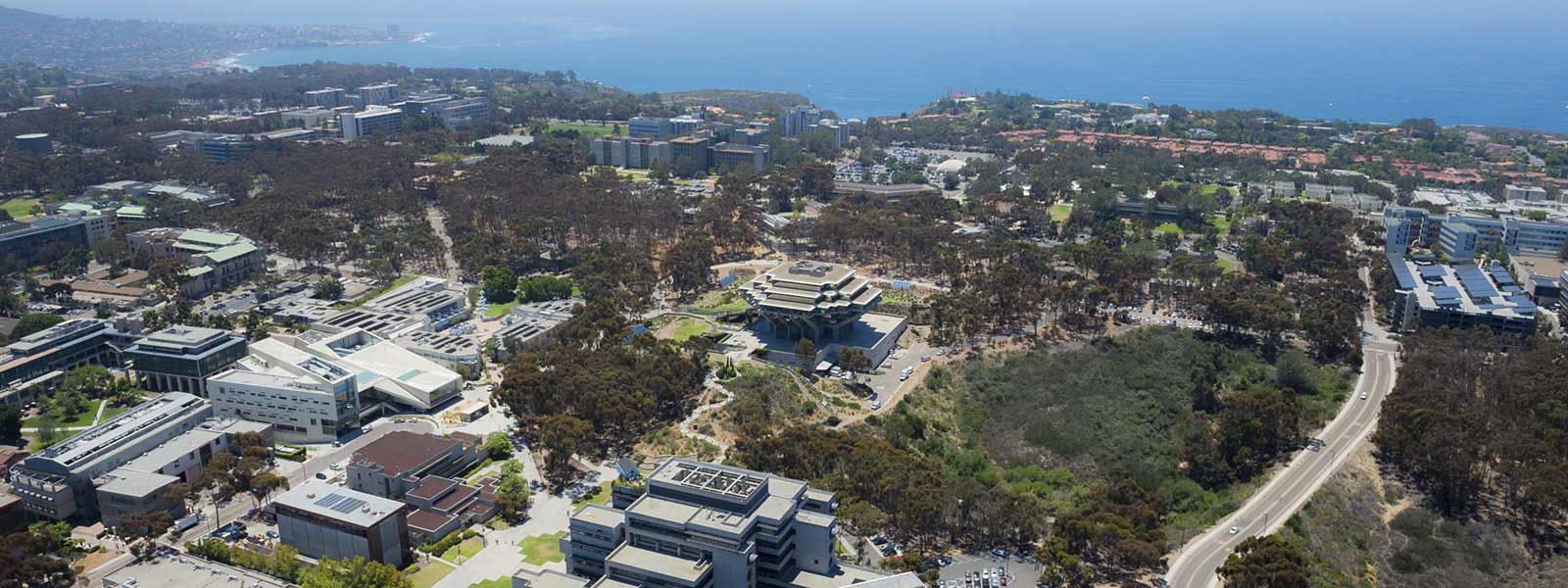
UC San Diego is a powerhouse of hard science and engineering, where surfboards and lab coats coexist. With a fiercely competitive admissions process (accepting just 26.8% of applicants) and a reputation for rigorous academics, it attracts students who thrive in its intense, research-driven environment. The campus culture leans more toward intellectual curiosity than raucous parties, though its stunning La Jolla location offers ample outdoor distractions. Graduates emerge with strong career prospects—mid-career salaries average $106,000—but the real draw is the chance to work alongside Nobel laureates and pioneers in fields like oceanography and bioengineering.
Admissions
Getting into UC San Diego is no small feat—the Acceptance rateThe share of applicants a college admits in a given year. A 10% acceptance rate means it admits about 1 in 10 applicants. hovers around 26.8%, making it one of the more selective public universities in the country. The university does not consider SAT or ACT scores for admissions (though middle 50% ranges for admitted students historically fell between 26-31 on the ACT and 1300-1520 on the SAT). GPA reigns supreme: 82% of admitted freshmen had a 3.75+ GPA, with the average admit sporting near-perfect grades. UC San Diego evaluates applicants holistically, weighing factors like course rigor, extracurriculars, and personal insight responses. Transfer admissions are slightly more forgiving, but still competitive.
Sources
- Common Data Set - Institutional Research
- [PDF] Common Data Set 2024-2025 - Institutional Research
- [PDF] 2023-2024 Common Data Set - University of San Diego
- Common Data Set - Analytic Studies & Institutional Research
- University of California, San Diego 2026 Common Data Set - GradGPT
- Common Data Set: Home
- What You Need For UCSD: SAT Scores and GPA - PrepScholar
- San Diego: Freshman admission profile
- First-Year Student Application Requirements - UCSD Admissions
- University of California San Diego Admissions