Loading…
← All schools
University of California-Riverside
Riverside, CApublicwww.ucr.edu/
- Acceptance rateThe share of applicants a college admits in a given year. A 10% acceptance rate means it admits about 1 in 10 applicants.
- 76%
- Undergrad enrollment
- 22,593
- Net priceWhat a family actually pays after grants and scholarships are subtracted from the sticker price — usually far less than the published cost.
- $14,304
- In-state tuition
- $15,606
- Out-of-state tuition
- $49,806
- Top Majors
- Mechanical Engineering, Computer Science
- Campus Vibe
- Collaborative, diverse, suburban
- Student Orgs
- 450+
- Avg Net Price
- $14,304
- Acceptance Rate
- 77%
- Graduation Rate
- 79%
- Median Earnings (6 yrs)
- $48,593
- Financial Aid Recipients
- 80%
Quick answers
- What is the acceptance rate at University of California-Riverside?
- University of California-Riverside's acceptance rate is approximately 76% (Riverside, CA), based on the most recent figures we compiled from public and primary sources.
- How much does University of California-Riverside cost?
- At University of California-Riverside, the average net price (after aid) is about $14,304 per year. Actual cost varies with financial aid and residency.
- How many undergraduates attend University of California-Riverside?
- University of California-Riverside enrolls approximately 22,593 undergraduate students.
- Where is University of California-Riverside located?
- University of California-Riverside is located in Riverside, CA.
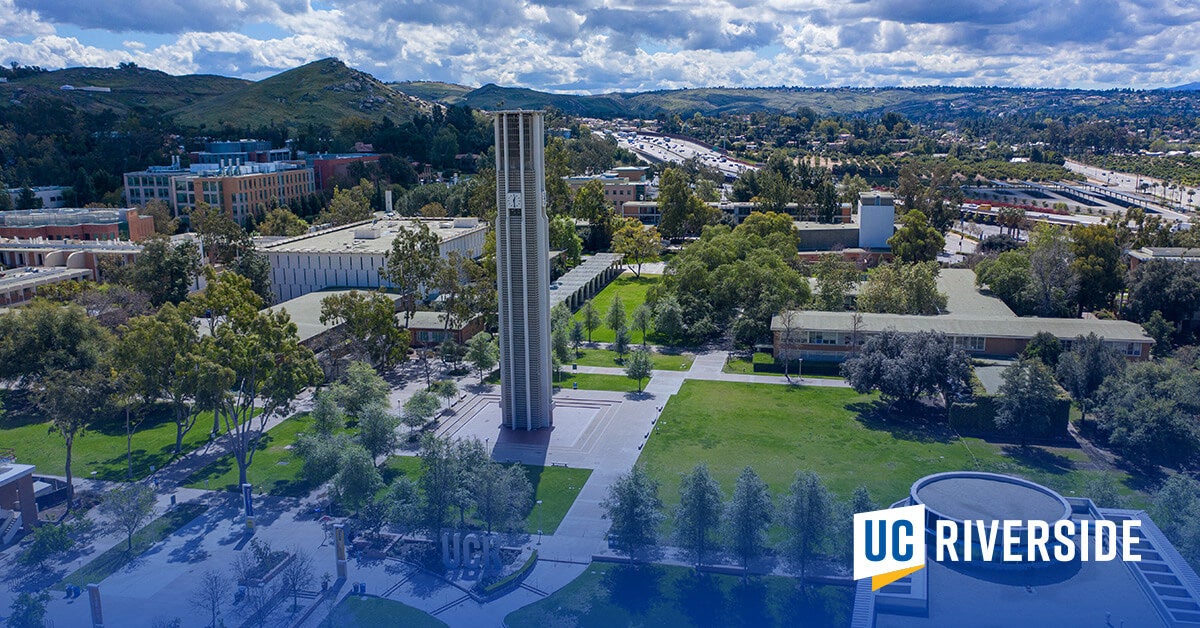
UC Riverside is the scrappy, high-value underdog of the UC system—a research powerhouse with shockingly high acceptance rates (for a UC) and a knack for turning out graduates who outperform their peers financially. With 150+ majors, a sun-baked campus buzzing with 450+ student orgs, and a student body that’s 80% on financial aid, UCR is where California’s middle class gets a top-tier STEM education without the cutthroat competition of its coastal siblings.
Admissions
UC Riverside is the most accessible UC campus by a wide margin, with a 77% acceptance rate for freshmen (per US News) and 68% for transfers (UC Admissions). SAT midranges are modest (560-670 EBRW, 570-730 Math), and ACT composites land between 21-29. The school leans heavily on GPA: 61% of admits have a 3.75+ GPA, but the 25th-75th percentile range includes students down to 3.5 (College Board). Notably, in-state applicants have a slight edge (87% admit rate vs. 85.5% out-of-state). Deadlines are standard UC: December 2 for freshmen.
Sources
- Common Data Set (CDS) - Institutional Research | - UC Riverside
- [PDF] University of California, Riverside - Common Data Set 2024-25
- Common Data Set - GradGPT
- Common Data Set: Home
- Common Data Set Repository - College Transitions
- The Common Data Set: What It Is & How to Use It In College ...
- Riverside: Freshman admission profile
- UC Riverside SAT Scores and GPA - PrepScholar
- UC Riverside - UC Admissions - University of California
- University of California, Riverside Admissions
- University of California: Riverside Admissions - BigFuture