Loading…
← All schools
University of Advancing Technology
Tempe, AZprivate forprofituat.edu
- Acceptance rateThe share of applicants a college admits in a given year. A 10% acceptance rate means it admits about 1 in 10 applicants.
- 98%
- Undergrad enrollment
- 855
- Net priceWhat a family actually pays after grants and scholarships are subtracted from the sticker price — usually far less than the published cost.
- $28,522
- In-state tuition
- $19,365
- Out-of-state tuition
- $19,365
- Specialty
- Project-Based Tech Degrees
- Avg Net Price
- $20,164
- Notable Mascot
- Max the Campus Cat
- Acceptance Rate
- 98.1%
- Student-Faculty Ratio
- 14:1
- 6-Year Graduation Rate
- 33-46%
- Median Earnings (6 Yrs)
- $39,000
Quick answers
- What is the acceptance rate at University of Advancing Technology?
- University of Advancing Technology's acceptance rate is approximately 98% (Tempe, AZ), based on the most recent figures we compiled from public and primary sources.
- How much does University of Advancing Technology cost?
- At University of Advancing Technology, the average net price (after aid) is about $28,522 per year. Actual cost varies with financial aid and residency.
- How many undergraduates attend University of Advancing Technology?
- University of Advancing Technology enrolls approximately 855 undergraduate students.
- Where is University of Advancing Technology located?
- University of Advancing Technology is located in Tempe, AZ.
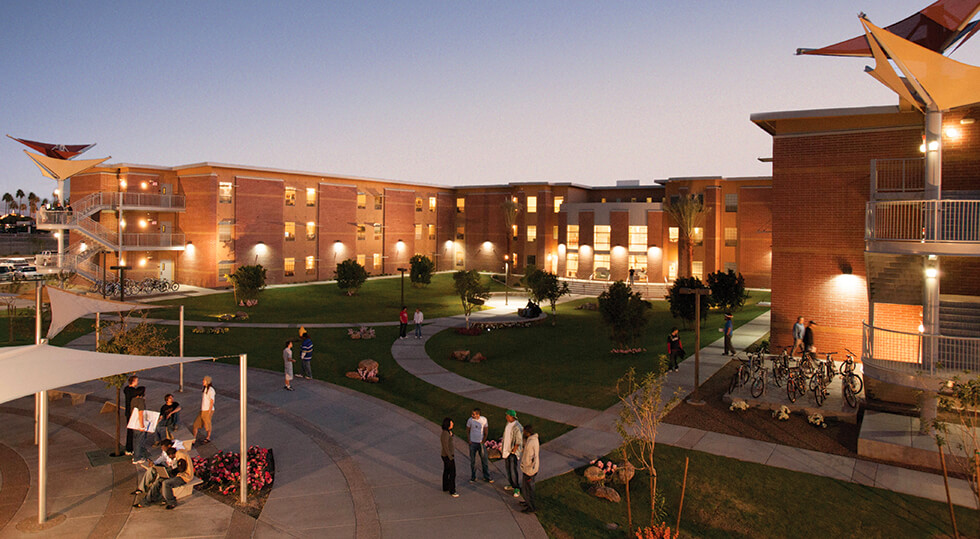
The University of Advancing Technology (UAT) is a niche, for-profit tech school in Tempe, Arizona with a near-open admissions policy (98% acceptance rate) and a quirky, gadget-heavy campus culture. Known for its hands-on tech degrees and a graduation rate hovering around 33-46%, UAT attracts students who want to bypass traditional gen-ed requirements—but its high costs ($20K+ net price) and mixed academic reputation make it a polarizing choice.
Admissions
UAT is one of the least selective universities in the U.S., with a 98.1% acceptance rate (353 of 360 applicants admitted in 2024). The school requires only a high school diploma or GED, with no minimum GPA or test scores—applicants must submit just "one or more forms of academic history" (GPA, SAT/ACT, or alternative credentials). This open-door policy contrasts sharply with the school's marketing as a prestige tech hub. Retention rates are low: only 33-46% of students graduate within 6 years, per federal data.
Academics
Sources
- Common Data Set - GradGPT
- Common Data Set: Home
- Is there a common data set for graduate schools? - Facebook
- University of Advancing Technology - Data USA
- Common Data Set Ultimate Guide: Use It to Find the Right College
- UAT Student Achievement Data - University of Advancing Technology
- Admissions Requirements - University of Advancing Technology
- University of Advancing Technology - BigFuture College Search
- University of Advancing Technology Admissions - USNews.com
- University of Advancing Technology (UAT) (UAT)
- University of Advancing Technology Admissions & Acceptance - Niche