Loading…
← All schools
University at Albany
Albany, NYpublicwww.albany.edu/
- Acceptance rateThe share of applicants a college admits in a given year. A 10% acceptance rate means it admits about 1 in 10 applicants.
- 69%
- Undergrad enrollment
- 12,564
- Net priceWhat a family actually pays after grants and scholarships are subtracted from the sticker price — usually far less than the published cost.
- $17,167
- In-state tuition
- $10,866
- Out-of-state tuition
- $31,256
- Net Price
- $17,714
- Campus Size
- 586 acres
- Mid-Range GPA
- 3.3–4.0
- Mid-Range SAT
- 1160–1310
- Notable Alumni
- Harvey Milk, Brian Higgins
- Acceptance Rate
- 69%
- Undergrad Enrollment
- ~13,000
- Student-Faculty Ratio
- 17:1
- 4-Year Graduation Rate
Quick answers
- What is the acceptance rate at University at Albany?
- University at Albany's acceptance rate is approximately 69% (Albany, NY), based on the most recent figures we compiled from public and primary sources.
- How much does University at Albany cost?
- At University at Albany, the average net price (after aid) is about $17,167 per year. Actual cost varies with financial aid and residency.
- How many undergraduates attend University at Albany?
- University at Albany enrolls approximately 12,564 undergraduate students.
- Where is University at Albany located?
- University at Albany is located in Albany, NY.
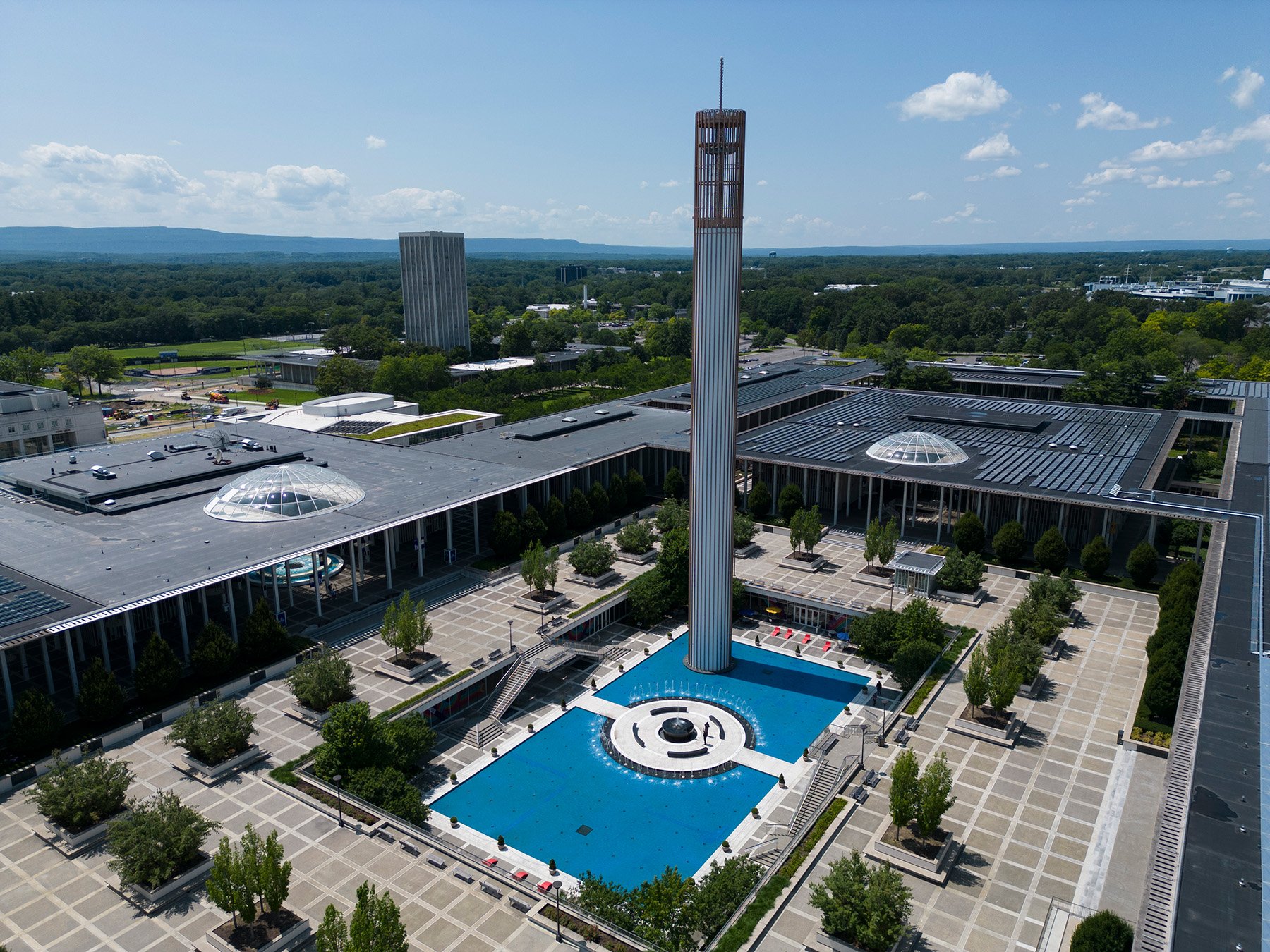
The University at Albany, SUNY's flagship public research university in New York's Capital Region, blends rigorous academics—particularly in public policy, business, and sciences—with a sprawling suburban campus and Division I athletics. Known for its high acceptance rate (69%) and strong ROI (median alumni earnings of $51,380 six years post-graduation), it attracts over 17,500 students with a mix of affordability and research opportunities, though student reviews note Albany itself can feel sleepy.
Admissions
UAlbany's admissions process leans accessible, with a 69% Acceptance rateThe share of applicants a college admits in a given year. A 10% acceptance rate means it admits about 1 in 10 applicants. (early acceptance jumps to 86.5%). Mid-range stats for Fall 2025 admits include GPAs of 3.3–4.0 (89–96 on a 100-point scale) and SAT/ACT scores of 1160–1310 (SAT) or 24–30 (ACT). Notably, 45% of admitted first-years had GPAs above 3.75. The university is Test-optionalA policy where you choose whether to submit SAT or ACT scores. If you don't, the rest of your application carries more weight., with applications due July 1 for regular decision. Transfer students find a welcoming pathway, with rolling admissions and articulation agreements across SUNY schools.
Academics
UAlbany offers over 50 undergraduate majors and 150 graduate programs, with standout departments in public administration, , and like genetics and biochemistry. The most popular majors cluster in social sciences (e.g., psychology, political science) and business—reflecting its reputation as a feeder for New York’s public sector. The university emphasizes research, with undergraduates often participating in projects through its Rockefeller College of Public Affairs and College of Engineering and Applied Sciences. A 17:1 student-faculty ratio keeps classes manageable, though introductory lectures can be large.
Sources
- Common Data Set 2024-2025 | University at Albany
- Data Available | University at Albany
- Common Data Set 2022-2023 | University at Albany
- Common Data Set: Home
- Common Data Set - Albany State University
- Common Data Set Repository - College Transitions
- SUNY University at Albany Admissions - BigFuture College Search
- University at Albany--SUNY Admissions - US News Best Colleges
- University at Albany Admission Requirements - PrepScholar
- How to Apply as a First-Year Student | University at Albany
- University at Albany Acceptance Rate & Average GPA