Loading…
← All schools
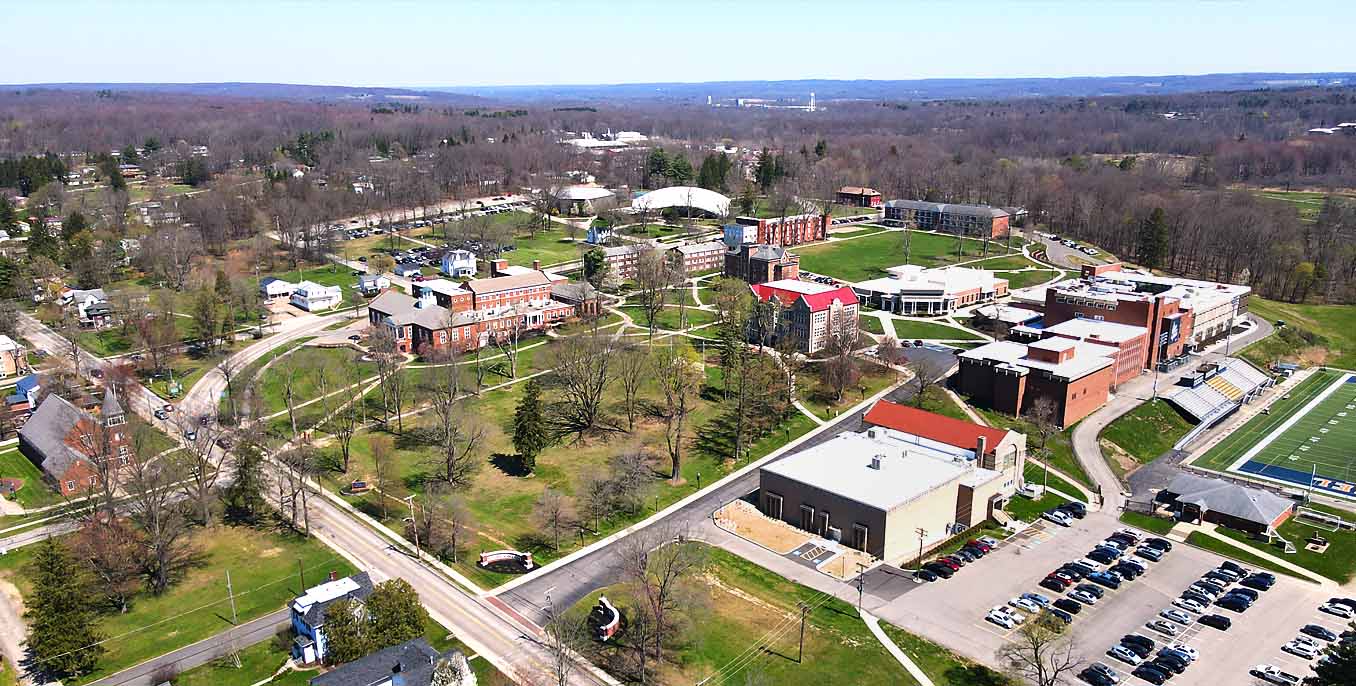
Thiel College
Greenville, PAprivate nonprofitthiel.edu
- Acceptance rateThe share of applicants a college admits in a given year. A 10% acceptance rate means it admits about 1 in 10 applicants.
- 72%
- Undergrad enrollment
- 788
- Net priceWhat a family actually pays after grants and scholarships are subtracted from the sticker price — usually far less than the published cost.
- $22,347
- In-state tuition
- $38,344
- Out-of-state tuition
- $38,344
- Top Majors
- Business (23%), Biology (12%), Nursing (8%)
- Acceptance Rate
- 72%
- Average Net Price
- $22,490
- On-Campus Housing
- 70%
- Freshman Retention
- 73%
- 4-Year Graduation Rate
- 36-45%
- 6-Year Graduation Rate
- 44-52%
- Students Receiving Aid
- 92%
- Median Earnings (Post-Grad)
- $51,262
- Student Activities Participation
- 96%
Quick answers
- What is the acceptance rate at Thiel College?
- Thiel College's acceptance rate is approximately 72% (Greenville, PA), based on the most recent figures we compiled from public and primary sources.
- How much does Thiel College cost?
- At Thiel College, the average net price (after aid) is about $22,347 per year. Actual cost varies with financial aid and residency.
- How many undergraduates attend Thiel College?
- Thiel College enrolls approximately 788 undergraduate students.
- Where is Thiel College located?
- Thiel College is located in Greenville, PA.
Thiel College is a small, unpretentious liberal arts school in rural Pennsylvania where nearly three-quarters of applicants get in, but those who stay find tight-knit community and surprisingly strong outcomes for a college of its size. With a 72% acceptance rate and test-optional admissions, it's accessible to students who might not thrive at more selective institutions, yet it boasts a 90% post-graduation employment rate and median earnings of $51,262—outperforming many peers in its sector.
Admissions
Thiel's admissions process leans heavily toward accessibility rather than exclusivity. With a 72% Acceptance rateThe share of applicants a college admits in a given year. A 10% acceptance rate means it admits about 1 in 10 applicants. (2,074 admitted from 2,885 applicants in recent cycles), it's firmly in the 'not selective' category by traditional metrics. The school is Test-optionalA policy where you choose whether to submit SAT or ACT scores. If you don't, the rest of your application carries more weight., explicitly stating that 'students applying to Thiel College's undergraduate degree programs will not be required to provide SAT or ACT test scores.' GPA distributions show modest academic preparation among enrollees: only 20.3% of entering students had GPAs of 3.75+, while 17.5% fell in the 3.25-3.49 range. The middle 50% ACT range is 17-24, well below national averages at more competitive schools.
Sources
- Student Consumer Information Disclosure - Thiel College
- Common Data Set: Home
- Thiel College Overview | CollegeData
- Thiel College - DFR Report HTML - Department of Education
- The Common Data Set: What It Is & How to Use It In College ...
- How To Use a Common Data Set - The College Solution
- Thiel College SAT Scores and GPA - PrepScholar
- Thiel College Admissions - BigFuture College Search
- Thiel College Admissions - U.S. News & World Report
- Thiel College - Tuition and Acceptance Rate - Peterson's
- Thiel College Admissions & Acceptance - Niche