Loading…
← All schools
The University of Montana
Missoula, MTpublicwww.umt.edu/
- Acceptance rateThe share of applicants a college admits in a given year. A 10% acceptance rate means it admits about 1 in 10 applicants.
- 96%
- Undergrad enrollment
- 7,488
- Net priceWhat a family actually pays after grants and scholarships are subtracted from the sticker price — usually far less than the published cost.
- $16,784
- In-state tuition
- $8,552
- Out-of-state tuition
- $33,671
- Mascot
- Grizzlies
- Location
- Missoula, MT (population 75,000)
- Acceptance Rate
- 95.9%
- Notable Programs
- Business, Natural Resources, Liberal Arts
- Admissions Contact
- 406-243-6266
- Avg ACT (Middle 50%)
- 23–28
- Avg SAT (Middle 50%)
- 1080–1280
- Six-Year Graduation Rate
- 47%
Quick answers
- What is the acceptance rate at The University of Montana?
- The University of Montana's acceptance rate is approximately 96% (Missoula, MT), based on the most recent figures we compiled from public and primary sources.
- How much does The University of Montana cost?
- At The University of Montana, the average net price (after aid) is about $16,784 per year. Actual cost varies with financial aid and residency.
- How many undergraduates attend The University of Montana?
- The University of Montana enrolls approximately 7,488 undergraduate students.
- Where is The University of Montana located?
- The University of Montana is located in Missoula, MT.
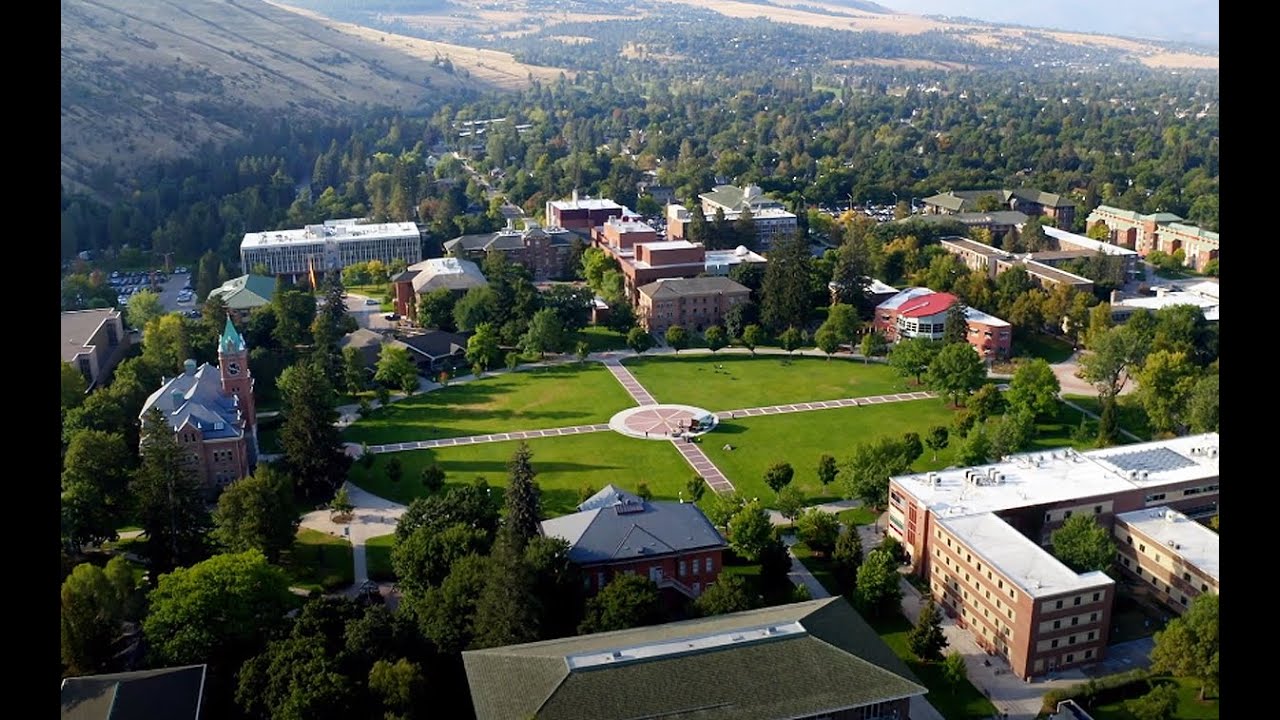
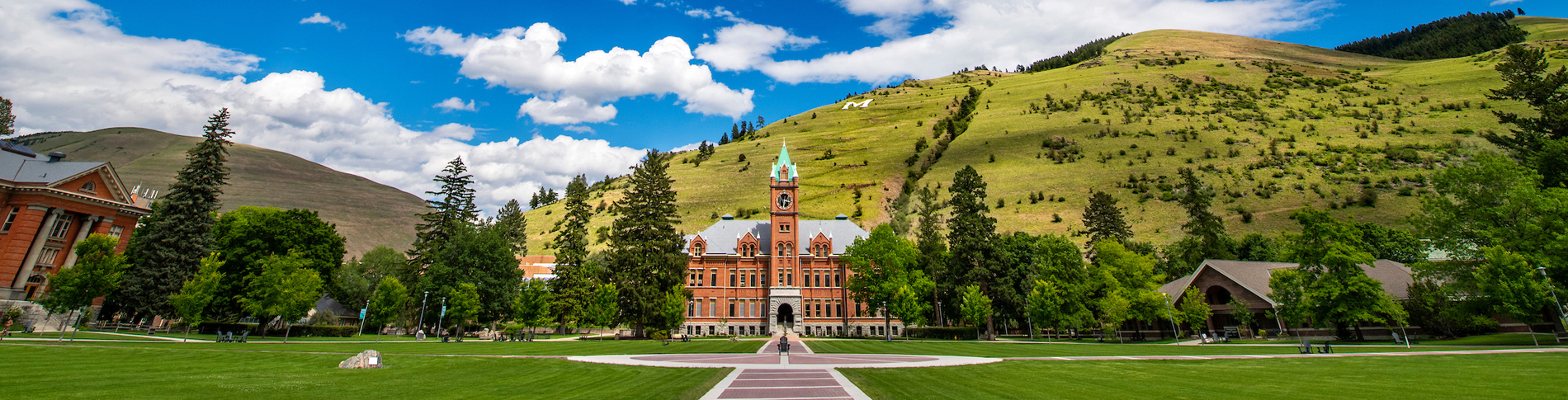
The University of Montana in Missoula is a public flagship university where the rugged outdoors meets academic rigor. Known for its strong programs in business, liberal arts, and natural resources—and a near-open admissions policy—UM attracts students who want big-sky thinking with a down-to-earth vibe. Football games and tailgates are campus sacraments, while the surrounding mountains and rivers offer a playground for hikers, skiers, and fly-fishers.
Admissions
UM is one of the least selective flagship universities in the U.S., with a 95.9% acceptance rate—practically open admissions for students meeting baseline requirements. The middle 50% of admitted students score between 1080–1280 on the SAT or 23–28 on the ACT, though alternatives like a 2.5 GPA or top-half class rank also qualify. Rolling admissions mean applications are reviewed year-round, with a $30 fee. The vibe is inclusive: UM explicitly seeks students who 'demonstrate academic promise' rather than chasing rankings through selectivity.
- Test-Optional: Though 75% of enrollees submit scores, alternatives exist
- Contact: Admissions office at 406-243-6266 or toll-free 800-462-8636
Sources
- Common Data Set and CSRDE - University of Montana
- Common Data Set | University of Montana
- [PDF] Common Data Set 2024-2025 - University of Montana
- [PDF] Common Data Set 2023-2024 - Montana State University
- Common Data Set: Home
- Data Requests - Institutional Research | University of Montana
- University of Montana SAT Scores and GPA
- Freshman Admission Requirements | University of Montana
- University of Montana Admissions - BigFuture College Search
- University of Montana SAT, ACT & GPA Requirements for Admissions