Loading…
← All schools
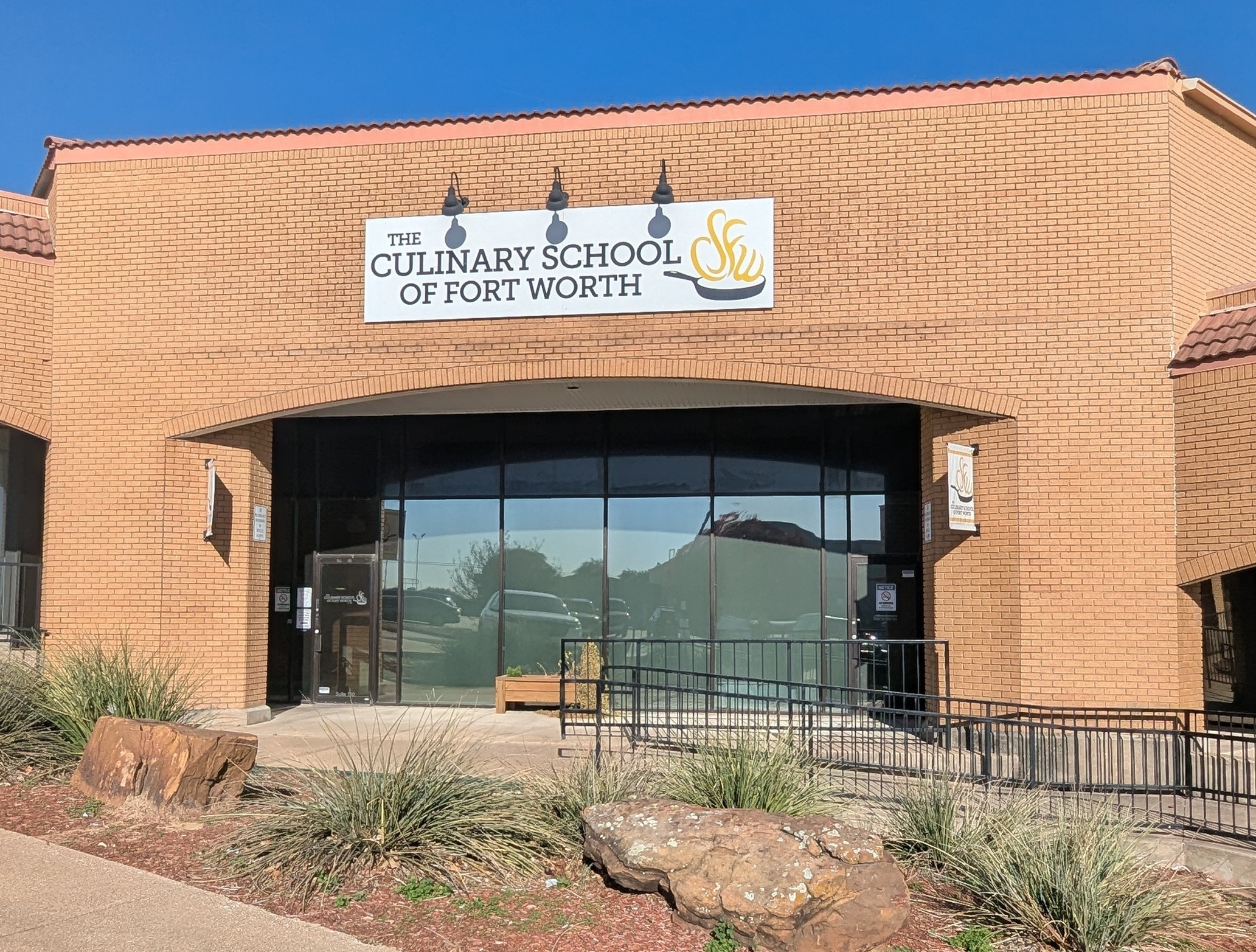
The Culinary School of Fort Worth
Fort Worth, TXprivate forprofitcsftw.edu
- Acceptance rateThe share of applicants a college admits in a given year. A 10% acceptance rate means it admits about 1 in 10 applicants.
- 78%
- Undergrad enrollment
- 92
- Net priceWhat a family actually pays after grants and scholarships are subtracted from the sticker price — usually far less than the published cost.
- $24,296
- Location
- Fort Worth, TX
- Gender Split
- 54% male, 46% female
- Program Length
- 9 months
- Acceptance Rate
- 63-100% (sources vary)
- Graduation Rate
- 82.4%
- Total Enrollment
- 69
- Job Placement Rate
- 79.5-85%
- Net Price After Aid
- $22,553
- Hands-on Kitchen Time
- 75%+
- Student-to-Faculty Ratio
- 17:1
- Median Earnings 1 Year Post-Grad
- $36,427
Quick answers
- What is the acceptance rate at The Culinary School of Fort Worth?
- The Culinary School of Fort Worth's acceptance rate is approximately 78% (Fort Worth, TX), based on the most recent figures we compiled from public and primary sources.
- How much does The Culinary School of Fort Worth cost?
- At The Culinary School of Fort Worth, the average net price (after aid) is about $24,296 per year. Actual cost varies with financial aid and residency.
- How many undergraduates attend The Culinary School of Fort Worth?
- The Culinary School of Fort Worth enrolls approximately 92 undergraduate students.
- Where is The Culinary School of Fort Worth located?
- The Culinary School of Fort Worth is located in Fort Worth, TX.
The Culinary School of Fort Worth is a hyper-focused, hands-on trade school where aspiring chefs train in a 72-seat restaurant classroom—think less lecture hall, more high-stakes kitchen. With a tiny cohort of 69 students (54% male, 46% female) and an open admissions policy, it delivers an 82% retention rate and 79.5% job placement through its intensive 9-month program where students spend 75% of their time wielding knives, not textbooks.
Admissions
This is not your typical cutthroat culinary institute—The Culinary School of Fort Worth maintains an open admissions policy, accepting virtually all applicants with a high school diploma or GED. Sources conflict on exact Acceptance rateThe share of applicants a college admits in a given year. A 10% acceptance rate means it admits about 1 in 10 applicants. (Niche reports 67%, BigFuture 63.21%, and CourseAdvisor/Tesbook claim 100%), but the school's 2024 cohort of 69 students came from just 89 applicants, suggesting minimal selectivity. The gender split leans slightly male (54%) in this intimate environment where the entire student body could fit in a commercial kitchen.
Sources
- The Culinary School of Fort Worth - Sallie
- Common Data Set: Home
- [PDF] common-data-set-current-year.pdf - Saint Vincent College
- The Culinary School of Fort Worth - Data USA
- How To Use a Common Data Set - The College Solution
- Decoding the Common Data Set What You Need to Know for Your ...
- The Culinary School of Fort Worth - Niche
- The Culinary School Of Fort Worth Admissions - BigFuture
- The Culinary School of Fort Worth Overview - CourseAdvisor.com
- The Culinary School Of Fort Worth Acceptance Rate, SAT, GPA ...