Loading…
← All schools
Talmudical Seminary Oholei Torah
Brooklyn, NYprivate nonprofitwww.tsot.edu/
- Acceptance rateThe share of applicants a college admits in a given year. A 10% acceptance rate means it admits about 1 in 10 applicants.
- 77%
- Undergrad enrollment
- 400
- Net priceWhat a family actually pays after grants and scholarships are subtracted from the sticker price — usually far less than the published cost.
- $10,755
- In-state tuition
- $8,750
- Out-of-state tuition
- $8,750
- Location
- Brooklyn, NY
- Net Price
- $13,535
- Total Cost
- $18,294
- Campus Setting
- Urban
- Retention Rate
- 54%
- Acceptance Rate
- 77-78%
- Graduation Rate
- 14%
- Institution Type
- Private, not-for-profit
- Single Major Offered
- Talmudic and Rabbinical Studies
- Religious Affiliation
- Orthodox Jewish (Chabad-Lubavitch)
Quick answers
- What is the acceptance rate at Talmudical Seminary Oholei Torah?
- Talmudical Seminary Oholei Torah's acceptance rate is approximately 77% (Brooklyn, NY), based on the most recent figures we compiled from public and primary sources.
- How much does Talmudical Seminary Oholei Torah cost?
- At Talmudical Seminary Oholei Torah, the average net price (after aid) is about $10,755 per year. Actual cost varies with financial aid and residency.
- How many undergraduates attend Talmudical Seminary Oholei Torah?
- Talmudical Seminary Oholei Torah enrolls approximately 400 undergraduate students.
- Where is Talmudical Seminary Oholei Torah located?
- Talmudical Seminary Oholei Torah is located in Brooklyn, NY.
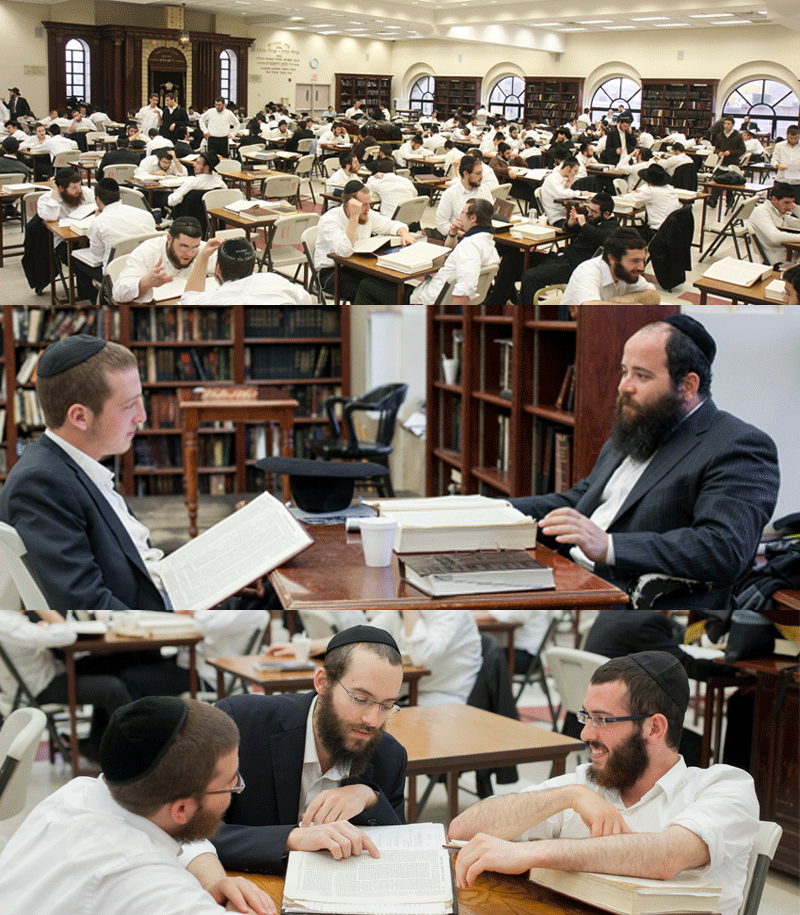
Talmudical Seminary Oholei Torah is a deeply traditional Orthodox Jewish institution in Brooklyn, singularly focused on Talmudic and rabbinical studies. With an acceptance rate hovering around 77-78%, it attracts students committed to intensive religious training within the Chabad-Lubavitch community. The seminary operates with minimal secular coursework, prioritizing mastery of Jewish texts above all else.
Admissions
Admissions at Talmudical Seminary Oholei Torah are moderately selective, with Acceptance rateThe share of applicants a college admits in a given year. A 10% acceptance rate means it admits about 1 in 10 applicants. ranging from 77% to 78% according to multiple sources. The school does not require SAT or ACT scores, focusing instead on applicants' backgrounds in traditional Jewish studies. Prospective students must have a high school diploma or GED, and the admissions process is handled directly by Rabbi E. Piekarski. While some sources describe admissions as 'somewhat competitive,' others note the school's high acceptance rate makes it accessible to most applicants from the Orthodox Jewish community.
Sources
- Talmudical Seminary Oholei Torah - Sallie
- Talmudical Seminary Oholei Torah - College Scorecard
- Talmudical Seminary Oholei Torah Tuition - CollegeData
- Talmudical Seminary Oholei Torah - Niche
- Talmudical Seminary Oholei Torah: Tabular Data - Encyclopedia.com
- Talmudical Seminary Oholei Torah - Data USA
- Talmudical Seminary Oholei Torah Requirements for Admission
- Talmudical Seminary Oholei Torah: 2026 Requirements, Scores ...
- Talmudical Seminary Oholei Torah - Tuition and Acceptance Rate