Loading…
← All schools
Stonehill College
Easton, MAprivate nonprofitstonehill.edu
- Acceptance rateThe share of applicants a college admits in a given year. A 10% acceptance rate means it admits about 1 in 10 applicants.
- 66%
- Undergrad enrollment
- 2,528
- Net priceWhat a family actually pays after grants and scholarships are subtracted from the sticker price — usually far less than the published cost.
- $33,016
- In-state tuition
- $57,490
- Out-of-state tuition
- $57,490
- Avg GPA
- 3.3
- Avg SAT
- 1130–1280
- Location
- Easton, MA
- Top Majors
- Marketing, Psychology, Business
- Sticker Price
- $76,835
- Acceptance Rate
- 66-72%
- Graduation Rate
- 76%
- On-Campus Housing
- 90%
- Undergrad Enrollment
- 2,539
- Avg Net Price After Aid
- $31,134
- Median Early-Career Earnings
- $70,500
Quick answers
- What is the acceptance rate at Stonehill College?
- Stonehill College's acceptance rate is approximately 66% (Easton, MA), based on the most recent figures we compiled from public and primary sources.
- How much does Stonehill College cost?
- At Stonehill College, the average net price (after aid) is about $33,016 per year. Actual cost varies with financial aid and residency.
- How many undergraduates attend Stonehill College?
- Stonehill College enrolls approximately 2,528 undergraduate students.
- Where is Stonehill College located?
- Stonehill College is located in Easton, MA.
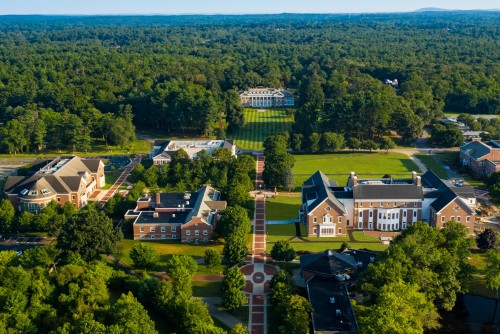
Stonehill College is a Catholic liberal arts school in Easton, Massachusetts, where 90% of students live on a 375-acre suburban campus. Known for strong business and psychology programs, it combines rigorous academics with a tight-knit community—though its dry campus policies curb traditional party culture. Its graduates earn notably high early-career salaries, ranking in the top 14% nationally for earnings potential.
Admissions
Stonehill admits about 66-72% of applicants, making it moderately selective. The middle 50% of admitted students score between 1130–1280 on the SAT or 22–27 on the ACT, with an average GPA of 3.3. The freshman class is predominantly white (76%), with smaller representations of Hispanic (8.7%), Black (6.7%), and Asian (2.6%) students. Applications are due by February 15 for regular decision.
- Early Action: Offered, though Acceptance rateThe share of applicants a college admits in a given year. A 10% acceptance rate means it admits about 1 in 10 applicants. aren't significantly higher.
- Waitlist: Some admitted students come from the waitlist, per Common Data Set (CDS)A standardized report most colleges publish each year with admissions, test-score, and financial-aid figures, making schools easier to compare. reports.
Sources
- Common Data Set | Stonehill College
- First-Year Admission Standards | Stonehill College
- Stonehill College - DFR Report PDF - Department of Education
- [PDF] Stonehill College Common Data Set 2019-2020
- Common Data Set Repository - College Transitions
- Stonehill College Overview - CollegeData
- Stonehill College SAT Scores and GPA - PrepScholar
- Stonehill College Admissions - BigFuture College Search
- Stonehill College Acceptance Rate
- Stonehill College: Acceptance Rate, SAT/ACT Scores, GPA