Loading…
← All schools
Spring Hill College
Mobile, ALprivate nonprofitshc.edu
- Acceptance rateThe share of applicants a college admits in a given year. A 10% acceptance rate means it admits about 1 in 10 applicants.
- 77%
- Undergrad enrollment
- 782
- Net priceWhat a family actually pays after grants and scholarships are subtracted from the sticker price — usually far less than the published cost.
- $20,449
- In-state tuition
- $24,054
- Out-of-state tuition
- $24,054
- Avg. Net Price
- $20,271
- Acceptance Rate
- 75%
- Career Outcomes
- 92%
- 4-Year Grad Rate
- 52-56%
- Jesuit Tradition
- Since 1830
- Signature Majors
- Business, Health Professions, Pre-Law
- On-Campus Housing
- 74%
- New Programs (2025)
- AI, Data Science, Digital Comm
Quick answers
- What is the acceptance rate at Spring Hill College?
- Spring Hill College's acceptance rate is approximately 77% (Mobile, AL), based on the most recent figures we compiled from public and primary sources.
- How much does Spring Hill College cost?
- At Spring Hill College, the average net price (after aid) is about $20,449 per year. Actual cost varies with financial aid and residency.
- How many undergraduates attend Spring Hill College?
- Spring Hill College enrolls approximately 782 undergraduate students.
- Where is Spring Hill College located?
- Spring Hill College is located in Mobile, AL.
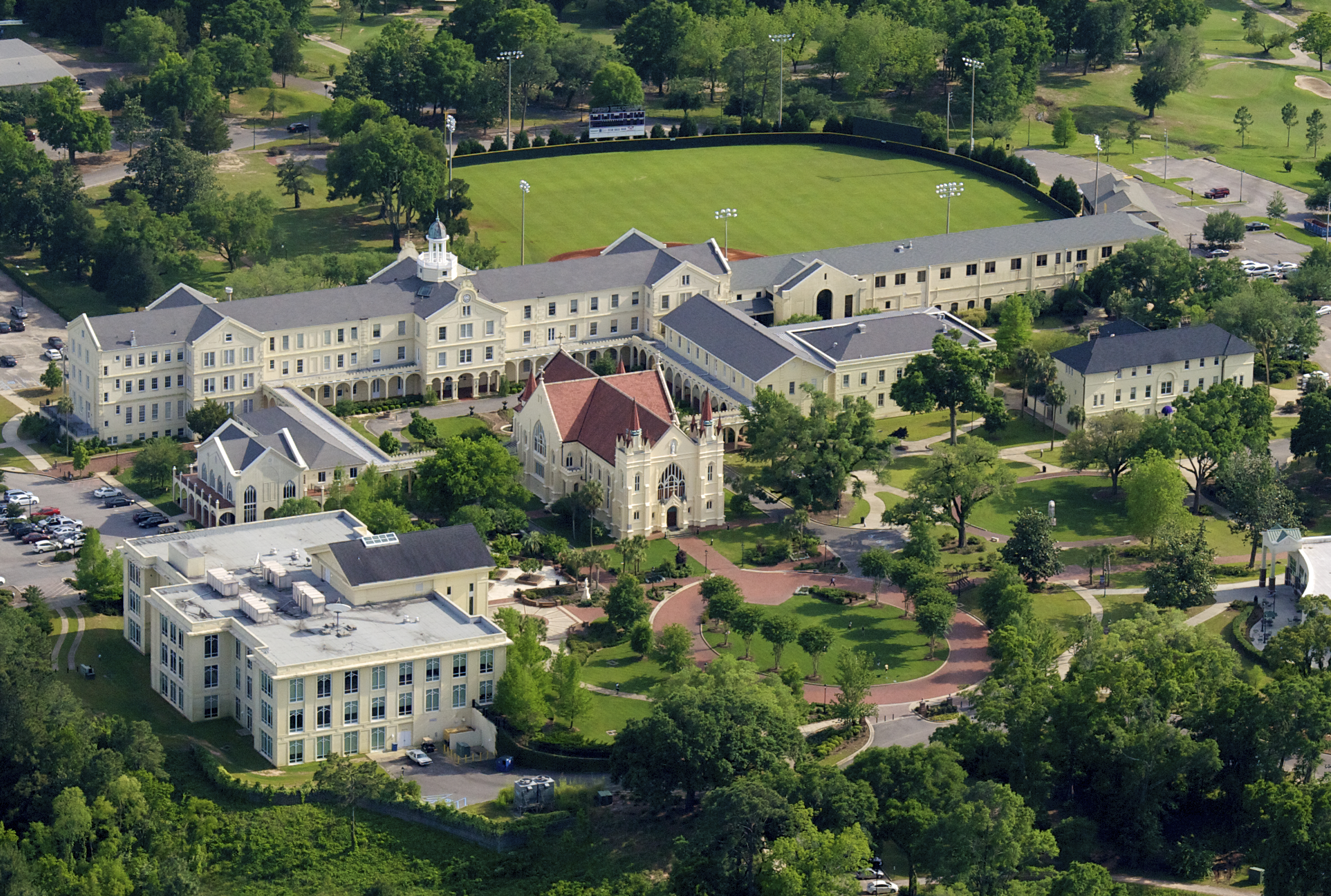
Spring Hill College, Alabama's oldest Catholic college (founded 1830), blends Jesuit rigor with Deep South charm. With a 75% acceptance rate and strong outcomes (92% employed/grad school-bound), this Mobile campus thrives on tight-knit community—74% live on campus—and punches above its weight in business, health professions, and new AI/digital programs launching in 2025.
Admissions
Spring Hill operates with moderate selectivity, admitting about 75% of applicants—though admitted students typically post ACT scores between 17-24 or SAT scores of 930-1,340. The college emphasizes Holistic admissionsA review that weighs the whole applicant — grades, essays, activities, and context — rather than relying on test scores and GPA alone., requiring a minimum 2.5 GPA but no strict test cutoffs. Notably, 68% of first-years receive need-based aid, with average awards topping $21,335—making it accessible despite a $44,658 sticker price.
Sources
- [PDF] 2024-2025-Bulletin-of-Information-7.24-1.pdf - Spring Hill College
- [PDF] Common Data Set 2024-2025 - Springfield College
- Spring Hill College Overview - CollegeData
- Spring Hill College - DFR Report HTML - Department of Education
- Common Data Set: Home
- The Common Data Set: What It Is & How to Use It In College ...
- Spring Hill College SAT Scores and GPA - PrepScholar
- Spring Hill College Admissions - U.S. News & World Report
- Spring Hill College Admissions - BigFuture
- Spring Hill College - Tuition and Acceptance Rate - Peterson's