Loading…
← All schools
Spring Arbor University
Spring Arbor, MIprivate nonprofitspringarbor.edu
- Acceptance rateThe share of applicants a college admits in a given year. A 10% acceptance rate means it admits about 1 in 10 applicants.
- 52%
- SAT 25th-75th percentileThe middle range of SAT scores for admitted students: a quarter scored below the low number and a quarter scored above the high number.
- 1010–1240
- Undergrad enrollment
- 1,010
- Net priceWhat a family actually pays after grants and scholarships are subtracted from the sticker price — usually far less than the published cost.
- $19,353
- In-state tuition
- $34,014
- Out-of-state tuition
- $34,014
- Location
- Spring Arbor, MI
- Top Majors
- Nursing, Business, Ministry
- Avg Class Size
- 17 students
- Acceptance Rate
- 37-52% (sources vary)
- On-Campus Housing
- 71% of students
- Net Price After Aid
- $21,720 (avg)
- 6-Year Graduation Rate
- 60%
Quick answers
- What is the acceptance rate at Spring Arbor University?
- Spring Arbor University's acceptance rate is approximately 52% (Spring Arbor, MI), based on the most recent figures we compiled from public and primary sources.
- What SAT score do you need for Spring Arbor University?
- Admitted students at Spring Arbor University typically score 1010–1240 on the SAT (the middle-50% range). Scores outside this band are still admitted, especially with strong applications.
- How much does Spring Arbor University cost?
- At Spring Arbor University, the average net price (after aid) is about $19,353 per year. Actual cost varies with financial aid and residency.
- How many undergraduates attend Spring Arbor University?
- Spring Arbor University enrolls approximately 1,010 undergraduate students.
- Where is Spring Arbor University located?
- Spring Arbor University is located in Spring Arbor, MI.
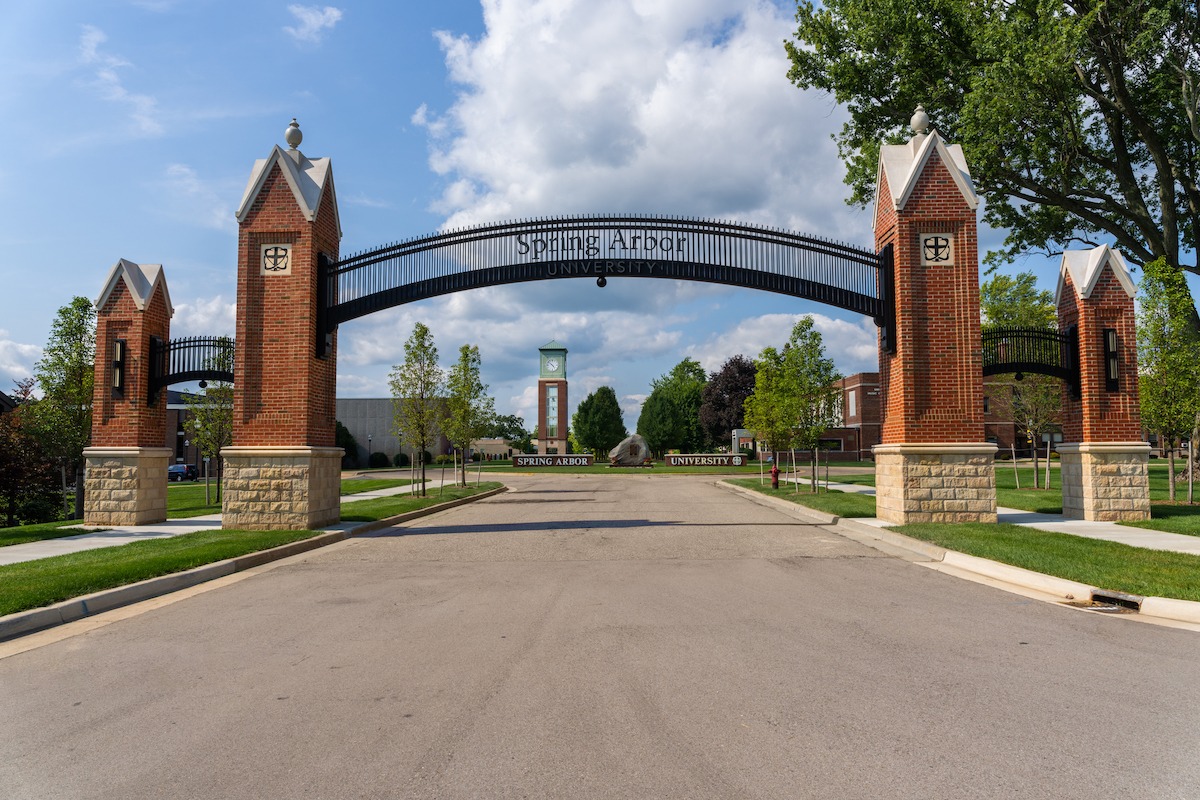
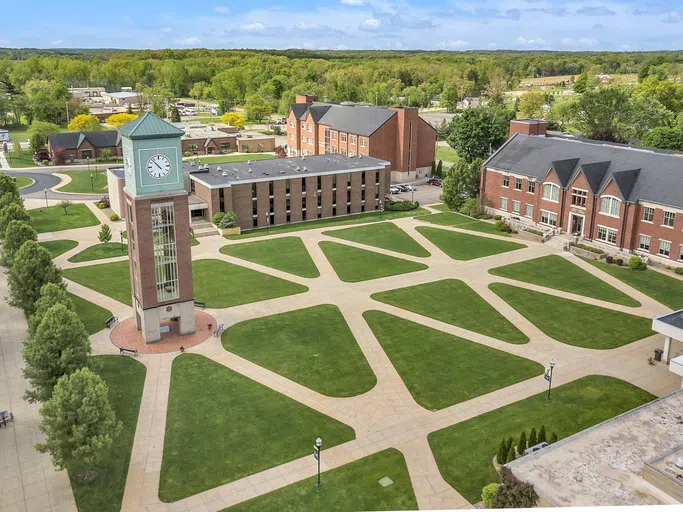
Spring Arbor University is a small, fiercely Christian Free Methodist university in rural Michigan where faith infuses everything from the 17-student average class size to the 'Village' dorm lounges designed for Bible study. With a 37-52% acceptance rate (sources vary wildly) and mid-range SAT scores (935-1165), SAU attracts students drawn to its 70+ majors—especially nursing, business, and ministry—and its 98% positive student outcomes rate. The vibe is wholesome but not austere: 71% of students live on campus in tight-knit residential communities, and the school has ranked as a top-tier Midwestern regional university for 16 straight years.
Admissions
Spring Arbor's admissions landscape is a study in contradictions: Acceptance rateThe share of applicants a college admits in a given year. A 10% acceptance rate means it admits about 1 in 10 applicants. range from 37% (PrepScholar, Testbook) to 52% (US News) to a baffling 65.7% (AcceptanceRate.com's 2020 data). The middle 50% SAT range falls between 935-1165 (BigFuture, Testbook), with ACT scores clustering around 20-26. Applications are rolling with an August 1 deadline, though the Common Data Set (CDS)A standardized report most colleges publish each year with admissions, test-score, and financial-aid figures, making schools easier to compare. suggests flexibility. Notably, SAU's own site directs applicants to external CDS resources rather than publishing clear benchmarks—a transparency gap for a school that otherwise emphasizes personalized attention.
Sources
- Common Data Set - Office of Budget and Planning
- Common Data Set: Home
- [PDF] Common Data Set 2024-2025 - University of Michigan-Dearborn
- Student Right to Know - Spring Arbor University
- Common Data Set - Institutional Research, Assessment, and Analytics
- Common Data Set Repository - College Transitions
- Spring Arbor University Admissions - BigFuture College Search
- Spring Arbor University SAT Scores and GPA - PrepScholar
- Spring Arbor University Admissions - US News Best Colleges
- Spring Arbor University Tuition, Acceptance Rate, & Academics - Sallie