Loading…
← All schools
Seton Hall University
South Orange, NJprivate nonprofitshu.edu
- Acceptance rateThe share of applicants a college admits in a given year. A 10% acceptance rate means it admits about 1 in 10 applicants.
- 73%
- SAT 25th-75th percentileThe middle range of SAT scores for admitted students: a quarter scored below the low number and a quarter scored above the high number.
- 1220–1390
- Undergrad enrollment
- 6,036
- Net priceWhat a family actually pays after grants and scholarships are subtracted from the sticker price — usually far less than the published cost.
- $31,446
- In-state tuition
- $53,170
- Out-of-state tuition
- $53,170
- Avg GPA
- 3.68
- Campus Size
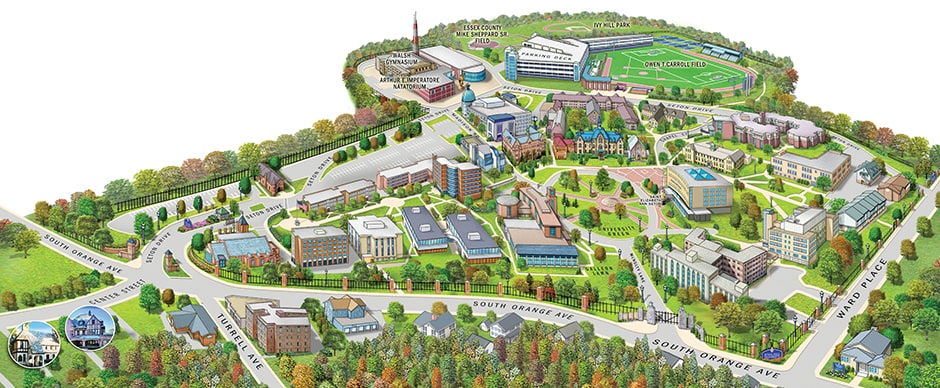
- 58 acres
- Acceptance Rate
- 73%
- 4-Year Grad Rate
- 71%
- Notable Programs
- Business, Diplomacy, Health Sciences
- Avg SAT (Middle 50%)
- 1240–1380
- Undergrad Enrollment
- ~6,000
- Students Receiving Aid
- 98%
- Avg Institutional Grant
- $28,399
- Median Earnings (Post-Grad)
- $76,919
Quick answers
- What is the acceptance rate at Seton Hall University?
- Seton Hall University's acceptance rate is approximately 73% (South Orange, NJ), based on the most recent figures we compiled from public and primary sources.
- What SAT score do you need for Seton Hall University?
- Admitted students at Seton Hall University typically score 1220–1390 on the SAT (the middle-50% range). Scores outside this band are still admitted, especially with strong applications.
- How much does Seton Hall University cost?
- At Seton Hall University, the average net price (after aid) is about $31,446 per year. Actual cost varies with financial aid and residency.
- How many undergraduates attend Seton Hall University?
- Seton Hall University enrolls approximately 6,036 undergraduate students.
- Where is Seton Hall University located?
- Seton Hall University is located in South Orange, NJ.
Seton Hall University, a Catholic institution in suburban New Jersey, combines mid-sized intimacy (10,000 students) with proximity to New York City’s opportunities. Known for strong pre-professional programs—especially business, diplomacy, and health sciences—it boasts a 73% acceptance rate but delivers standout outcomes: 97% career success rates and median earnings ($76,919) well above national averages. Its tight-knit campus culture and generous aid (98% of students receive scholarships) make it a practical choice for career-focused students.
Admissions
Seton Hall’s admissions are moderately selective, with a 73% acceptance rate (18,152 admits from 24,776 applications in 2024). The middle 50% of admitted students score between 1240–1380 on the SAT or 25–29 on the ACT, with an average high school GPA of 3.68 (B+). Notably, the university recommends applicants aim for at least a 1200 SAT or 25 ACT to be competitive. While Test-optionalA policy where you choose whether to submit SAT or ACT scores. If you don't, the rest of your application carries more weight., 50% of admitted students submitted scores. The five-year trend shows steady enrollment, with most freshmen arriving with GPAs above 3.5.
Sources
- Reports - Seton Hall University
- [PDF] 2022-23 Data Trends - Seton Hall University
- Seton Hall University - IPEDS - Department of Education
- Seton Hall University Overview - CollegeData
- Common Data Set Repository - College Transitions
- Seton Hall University | Data USA
- Counselor Handbook - Seton Hall University
- Seton Hall University Admissions - US News Best Colleges
- Seton Hall University Admissions - BigFuture College Search
- How to Get In: Seton Hall SAT Scores and GPA - PrepScholar