Loading…
← All schools
Saint Francis University
Loretto, PAprivate nonprofitwww.francis.edu/
- Acceptance rateThe share of applicants a college admits in a given year. A 10% acceptance rate means it admits about 1 in 10 applicants.
- 77%
- SAT 25th-75th percentileThe middle range of SAT scores for admitted students: a quarter scored below the low number and a quarter scored above the high number.
- 1050–1230
- Undergrad enrollment
- 1,557
- Net priceWhat a family actually pays after grants and scholarships are subtracted from the sticker price — usually far less than the published cost.
- $23,526
- In-state tuition
- $44,000
- Out-of-state tuition
- $44,000
- Location
- Loretto, PA
- Average GPA
- 3.69
- Campus Housing
- 66% of students
- Middle 50% ACT
- 20-26
- Middle 50% SAT
- 1070-1220
- Acceptance Rate
- 76-80%
- Notable Rankings
- #132 for Graduate Salaries, #107 Social Mobility (WSJ 2026)
- Total Annual Cost
Quick answers
- What is the acceptance rate at Saint Francis University?
- Saint Francis University's acceptance rate is approximately 77% (Loretto, PA), based on the most recent figures we compiled from public and primary sources.
- What SAT score do you need for Saint Francis University?
- Admitted students at Saint Francis University typically score 1050–1230 on the SAT (the middle-50% range). Scores outside this band are still admitted, especially with strong applications.
- How much does Saint Francis University cost?
- At Saint Francis University, the average net price (after aid) is about $23,526 per year. Actual cost varies with financial aid and residency.
- How many undergraduates attend Saint Francis University?
- Saint Francis University enrolls approximately 1,557 undergraduate students.
- Where is Saint Francis University located?
- Saint Francis University is located in Loretto, PA.
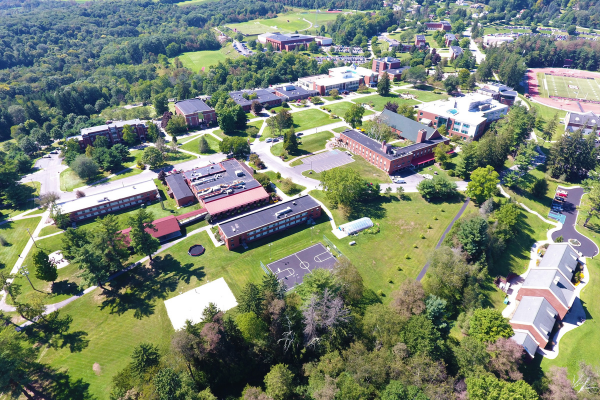
Saint Francis University, a small Catholic institution in rural Loretto, Pennsylvania, blends career-focused academics with a tight-knit community vibe. Known for strong outcomes in healthcare fields like physician assistant studies and nursing, it offers a moderately selective admissions process and a residential campus where two-thirds of students live. The university punches above its weight in social mobility and graduate salaries, delivering Franciscan values with pragmatic professional preparation.
Admissions
Saint Francis University maintains a moderately selective admissions process with an Acceptance rateThe share of applicants a college admits in a given year. A 10% acceptance rate means it admits about 1 in 10 applicants. hovering between 74-80% across recent cycles. The middle 50% of admitted students typically post SAT scores between 1070-1220 or ACT scores of 20-26, with an average high school GPA of 3.69. Notably, the university has adopted a Test-optionalA policy where you choose whether to submit SAT or ACT scores. If you don't, the rest of your application carries more weight. policy for most undergraduate programs, though some accelerated tracks still require standardized test scores. About 38% of applicants voluntarily submit SAT scores. The institution received 2,623 applications for Fall 2024, admitting approximately 2,015 students.
Sources
- Institutional Research | Saint Francis University
- Saint Francis University Overview - CollegeData
- Flash Facts, Rankings, and More | Saint Francis University
- Saint Stats - University of St. Francis
- Saint Francis University - DFR Report HTML
- Saint Francis University | Data USA
- St. Francis University Admissions - BigFuture College Search
- Saint Francis University Requirements for Admission - PrepScholar
- Saint Francis University Admissions & Acceptance - Niche
- Apply to SFU - Admissions - Saint Francis University