Loading…
← All schools
Reed College
Portland, ORprivate nonprofitreed.edu
- Acceptance rateThe share of applicants a college admits in a given year. A 10% acceptance rate means it admits about 1 in 10 applicants.
- 25%
- SAT 25th-75th percentileThe middle range of SAT scores for admitted students: a quarter scored below the low number and a quarter scored above the high number.
- 1290–1520
- Undergrad enrollment
- 1,320
- Net priceWhat a family actually pays after grants and scholarships are subtracted from the sticker price — usually far less than the published cost.
- $33,013
- In-state tuition
- $69,350
- Out-of-state tuition
- $69,350
- Campus Size
- 116 acres (including 28-acre canyon)
- Acceptance Rate
- 23-24.6%
- Median SAT Range
- 1310–1490
- Notable Tradition
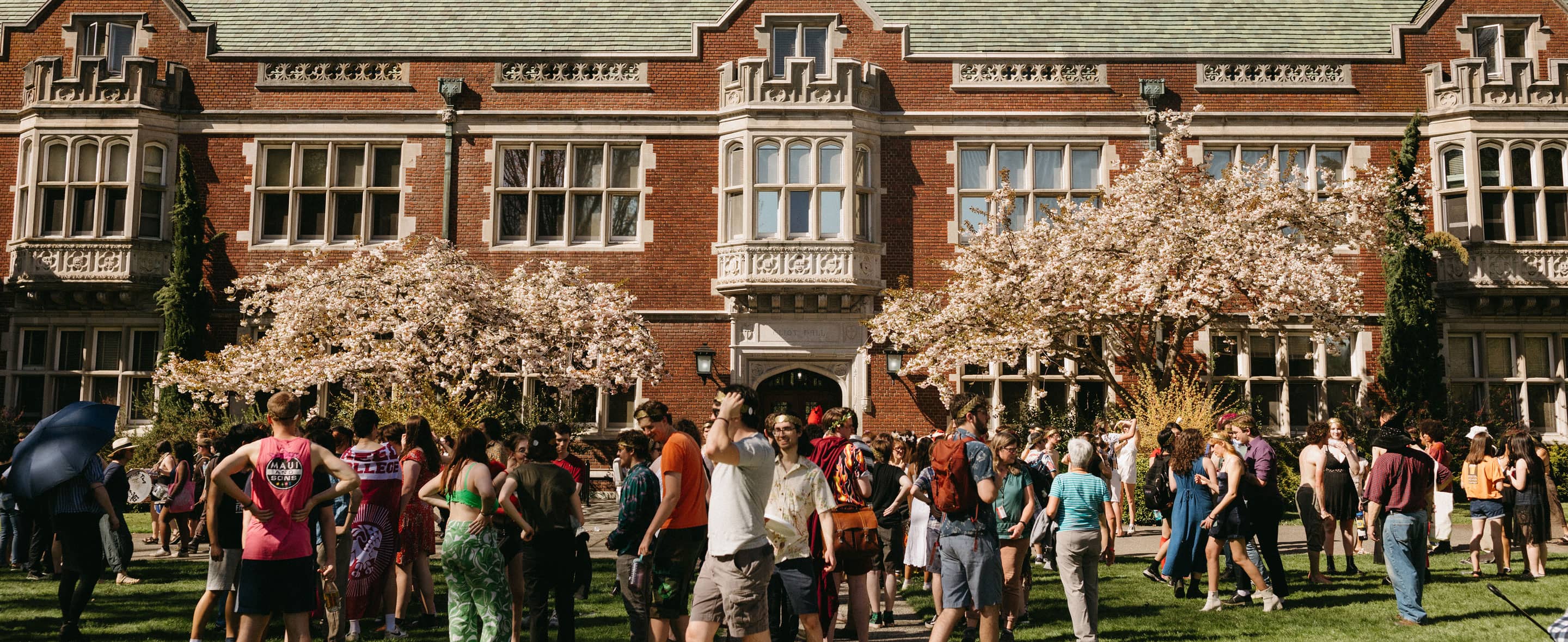
- Renn Fayre (medieval festival)
- Residential Students
- 74%
- Student-Faculty Ratio
- 9:1
- 4-Year Graduation Rate
- 59%
- 6-Year Graduation Rate
- 80%
- Percentage Receiving Aid
- 61%
- Average Financial Aid Package
- $59,053
Quick answers
- What is the acceptance rate at Reed College?
- Reed College's acceptance rate is approximately 25% (Portland, OR), based on the most recent figures we compiled from public and primary sources.
- What SAT score do you need for Reed College?
- Admitted students at Reed College typically score 1290–1520 on the SAT (the middle-50% range). Scores outside this band are still admitted, especially with strong applications.
- How much does Reed College cost?
- At Reed College, the average net price (after aid) is about $33,013 per year. Actual cost varies with financial aid and residency.
- How many undergraduates attend Reed College?
- Reed College enrolls approximately 1,320 undergraduate students.
- Where is Reed College located?
- Reed College is located in Portland, OR.
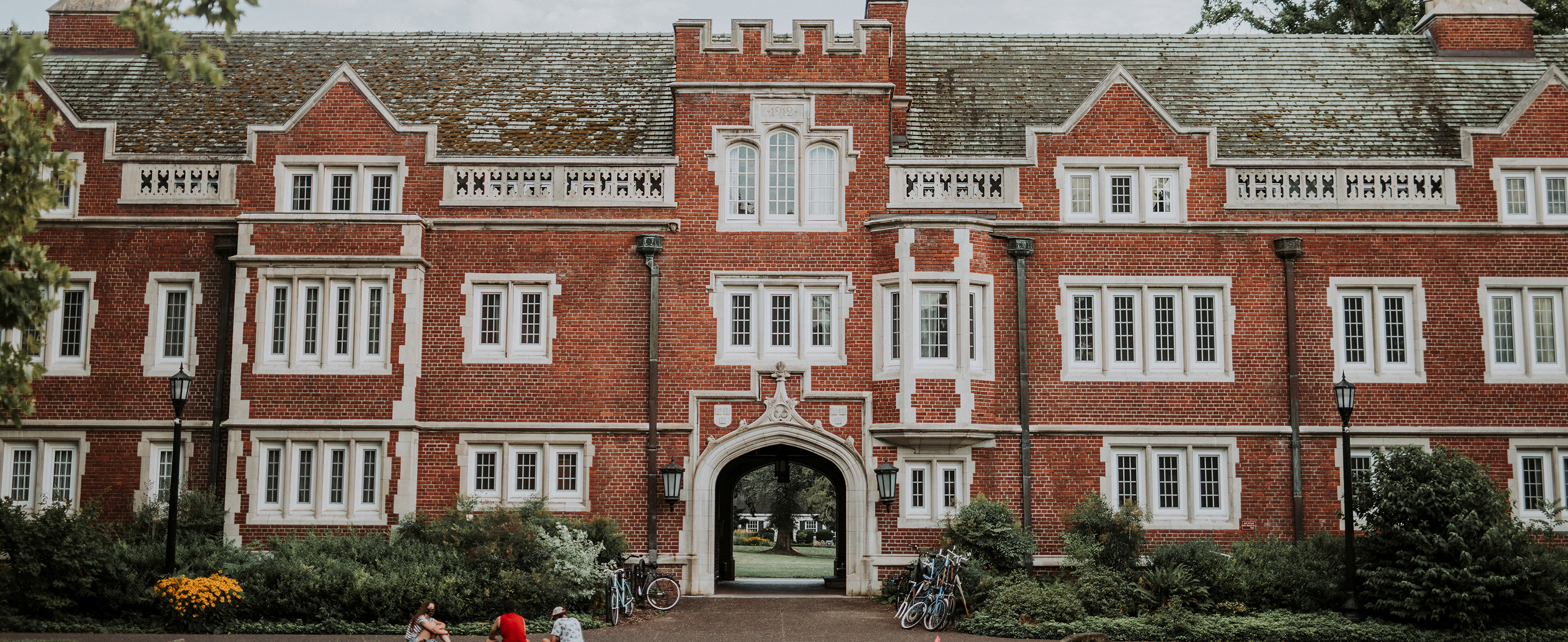
Reed College is a fiercely intellectual, unconventional liberal arts college where students dive deep into academic rigor—most notably through its mandatory senior thesis—amid a quirky, tight-knit community. With a wooded canyon cutting through campus and a reputation for producing PhDs at one of the highest rates in the country, Reed attracts self-directed learners who thrive in its intense, discussion-heavy classrooms and proudly nonconformist culture.
Admissions
Reed is highly selective, with a 23-24.6% Acceptance rateThe share of applicants a college admits in a given year. A 10% acceptance rate means it admits about 1 in 10 applicants. (9,606 applicants for Fall 2025, 2,321 accepted). Nearly half of admitted students submit SAT scores (middle 50% range: 1310–1490), though Test-optionalA policy where you choose whether to submit SAT or ACT scores. If you don't, the rest of your application carries more weight. policies apply. The student body skews academically elite: 74% ranked in the top fifth of their high school class, and 51% in the top tenth. Most come from public high schools (58%), with 25% from private institutions. The admissions process emphasizes intellectual curiosity over extracurricular polish—fitting for a school where the academic grind is the main extracurricular.
Sources
- Reed College Common Data Set - Institutional Research
- Reed College 2024-25 Common Data Set - Institutional Research
- Reed College 2023-24 Common Data Set - Institutional Research
- [PDF] Reed College Common Data Set 2024-25
- Common Data Set: Home
- [PDF] Reed College Common Data Set 2023-2024
- Admission Statistics - Institutional Research - Reed College
- Reed College SAT Scores and GPA
- Reed College Admissions & Acceptance - Niche
- Reed College Admissions - BigFuture College Search
- Reed College - Tuition and Acceptance Rate - Peterson's
- First-year Applicants - Admission & Aid - Reed College