Loading…
← All schools
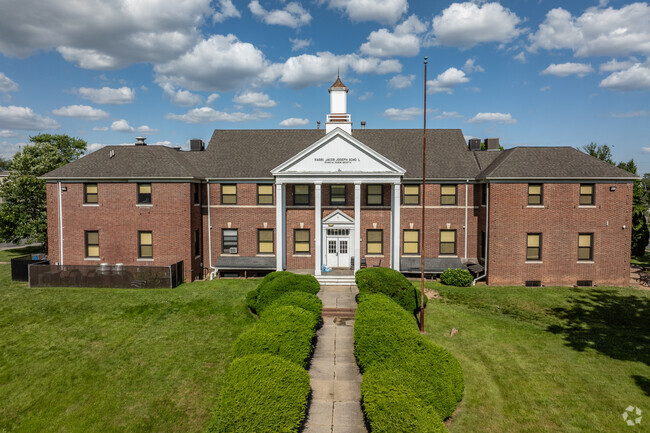
Rabbi Jacob Joseph School
Edison, NJprivate nonprofitrabbijacobjoseph.com
- Acceptance rateThe share of applicants a college admits in a given year. A 10% acceptance rate means it admits about 1 in 10 applicants.
- 92%
- Undergrad enrollment
- 115
- Net priceWhat a family actually pays after grants and scholarships are subtracted from the sticker price — usually far less than the published cost.
- $8,389
- In-state tuition
- $12,700
- Out-of-state tuition
- $12,700
- Male Students
- 100%
- Annual Tuition
- $11,950
- White Students
- 95.8%
- Acceptance Rate
- 83-92%
- Undergrad Enrollment
- ~96
- Single Degree Offered
- Talmudic Studies
- Student-Teacher Ratio
- 7:1 (Staten Island) to 21:1 (Edison)
- 6-Year Graduation Rate
- 3.6-4%
Quick answers
- What is the acceptance rate at Rabbi Jacob Joseph School?
- Rabbi Jacob Joseph School's acceptance rate is approximately 92% (Edison, NJ), based on the most recent figures we compiled from public and primary sources.
- How much does Rabbi Jacob Joseph School cost?
- At Rabbi Jacob Joseph School, the average net price (after aid) is about $8,389 per year. Actual cost varies with financial aid and residency.
- How many undergraduates attend Rabbi Jacob Joseph School?
- Rabbi Jacob Joseph School enrolls approximately 115 undergraduate students.
- Where is Rabbi Jacob Joseph School located?
- Rabbi Jacob Joseph School is located in Edison, NJ.
Rabbi Jacob Joseph School is a small, Orthodox Jewish institution in Edison, NJ, with a singular focus on Talmudic studies and religious training. With an acceptance rate hovering around 90%, it attracts a tight-knit, almost entirely male student body (95.8% white) and boasts a 100% college attendance rate post-graduation. Its academic rigor is matched by its financial accessibility, with tuition under $12K and robust aid options.
Admissions
Getting into Rabbi Jacob Joseph School isn't the bloodsport of Ivy League admissions—with Acceptance rateThe share of applicants a college admits in a given year. A 10% acceptance rate means it admits about 1 in 10 applicants. ranging from 83% to 92% across sources, it's among the most accessible US higher ed institutions. The school saw just 36 undergraduate applications in 2024 (a 16.1% annual increase), admitting 33 of them according to one dataset. Notably, the student body is almost exclusively male (100% in Fall 2021 data) and overwhelmingly white (95.8%). No application fee and Test-optionalA policy where you choose whether to submit SAT or ACT scores. If you don't, the rest of your application carries more weight. policies lower barriers further.
Sources
- Rabbi Jacob Joseph School - Data USA
- Rabbi Jacob Joseph School Tuition, Acceptance Rate, & Academics
- Rabbi Jacob Joseph School: Acceptance Rate, Tuition & Stats (2026)
- Rabbi Jacob Joseph School Majors and Degrees - CollegeData
- Rabbi Jacob Joseph School — Acceptance Rate, Costs ...
- Rabbi Jacob Joseph School | Instudi
- Rabbi Jacob Joseph School - Adult Education - Niche
- Rabbi Jacob Joseph School Acceptance Rates & Admissions Statistics
- Rabbi Jacob Joseph School [Ranking 2026 + Acceptance Rate]
- Rabbi Jacob Joseph School - Admissions - MeetYourClass