Loading…
← All schools
Pennsylvania State University-Penn State Wilkes-Barre
Dallas, PApublicwilkesbarre.psu.edu
- Acceptance rateThe share of applicants a college admits in a given year. A 10% acceptance rate means it admits about 1 in 10 applicants.
- 97%
- SAT 25th-75th percentileThe middle range of SAT scores for admitted students: a quarter scored below the low number and a quarter scored above the high number.
- 1090–1330
- Undergrad enrollment
- 313
- Net priceWhat a family actually pays after grants and scholarships are subtracted from the sticker price — usually far less than the published cost.
- $16,448
- In-state tuition
- $14,280
- Out-of-state tuition
- $24,006
- Average ACT
- 24
- Average GPA
- 3.4
- Average SAT
- 1075
- Campus Setting
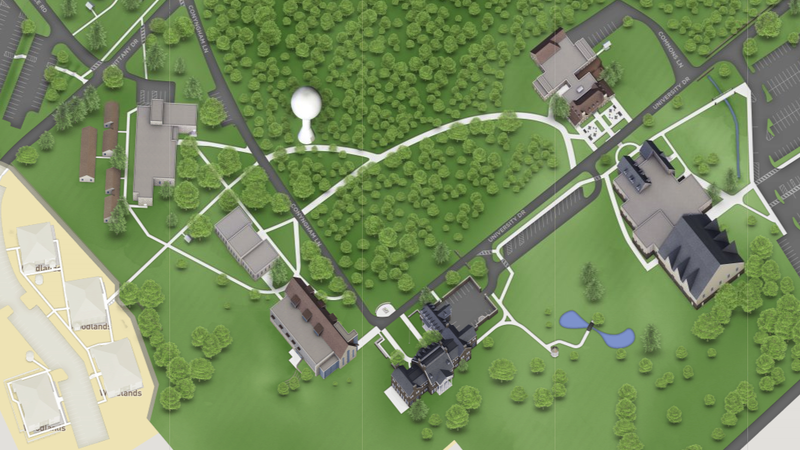
- Suburban (58 acres)
- Acceptance Rate
- 97%
- Graduation Rate
- 27%
- Average Net Price
- $16,275
- Undergrad Enrollment
Quick answers
- What is the acceptance rate at Pennsylvania State University-Penn State Wilkes-Barre?
- Pennsylvania State University-Penn State Wilkes-Barre's acceptance rate is approximately 97% (Dallas, PA), based on the most recent figures we compiled from public and primary sources.
- What SAT score do you need for Pennsylvania State University-Penn State Wilkes-Barre?
- Admitted students at Pennsylvania State University-Penn State Wilkes-Barre typically score 1090–1330 on the SAT (the middle-50% range). Scores outside this band are still admitted, especially with strong applications.
- How much does Pennsylvania State University-Penn State Wilkes-Barre cost?
- At Pennsylvania State University-Penn State Wilkes-Barre, the average net price (after aid) is about $16,448 per year. Actual cost varies with financial aid and residency.
- How many undergraduates attend Pennsylvania State University-Penn State Wilkes-Barre?
- Pennsylvania State University-Penn State Wilkes-Barre enrolls approximately 313 undergraduate students.
- Where is Pennsylvania State University-Penn State Wilkes-Barre located?
- Pennsylvania State University-Penn State Wilkes-Barre is located in Dallas, PA.
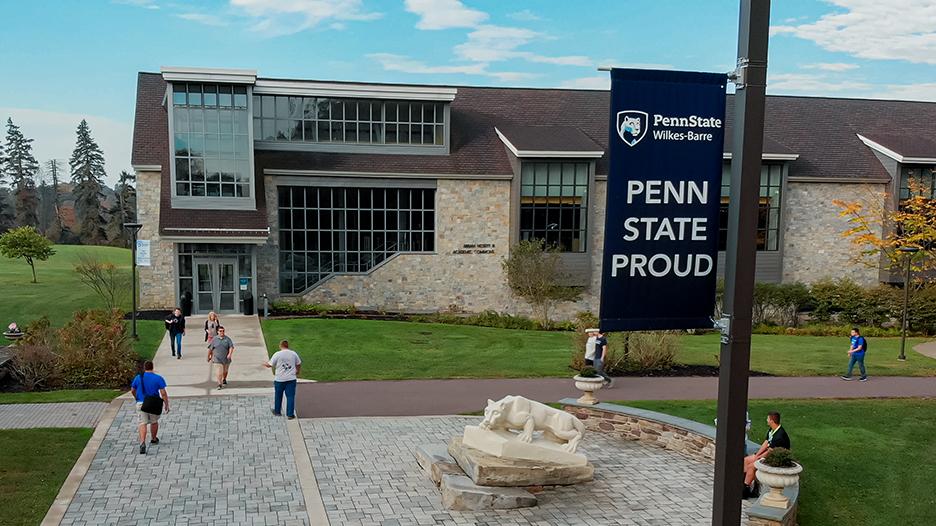
Penn State Wilkes-Barre is a small, accessible branch campus of Pennsylvania State University, offering a tight-knit community with the resources of a major research university. With an acceptance rate hovering around 97%, it serves as a gateway for students who may not meet the more selective criteria of University Park, while still providing pathways to Penn State degrees in a scenic suburban setting. The campus is known for its intimate 10:1 student-faculty ratio and strong emphasis on hands-on learning, though its 27% graduation rate reflects the challenges some students face in persisting to degree completion.
Admissions
Penn State Wilkes-Barre stands out for its remarkably high Acceptance rateThe share of applicants a college admits in a given year. A 10% acceptance rate means it admits about 1 in 10 applicants. of 97% (612 admissions from 631 applications in 2024), making it one of the most accessible entry points into the Penn State system. Unlike the flagship University Park campus (55% acceptance rate), Wilkes-Barre doesn't require SAT/ACT scores, though submitted scores average 1075 SAT and 24 ACT. The middle 50% high school GPA range is approximately 3.4, with most admitted students ranking in the top half of their class. Application deadlines are rolling, with no early decision or early action options.
Sources
- Common Data Set | Office of Planning, Assessment, and ... - opair
- Pennsylvania State University 2026 Common Data Set - GradGPT
- [PDF] A. General Information - opair - Penn State
- How to Use the Penn State Common Data Set - Admit Report
- Pennsylvania State University-Penn State Brandywine - IPEDS
- Common Data Set (CDS) Penn - Institutional Research & Analysis
- Eligibility and Class Profile for First-Year Students - Penn State
- Penn State Wilkes-Barre - Niche
- Penn State Wilkes-Barre - BigFuture College Search
- Pennsylvania State University-Penn State Wilkes-Barre - Data USA