Loading…
← All schools
Mitchell College
New London, CTprivate nonprofitmitchell.edu
- Acceptance rateThe share of applicants a college admits in a given year. A 10% acceptance rate means it admits about 1 in 10 applicants.
- 95%
- Undergrad enrollment
- 377
- Net priceWhat a family actually pays after grants and scholarships are subtracted from the sticker price — usually far less than the published cost.
- $30,260
- In-state tuition
- $40,490
- Out-of-state tuition
- $40,490
- Location
- New London, CT (suburban/coastal)
- Acceptance Rate
- 95%
- Notable Program
- Health Sciences
- Average Net Price
- $30,365
- First-Gen Students
- 53%
- Undergrad Enrollment
- 442
- 6-Year Graduation Rate
- 44%
- Student-to-Faculty Ratio
- Low (exact figure not cited in sources)
- Median Early-Career Earnings
- $36,427
- Students Using Accessibility Services
- 38%
Quick answers
- What is the acceptance rate at Mitchell College?
- Mitchell College's acceptance rate is approximately 95% (New London, CT), based on the most recent figures we compiled from public and primary sources.
- How much does Mitchell College cost?
- At Mitchell College, the average net price (after aid) is about $30,260 per year. Actual cost varies with financial aid and residency.
- How many undergraduates attend Mitchell College?
- Mitchell College enrolls approximately 377 undergraduate students.
- Where is Mitchell College located?
- Mitchell College is located in New London, CT.
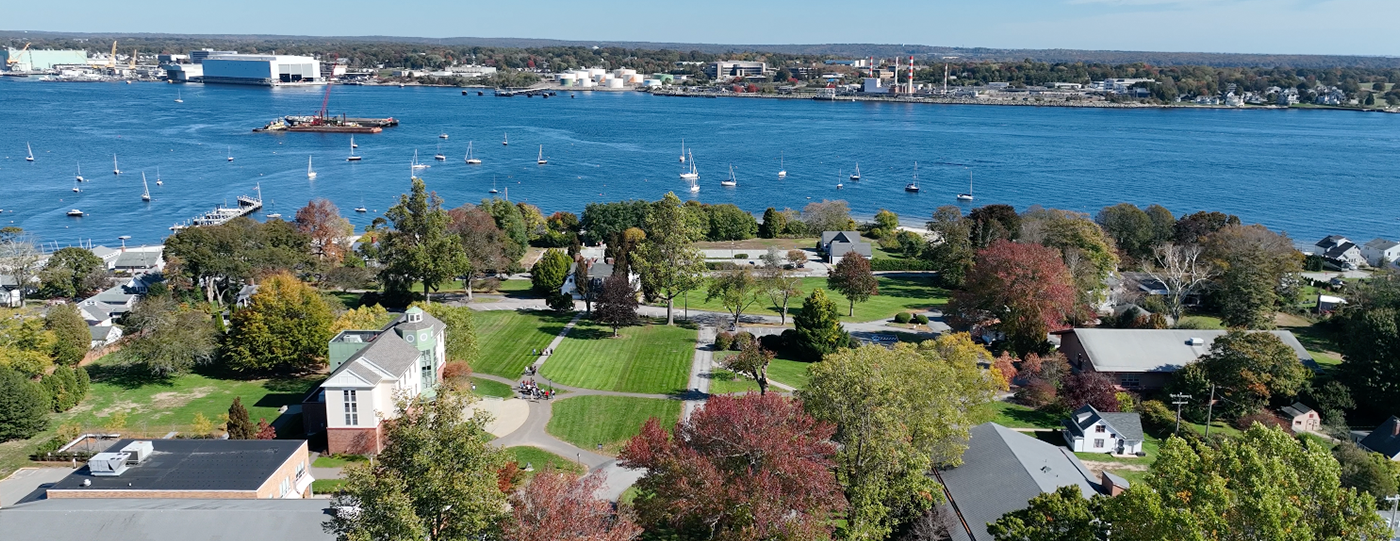
Mitchell College is a small, inclusive liberal arts college in coastal New London, CT, with a near-open admissions policy (95% acceptance rate) and a focus on personalized education through its 'Mitchell Ability Model.' Known for its high proportion of first-generation students (53%) and robust accessibility services (38% of students), it offers a tight-knit but sometimes socially fragmented campus life and middling graduation rates (44%).
Admissions
Mitchell College is one of the least selective four-year institutions in the U.S., with a 95% acceptance rate (975 of 1,030 applicants admitted in recent data). The admissions process is rolling, with no Early Decision option but Early Action available. The student body skews slightly male (53%) and is notably diverse: 40% are students of color, 53% are first-generation college students, and 38% use accessibility services—a far higher rate than national averages. Test scores are rarely a barrier; the school emphasizes Holistic admissionsA review that weighs the whole applicant — grades, essays, activities, and context — rather than relying on test scores and GPA alone. over GPA or SAT/ACT metrics.
Sources
- Mitchell College At A Glance
- Mitchell College - DFR Report PDF - Department of Education
- Mitchell College Overview - CollegeData
- Common Data Set - Colorado College
- Common Data Set: Home
- [PDF] Common Data Set 2021-2022 - Colorado Department of Education
- Mitchell College Tuition, Acceptance Rate, & Academics - Sallie
- Mitchell College Admissions - U.S. News & World Report
- Mitchell College Admissions & Acceptance - Niche
- Mitchell College Requirements for Admission - PrepScholar
- Mitchell College - Tuition and Acceptance Rate - Peterson's