Loading…
← All schools
Meredith College
Raleigh, NCprivate nonprofitwww.meredith.edu/
- Acceptance rateThe share of applicants a college admits in a given year. A 10% acceptance rate means it admits about 1 in 10 applicants.
- 74%
- SAT 25th-75th percentileThe middle range of SAT scores for admitted students: a quarter scored below the low number and a quarter scored above the high number.
- 1098–1348
- Undergrad enrollment
- 1,188
- Net priceWhat a family actually pays after grants and scholarships are subtracted from the sticker price — usually far less than the published cost.
- $22,488
- In-state tuition
- $45,630
- Out-of-state tuition
- $45,630
- SAT Middle 50%
- 1098-1348
- Acceptance Rate
- 74%
- Notable Programs
- STRONGPOINTS®, Visual Arts, Business, Psychology
- Avg GPA (Unweighted)
- 3.56
- Six-Year Graduation Rate
- 65%
- First-Years Receiving Aid
- 95%
- Avg Need-Based Aid Package
- $39,504
- Campus Housing (Undergrads)
- 56%
Quick answers
- What is the acceptance rate at Meredith College?
- Meredith College's acceptance rate is approximately 74% (Raleigh, NC), based on the most recent figures we compiled from public and primary sources.
- What SAT score do you need for Meredith College?
- Admitted students at Meredith College typically score 1098–1348 on the SAT (the middle-50% range). Scores outside this band are still admitted, especially with strong applications.
- How much does Meredith College cost?
- At Meredith College, the average net price (after aid) is about $22,488 per year. Actual cost varies with financial aid and residency.
- How many undergraduates attend Meredith College?
- Meredith College enrolls approximately 1,188 undergraduate students.
- Where is Meredith College located?
- Meredith College is located in Raleigh, NC.
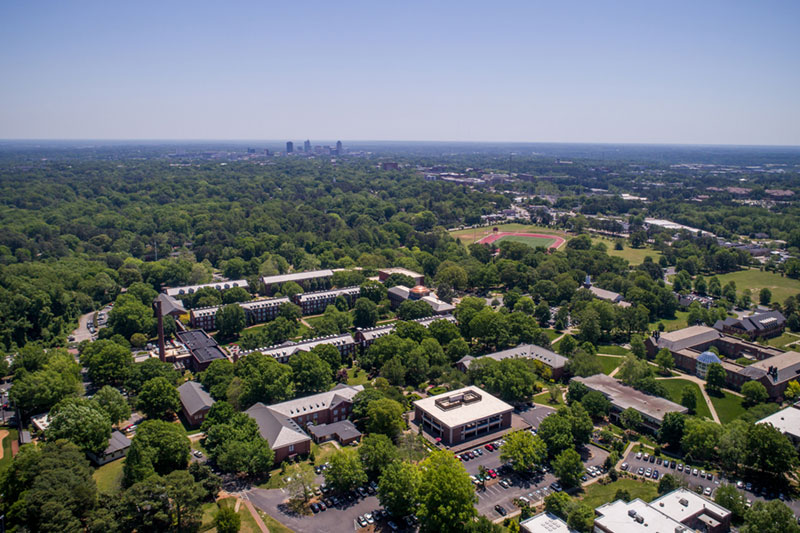
Meredith College is a small, women's liberal arts college in Raleigh, NC, with a distinctive focus on personal strengths development through its STRONGPOINTS® program. Known for its welcoming campus vibe and robust arts scene, it offers over 90 majors with particular strengths in visual arts, business, and psychology. While its 74% acceptance rate makes it accessible, its 65% six-year graduation rate outperforms many regional peers.
Admissions
Meredith College maintains a moderately selective admissions process with a 74% acceptance rate, admitting roughly three-quarters of its nearly 2,000 annual applicants ([1], [3], [5]). The middle 50% of admitted students boast SAT scores between 1098-1348 or ACT scores of 23-29 ([5], [9]), though test scores are optional ([10]). Academic preparation is solid but not elite: the average unweighted GPA is 3.56 (weighted: 3.90), with admitted students representing 180 high schools ([1]). The February 18 regular decision deadline suggests a rolling admissions flexibility ([4]).
Sources
- First-Year Class Profile - Meredith College
- Meredith College - IPEDS - Department of Education
- Meredith College | Data USA
- Meredith College Overview | CollegeData
- Meredith College - Profile, Rankings and Data | US News Best ...
- Common Data Set: Home
- Meredith College Admissions - BigFuture College Search
- Meredith College SAT Scores and GPA - PrepScholar
- Meredith College Admissions - U.S. News & World Report
- First-Year Application Requirements - Meredith College
- Meredith College Tuition, Acceptance Rate, & Academics - Sallie