Loading…
← All schools
Lewis & Clark College
Portland, ORprivate nonprofitlclark.edu
- Acceptance rateThe share of applicants a college admits in a given year. A 10% acceptance rate means it admits about 1 in 10 applicants.
- 78%
- Undergrad enrollment
- 2,120
- Net priceWhat a family actually pays after grants and scholarships are subtracted from the sticker price — usually far less than the published cost.
- $36,013
- In-state tuition
- $64,828
- Out-of-state tuition
- $64,828
- Test Optional
- Yes
- Avg Class Size
- 19
- Acceptance Rate
- 78%
- Merit Aid Minimum
- $24,000/year
- On-Campus Housing
- 68%
- 6-Year Graduation Rate
- 74.3%
- Median 10-Year Earnings
- $62,205
- Student-to-Faculty Ratio
- 12:1
Quick answers
- What is the acceptance rate at Lewis & Clark College?
- Lewis & Clark College's acceptance rate is approximately 78% (Portland, OR), based on the most recent figures we compiled from public and primary sources.
- How much does Lewis & Clark College cost?
- At Lewis & Clark College, the average net price (after aid) is about $36,013 per year. Actual cost varies with financial aid and residency.
- How many undergraduates attend Lewis & Clark College?
- Lewis & Clark College enrolls approximately 2,120 undergraduate students.
- Where is Lewis & Clark College located?
- Lewis & Clark College is located in Portland, OR.
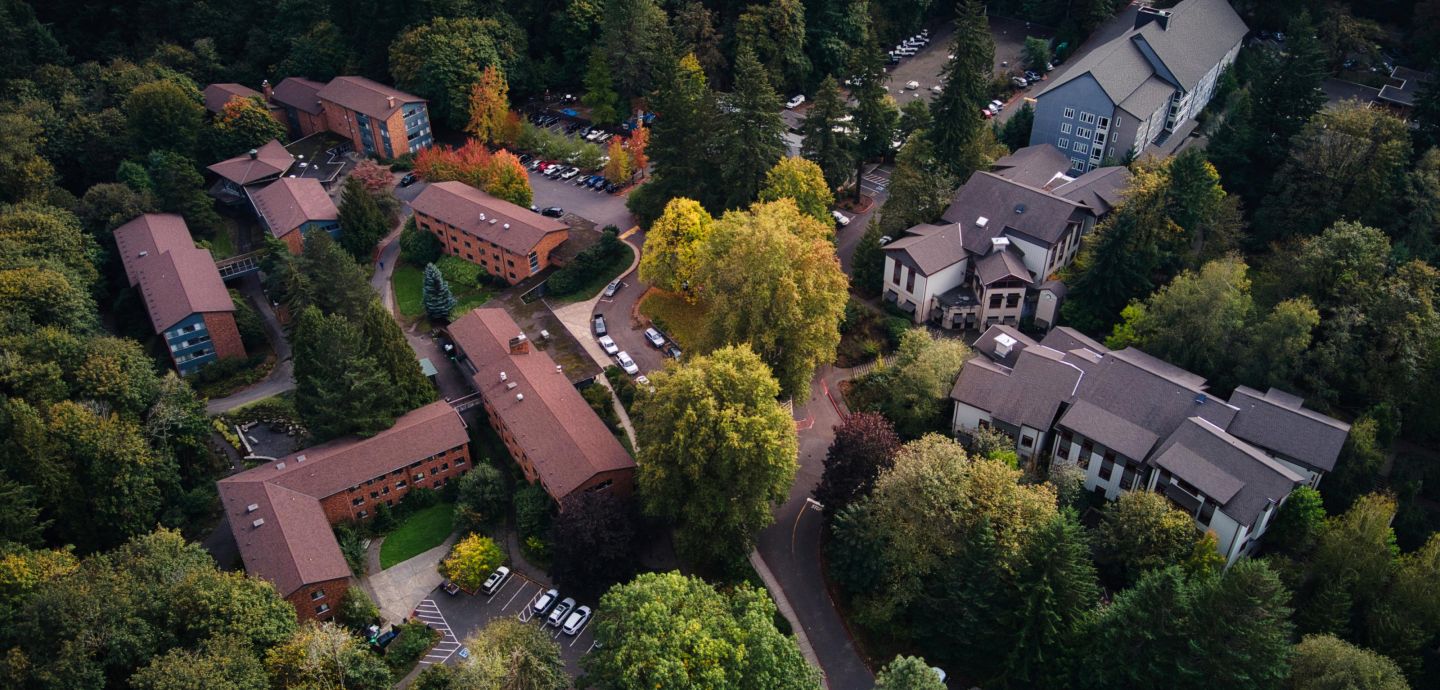
Lewis & Clark College is a small, liberal arts school in Portland, Oregon, known for its intimate academic environment (12:1 student-to-faculty ratio) and strong programs in psychology, biology, and international studies. With a 78% acceptance rate, it attracts students who value its lush, forested campus and laid-back Pacific Northwest vibe, though its 11.8% yield rate suggests many admitted students opt for elsewhere. Graduates earn a median $62,205 a decade after enrollment—a figure that outperforms peers—but the school’s sticker price demands serious financial aid consideration.
Admissions
Lewis & Clark’s admissions process is far from cutthroat, with a 78% acceptance rate (early applicants enjoy an 88% admit rate). The middle 50% of admitted students score between 1230–1390 on the SAT, though Test-optionalA policy where you choose whether to submit SAT or ACT scores. If you don't, the rest of your application carries more weight. policies mean these numbers are increasingly less definitive. Notably, only 11.8% of accepted students enroll—a strikingly low YieldThe share of admitted students who actually choose to enroll. Colleges watch it closely, which is why some weigh how interested you seem. that hints at the college’s position as a safety or backup for many applicants. The college doesn’t publicly emphasize GPA cutoffs, but its non-competitive vibe aligns with its Pacific Northwest ethos: rigorous but not ruthless.
Sources
- Common Data Set (CDS) • Institutional Research • Lewis & Clark
- Archived Common Data Sets (CDS) - Lewis & Clark College
- Common Data Set: Home
- Common Data Set Repository - College Transitions
- [PDF] Common Data Set 2024-2025 - Clark University
- Need LC State Data? - Institutional Research & Effectiveness
- Lewis & Clark College Admissions - BigFuture
- Lewis & Clark College SAT Scores and GPA - PrepScholar
- Lewis & Clark College Admissions - U.S. News & World Report
- Lewis & Clark College Admissions Statistics and Chances - Parchment