Loading…
← All schools
Lawrence Technological University
Southfield, MIprivate nonprofitwww.ltu.edu/
- Acceptance rateThe share of applicants a college admits in a given year. A 10% acceptance rate means it admits about 1 in 10 applicants.
- 56%
- Undergrad enrollment
- 1,668
- Net priceWhat a family actually pays after grants and scholarships are subtracted from the sticker price — usually far less than the published cost.
- $32,918
- In-state tuition
- $44,760
- Out-of-state tuition
- $44,760
- Location
- Southfield, MI
- Acceptance Rate
- 55.9–82%
- Avg. Class Size
- <20 students (82% of classes)
- Notable Programs
- Aeronautical Engineering, Architecture, AI-Driven Business
- Undergrad Programs
- 100+
- Student-Faculty Ratio
- 10:1
- 6-Year Graduation Rate
- 62%
- Avg. Net Price After Aid
- $32,641
- Total Cost of Attendance
- $69,728
- Median Earnings (1 Yr Post-Grad)
- $36,427
Quick answers
- What is the acceptance rate at Lawrence Technological University?
- Lawrence Technological University's acceptance rate is approximately 56% (Southfield, MI), based on the most recent figures we compiled from public and primary sources.
- How much does Lawrence Technological University cost?
- At Lawrence Technological University, the average net price (after aid) is about $32,918 per year. Actual cost varies with financial aid and residency.
- How many undergraduates attend Lawrence Technological University?
- Lawrence Technological University enrolls approximately 1,668 undergraduate students.
- Where is Lawrence Technological University located?
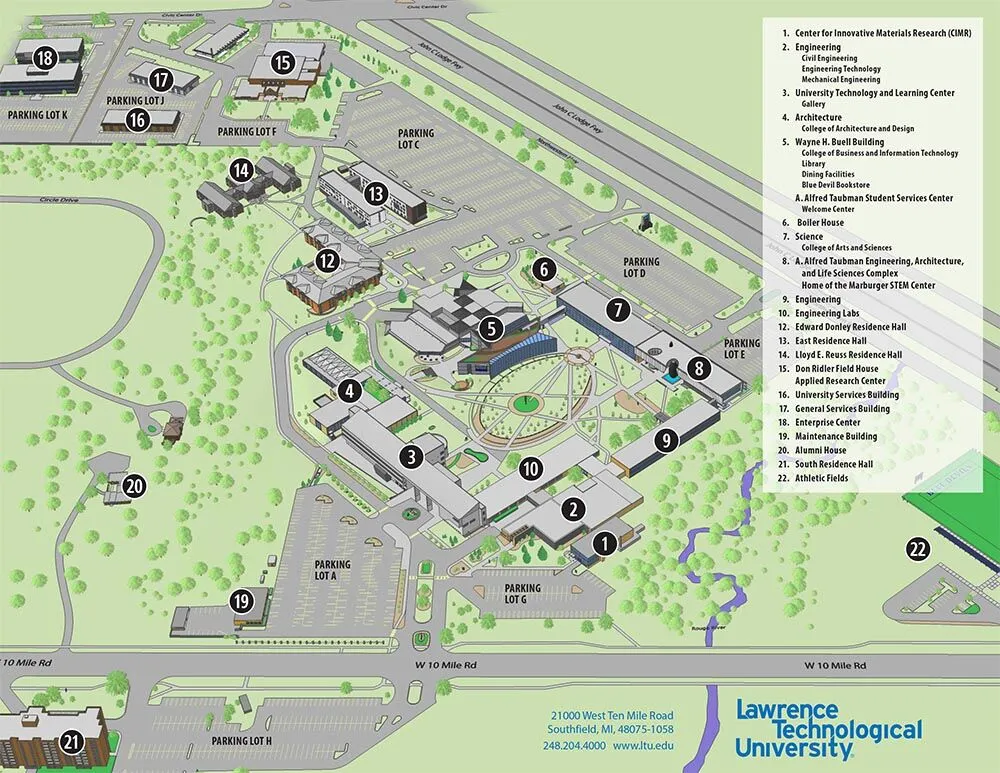
- Lawrence Technological University is located in Southfield, MI.
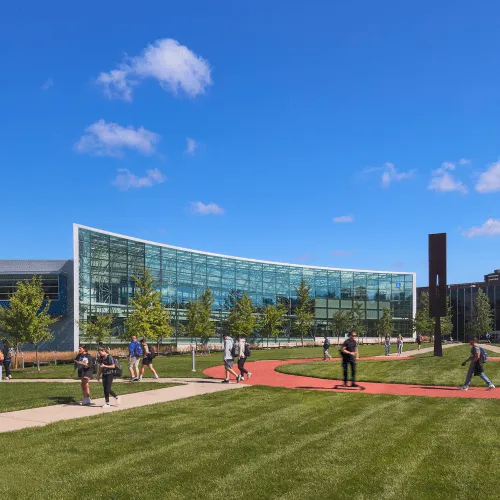
Lawrence Technological University (LTU) is a small, tech-focused institution in Southfield, Michigan, where hands-on learning and industry connections take center stage. With a 10:1 student-faculty ratio and a curriculum that leans heavily into engineering, architecture, and business, LTU attracts students who want to graduate job-ready—though its middling graduation rates suggest it’s not for the academically faint of heart. The campus vibe is tight-knit, with over 40 student organizations and a strong emphasis on STEM-driven extracurriculars.
Admissions
LTU’s admissions process is moderately selective, with Acceptance rateThe share of applicants a college admits in a given year. A 10% acceptance rate means it admits about 1 in 10 applicants. fluctuating between 55.9% (2024) and 82% (earlier reports), reflecting its growing appeal among tech-oriented applicants. The university adopted a test-optional policy, allowing students to omit SAT/ACT scores—though mid-50% ranges for those who submit fall between 1030–1250 (SAT) and 22–26 (ACT). Applications are rolling, with a July 31 deadline for regular decisions. Notably, LTU’s admissions office emphasizes personalized outreach, listing a toll-free number (800.CALL.LTU) and direct email ([email protected]) for prospective students.
- Acceptance Rate: Ranges from 55.9% (2024) to 82% (historical)
- Mid-50% Test Scores: SAT 1030–1250, ACT 22–26
- Application Deadline: July 31 (rolling admissions thereafter)
Sources
- [PDF] Common Data Set 2023-2024 - Lawrence Technological University
- [PDF] Common Data Set 2024-2025 - Lawrence Technological University
- Institutional Research - Lawrence Technological University
- [PDF] Lawrence University Common Data Set 2024-2025
- Lawrence Technological University - DFR Report HTML
- [PDF] Common Data Set 2022-2023 - Lawrence Technological University
- Lawrence Technological University Admissions - USNews.com
- Lawrence Technological University Admissions - BigFuture
- First-Year Students - Admissions - Lawrence Technological University
- Lawrence Technological University SAT Scores and GPA