Loading…
← All schools
La Roche University
Pittsburgh, PAprivate nonprofitwww.laroche.edu/
- Acceptance rateThe share of applicants a college admits in a given year. A 10% acceptance rate means it admits about 1 in 10 applicants.
- 76%
- SAT 25th-75th percentileThe middle range of SAT scores for admitted students: a quarter scored below the low number and a quarter scored above the high number.
- 940–1200
- Undergrad enrollment
- 751
- Net priceWhat a family actually pays after grants and scholarships are subtracted from the sticker price — usually far less than the published cost.
- $20,794
- In-state tuition
- $34,052
- Out-of-state tuition
- $34,052
- Avg ACT
- 17-24
- Avg SAT
- 940-1200
- Location
- Pittsburgh, PA (suburban)
- Avg Net Price
- $24,233
- Sticker Price
- $52,576
- Int'l Students
- 20%
- Acceptance Rate
- 70-78%
- Graduation Rate
- 52-58%
- Undergrad Enrollment
- 1,828
- Median Earnings (1yr)
- $36,427
- Student-Faculty Ratio
- 11:1
Quick answers
- What is the acceptance rate at La Roche University?
- La Roche University's acceptance rate is approximately 76% (Pittsburgh, PA), based on the most recent figures we compiled from public and primary sources.
- What SAT score do you need for La Roche University?
- Admitted students at La Roche University typically score 940–1200 on the SAT (the middle-50% range). Scores outside this band are still admitted, especially with strong applications.
- How much does La Roche University cost?
- At La Roche University, the average net price (after aid) is about $20,794 per year. Actual cost varies with financial aid and residency.
- How many undergraduates attend La Roche University?
- La Roche University enrolls approximately 751 undergraduate students.
- Where is La Roche University located?
- La Roche University is located in Pittsburgh, PA.
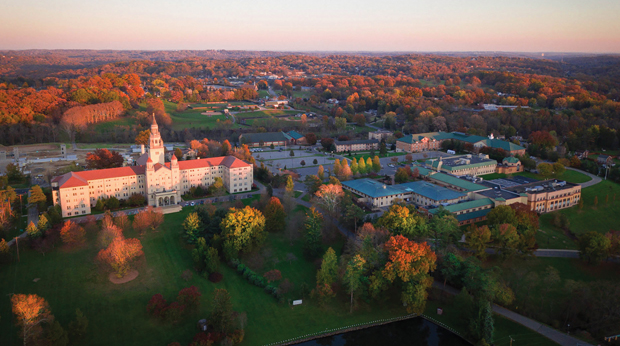
La Roche University is a small, globally infused Catholic university in Pittsburgh where nearly 20% of students hail from overseas—a rarity for an institution of its size. With a 70-78% acceptance rate and a focus on hands-on professional programs like aviation management and health sciences, it's a pragmatic choice for students seeking close faculty attention (11:1 ratio) without cutthroat competition. The suburban campus buzzes with international energy but struggles with middling graduation rates (52-58%) and post-grad earnings that hover around $36K.
Admissions
La Roche is decidedly not a selective school, admitting 70-78% of applicants across sources—a rate that's held steady in recent years. The middle 50% of admitted students score between 940-1200 on the SAT or 17-24 on the ACT, with self-reported averages landing around 1140 SAT and 22 ACT. Notably, female applicants enjoy a slightly higher Acceptance rateThe share of applicants a college admits in a given year. A 10% acceptance rate means it admits about 1 in 10 applicants. (92% per Peterson's) than males. The process is minimally difficult, with no indication of preference for early decision or LegacyAn applicant whose parent (or sometimes other close relative) attended the college. Some schools give a small edge to legacy applicants. status in available data. International students make up a significant portion of the student body (more on that later), suggesting the admissions office actively recruits globally.
Sources
- La Roche University Overview - CollegeData
- Consumer Info | La Roche University
- La Roche University - DFR Report HTML - Department of Education
- Common Data Set: Home
- Common Data Set - Louisiana Tech University
- The Common Data Set: What It Is & How to Use It In College ...
- La Roche University Admissions - BigFuture College Search
- La Roche University Tuition, Acceptance Rate, & Academics - Sallie
- La Roche College SAT Scores and GPA
- La Roche University - Tuition and Acceptance Rate - Peterson's
- La Roche University - Admissions Chances - College Raptor