Loading…
← All schools
Judson University
Elgin, ILprivate nonprofitwww.judsonu.edu/
- Acceptance rateThe share of applicants a college admits in a given year. A 10% acceptance rate means it admits about 1 in 10 applicants.
- 48%
- SAT 25th-75th percentileThe middle range of SAT scores for admitted students: a quarter scored below the low number and a quarter scored above the high number.
- 816–1118
- Undergrad enrollment
- 708
- Net priceWhat a family actually pays after grants and scholarships are subtracted from the sticker price — usually far less than the published cost.
- $18,558
- In-state tuition
- $31,360
- Out-of-state tuition
- $31,360
- Location
- Elgin, IL
- Acceptance Rate
- 48-62%
- Notable Programs
- Architecture, Business, Christian Ministries
- On-Campus Housing
- 57%
- Avg ACT (middle 50%)
- 16–24
- Avg SAT (middle 50%)
- 850–1110
- Student-Faculty Ratio
- 10:1
- 6-Year Graduation Rate
- 53%
- Financial Aid Recipients
- 99%
- Avg Financial Aid Package
- $17,772
Quick answers
- What is the acceptance rate at Judson University?
- Judson University's acceptance rate is approximately 48% (Elgin, IL), based on the most recent figures we compiled from public and primary sources.
- What SAT score do you need for Judson University?
- Admitted students at Judson University typically score 816–1118 on the SAT (the middle-50% range). Scores outside this band are still admitted, especially with strong applications.
- How much does Judson University cost?
- At Judson University, the average net price (after aid) is about $18,558 per year. Actual cost varies with financial aid and residency.
- How many undergraduates attend Judson University?
- Judson University enrolls approximately 708 undergraduate students.
- Where is Judson University located?
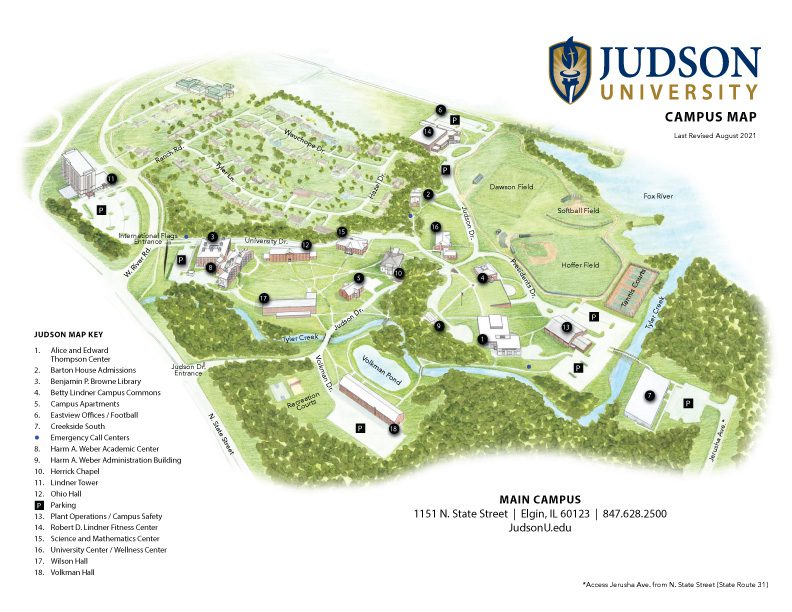
- Judson University is located in Elgin, IL.
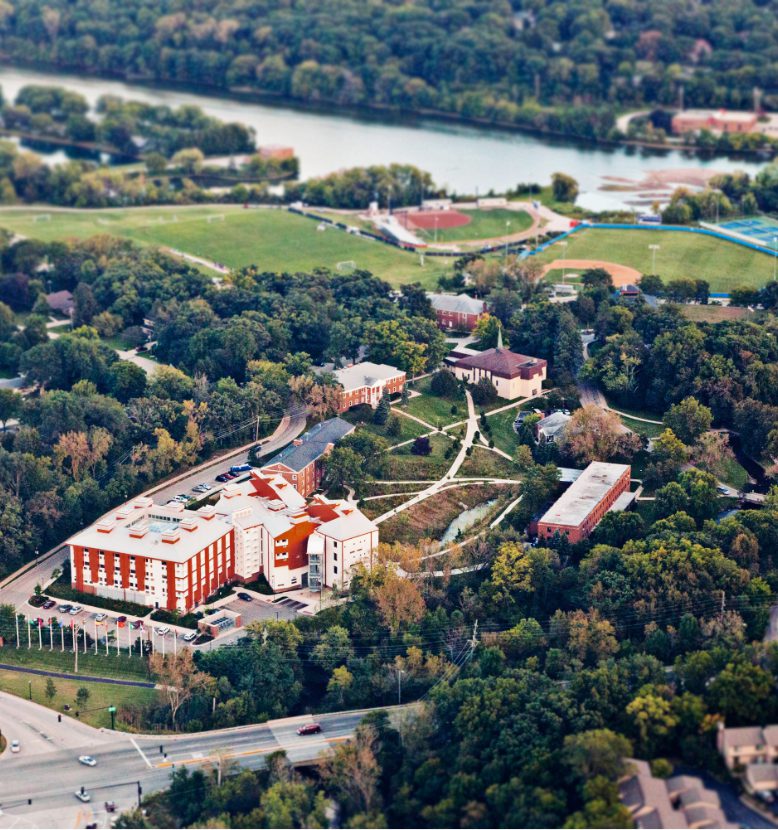
Judson University is a small Christian liberal arts college in Elgin, Illinois, where faith and community shape the academic experience. With a moderately selective admissions process (acceptance rates hover around 50-60%), Judson attracts students drawn to its tight-knit campus life, strong architecture and business programs, and a 10:1 student-faculty ratio. While graduation rates lag behind national averages, the university offers robust financial aid—99% of students receive some form of assistance—making it an accessible option for those seeking a values-driven education.
Admissions
Judson University is moderately selective, with Acceptance rateThe share of applicants a college admits in a given year. A 10% acceptance rate means it admits about 1 in 10 applicants. ranging from 48% to 62.4% depending on the source. The middle 50% of admitted students score between 850–1110 on the SAT or 16–24 on the ACT, with only 36% of accepted students submitting ACT scores. Judson does not require early applications but offers academic grants for students in the upper 25% of ACT scorers. The university tracks demonstrated interest but does not mandate admission applications for certain campus visits or events.
Sources
- Common Data Set: Home
- Common Data Set - Davidson College
- Where to find Common Data Set (CDS) for college admission statistics
- Demystifying the Common Data Set - Top Tier Admissions
- Researching Colleges With the Common Data Set
- [PDF] Common Data Set 2022-2023 - Simpson University
- Judson University SAT Scores and GPA
- Judson University Admissions - BigFuture College Search
- Freshman Application | Judson University Enrollment
- Judson University Acceptance Rates & Admissions Statistics