Loading…
← All schools
Jacksonville University
Jacksonville, FLprivate nonprofitju.edu
- Acceptance rateThe share of applicants a college admits in a given year. A 10% acceptance rate means it admits about 1 in 10 applicants.
- 57%
- SAT 25th-75th percentileThe middle range of SAT scores for admitted students: a quarter scored below the low number and a quarter scored above the high number.
- 1100–1280
- Undergrad enrollment
- 2,930
- Net priceWhat a family actually pays after grants and scholarships are subtracted from the sticker price — usually far less than the published cost.
- $25,180
- In-state tuition
- $47,830
- Out-of-state tuition
- $47,830
- Avg GPA
- 3.73
- Top Majors
- Nursing, Aviation, Business
- Avg Net Price
- $25,745
- Sticker Price
- $68,366
- Acceptance Rate
- 57%
- 4-Year Grad Rate
- 41%
- On-Campus Housing
- 52%
- Avg SAT (middle 50%)
Quick answers
- What is the acceptance rate at Jacksonville University?
- Jacksonville University's acceptance rate is approximately 57% (Jacksonville, FL), based on the most recent figures we compiled from public and primary sources.
- What SAT score do you need for Jacksonville University?
- Admitted students at Jacksonville University typically score 1100–1280 on the SAT (the middle-50% range). Scores outside this band are still admitted, especially with strong applications.
- How much does Jacksonville University cost?
- At Jacksonville University, the average net price (after aid) is about $25,180 per year. Actual cost varies with financial aid and residency.
- How many undergraduates attend Jacksonville University?
- Jacksonville University enrolls approximately 2,930 undergraduate students.
- Where is Jacksonville University located?
- Jacksonville University is located in Jacksonville, FL.
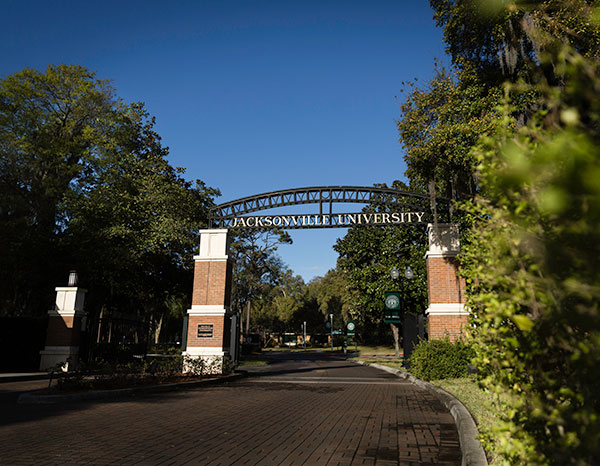
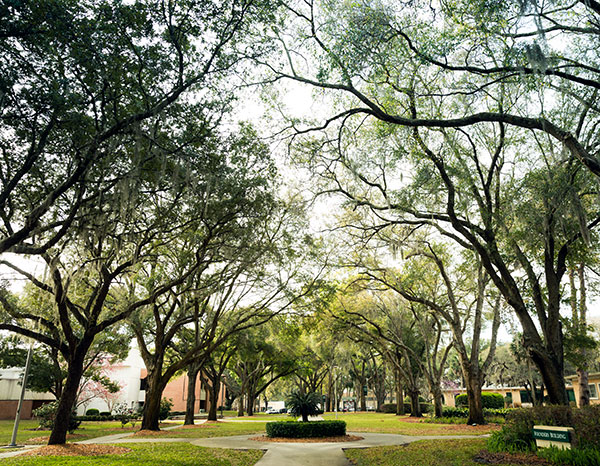
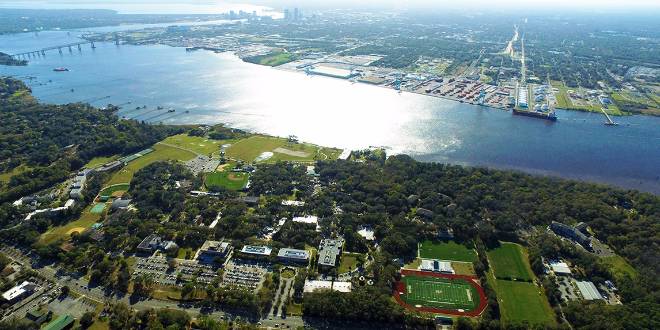
Jacksonville University, perched along the St. Johns River in Florida, blends hands-on professional training with a liberal arts core—think flight simulators for aviation majors alongside Shakespeare seminars. With a 57% acceptance rate and test-optional policy, JU attracts students drawn to its nursing, business, and pilot programs, plus Division I athletics and Greek life. The school’s 'River Life' ethos means kayaking between classes, but graduates face middling earnings ($36K early-career) and a 41% four-year graduation rate.
Admissions
Jacksonville University admits just over half of its applicants—a 57% Acceptance rateThe share of applicants a college admits in a given year. A 10% acceptance rate means it admits about 1 in 10 applicants.—with middle-50% SAT scores ranging from 1050 to 1280 and ACT scores between 22 and 27. The average admitted student has a 3.73 GPA, though JU is test-optional, waiving SAT/ACT requirements entirely. Notably, 52% of enrolled students live on campus, suggesting a residential college experience remains central to JU’s appeal. Auditions are required for performing arts applicants.
Sources
- Data Sources - Jacksonville University
- [PDF] Common Data Set 2023-2024 - Jacksonville University
- Institutional Research - Jacksonville University
- Common Data Set: Home
- Jacksonville University - IPEDS - Department of Education
- Common Data Set Repository - College Transitions
- Jacksonville University Admissions - US News Best Colleges
- Jacksonville University Admissions - BigFuture College Search
- Jacksonville University SAT Scores and GPA - PrepScholar
- Jacksonville University - Tuition and Acceptance Rate - Peterson's