Loading…
← All schools
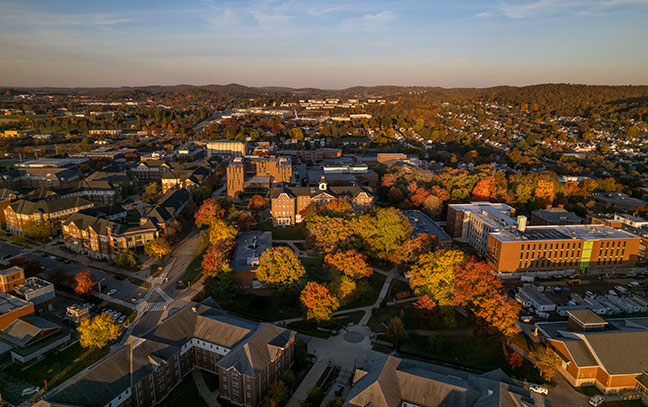
Indiana University of Pennsylvania
Indiana, PApublicwww.iup.edu/
- Acceptance rateThe share of applicants a college admits in a given year. A 10% acceptance rate means it admits about 1 in 10 applicants.
- 91%
- SAT 25th-75th percentileThe middle range of SAT scores for admitted students: a quarter scored below the low number and a quarter scored above the high number.
- 970–1180
- Undergrad enrollment
- 6,764
- Net priceWhat a family actually pays after grants and scholarships are subtracted from the sticker price — usually far less than the published cost.
- $16,804
- In-state tuition
- $11,380
- Out-of-state tuition
- $16,297
- Acceptance Rate
- 91%
- Avg ACT (mid-50%)
- 20–28
- Avg SAT (mid-50%)
- 970–1180
- On-Campus Housing
- 39% of students
- 6-Year Graduation Rate
- 52%
- Students Receiving Aid
- 68.64%
- Avg Net Price After Aid
- $17,665
Quick answers
- What is the acceptance rate at Indiana University of Pennsylvania?
- Indiana University of Pennsylvania's acceptance rate is approximately 91% (Indiana, PA), based on the most recent figures we compiled from public and primary sources.
- What SAT score do you need for Indiana University of Pennsylvania?
- Admitted students at Indiana University of Pennsylvania typically score 970–1180 on the SAT (the middle-50% range). Scores outside this band are still admitted, especially with strong applications.
- How much does Indiana University of Pennsylvania cost?
- At Indiana University of Pennsylvania, the average net price (after aid) is about $16,804 per year. Actual cost varies with financial aid and residency.
- How many undergraduates attend Indiana University of Pennsylvania?
- Indiana University of Pennsylvania enrolls approximately 6,764 undergraduate students.
- Where is Indiana University of Pennsylvania located?
- Indiana University of Pennsylvania is located in Indiana, PA.
Indiana University of Pennsylvania (IUP) is a public university with a near-open admissions policy (91% acceptance rate) and a strong regional reputation for its business, criminology, and health professions programs. Known for its vibrant student life and affordable in-state tuition, IUP serves a mix of commuter and residential students, though its 52% graduation rate lags behind national averages. The campus thrives on inclusivity and hands-on learning, particularly in its well-regarded engineering and liberal arts departments.
Admissions
IUP is one of the least selective public universities in Pennsylvania, with a 91% acceptance rate—effectively open admissions. The average admitted student has an SAT score between 970–1180 (mid-50% range) or an ACT composite of 20–28, with reported averages hovering around SAT 1071 and ACT 23. GPA data is sparse, but Niche reports 37% of admits have a 3.75+ GPA. Test-optionalA policy where you choose whether to submit SAT or ACT scores. If you don't, the rest of your application carries more weight. since at least 2024, IUP prioritizes factors like high school GPA (though no minimum is stated) and rigor of coursework over standardized tests. The November 1 regular decision deadline is soft; rolling admissions continue until seats fill.
Sources
- University Data - Indiana University of Pennsylvania - IUP
- Common Data Set - GradGPT
- Common Data Set (CDS) Penn - Institutional Research & Analysis
- Indiana University of Pennsylvania (IUP) | US News Best Colleges
- Common Data Set: Home
- Indiana University of Pennsylvania-Main Campus - IPEDS
- Freshman Admission Requirements and Planning
- IUP SAT Scores and GPA
- Indiana University of Pennsylvania Admissions - BigFuture
- Indiana University of Pennsylvania Admissions & Acceptance - Niche
- Indiana University of Pennsylvania [Acceptance Rate + Statistics]