Loading…
← All schools
Harvard University
Cambridge, MAprivate nonprofitwww.harvard.edu/
- Acceptance rateThe share of applicants a college admits in a given year. A 10% acceptance rate means it admits about 1 in 10 applicants.
- 4%
- SAT 25th-75th percentileThe middle range of SAT scores for admitted students: a quarter scored below the low number and a quarter scored above the high number.
- 1510–1580
- Undergrad enrollment
- 7,601
- Net priceWhat a family actually pays after grants and scholarships are subtracted from the sticker price — usually far less than the published cost.
- $19,066
- In-state tuition
- $61,676
- Out-of-state tuition
- $61,676
- Housing
- 97% on-campus
- Average ACT
- 34-36
- Average GPA
- 4.21 weighted
- Average SAT
- 1510-1580 (middle 50%)
- Acceptance Rate
- 3.6% (Class of 2029)
- Graduation Rate
- 97%
- Net Price After Aid
- $15,126
- Undergrad Enrollment
Quick answers
- What is the acceptance rate at Harvard University?
- Harvard University's acceptance rate is approximately 4% (Cambridge, MA), based on the most recent figures we compiled from public and primary sources.
- What SAT score do you need for Harvard University?
- Admitted students at Harvard University typically score 1510–1580 on the SAT (the middle-50% range). Scores outside this band are still admitted, especially with strong applications.
- How much does Harvard University cost?
- At Harvard University, the average net price (after aid) is about $19,066 per year. Actual cost varies with financial aid and residency.
- How many undergraduates attend Harvard University?
- Harvard University enrolls approximately 7,601 undergraduate students.
- Where is Harvard University located?
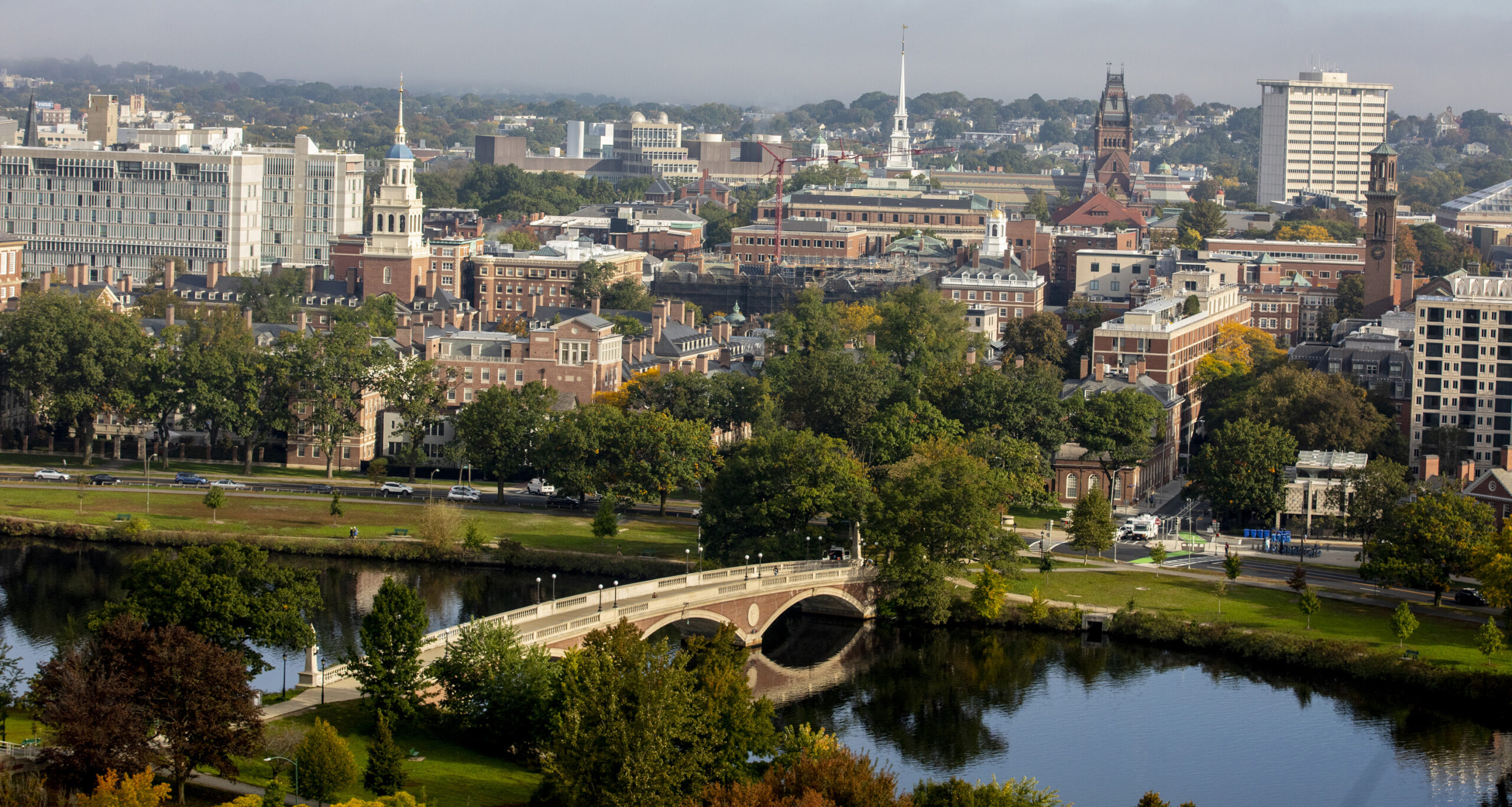
- Harvard University is located in Cambridge, MA.
Harvard University isn't just the oldest institution of higher education in the U.S.—it's a global symbol of academic prestige, where the world's most ambitious students compete for a 3.6% acceptance rate. With a $15,126 average net price after aid, near-perfect graduation rates, and a social scene split between exclusive final clubs and intense pre-professionalism, Harvard remains the gold standard for elite education, for better or worse.
Admissions
Getting into Harvard is a statistical improbability: the Class of 2029 saw 47,893 applicants for just 2,003 spots (3.6% Acceptance rateThe share of applicants a college admits in a given year. A 10% acceptance rate means it admits about 1 in 10 applicants.), with waitlist admits scraping by at 75 students. Admitted students typically sport SAT scores between 1510-1580 (middle 50%), ACTs of 34-36, and weighted GPAs averaging 4.21. Post-pandemic application surges peaked at 61,221 for the Class of 2026 before dropping 22%, suggesting even the most qualified applicants are wary of lottery-style odds.
Academics
Harvard’s undergraduate experience is a paradox—simultaneously intimate (with small seminars and personalized degree paths) and overwhelming (access to 5,000+ courses across 50 fields). The social sciences dominate popular majors, but the real draw is the university’s intellectual infrastructure: Nobel-winning faculty, libraries holding 20 million volumes, and research opportunities that undergrads at most schools reserve for grad students. Prestige here skews undergraduate; as one Reddit user notes, 'When most kids want to get into Harvard, only some college graduates are aiming for Harvard grad schools.'
Sources
- Common Data Set - Office of Institutional Research & Analytics
- Harvard University 2026 Common Data Set: Visualized - GradGPT
- How to Use the Harvard Common Data Set - Admit Report
- How to Get Into Harvard University (2025): Stats,... - GoodGoblin
- Common Data Set: Home
- Year: 2025 - Office of Institutional Research & Analytics
- Admissions Statistics - Harvard College
- Harvard University Acceptance Rate: Class of 2030
- Harvard College Admissions - BigFuture College Search
- What You Need For Harvard: SAT Scores and GPA - PrepScholar
- Class of 2025 By the Numbers - The Harvard Crimson