Loading…
← All schools
Georgia Institute of Technology-Main Campus
Atlanta, GApublicwww.gatech.edu/
- Acceptance rateThe share of applicants a college admits in a given year. A 10% acceptance rate means it admits about 1 in 10 applicants.
- 14%
- SAT 25th-75th percentileThe middle range of SAT scores for admitted students: a quarter scored below the low number and a quarter scored above the high number.
- 1370–1540
- Undergrad enrollment
- 18,785
- Net priceWhat a family actually pays after grants and scholarships are subtracted from the sticker price — usually far less than the published cost.
- $12,116
- In-state tuition
- $12,058
- Out-of-state tuition
- $34,484
- ACT Middle 50%
- 30-34
- SAT Middle 50%
- 1370-1530
- Acceptance Rate
- 14% (33% in-state, 10% out-of-state)
- In-State Tuition
- $10,618
- Out-of-State Tuition
- $34,604
- 4-Year Graduation Rate
- 75%
- Average GPA (weighted)
- 4.0+
Quick answers
- What is the acceptance rate at Georgia Institute of Technology-Main Campus?
- Georgia Institute of Technology-Main Campus's acceptance rate is approximately 14% (Atlanta, GA), based on the most recent figures we compiled from public and primary sources.
- What SAT score do you need for Georgia Institute of Technology-Main Campus?
- Admitted students at Georgia Institute of Technology-Main Campus typically score 1370–1540 on the SAT (the middle-50% range). Scores outside this band are still admitted, especially with strong applications.
- How much does Georgia Institute of Technology-Main Campus cost?
- At Georgia Institute of Technology-Main Campus, the average net price (after aid) is about $12,116 per year. Actual cost varies with financial aid and residency.
- How many undergraduates attend Georgia Institute of Technology-Main Campus?
- Georgia Institute of Technology-Main Campus enrolls approximately 18,785 undergraduate students.
- Where is Georgia Institute of Technology-Main Campus located?
- Georgia Institute of Technology-Main Campus is located in Atlanta, GA.
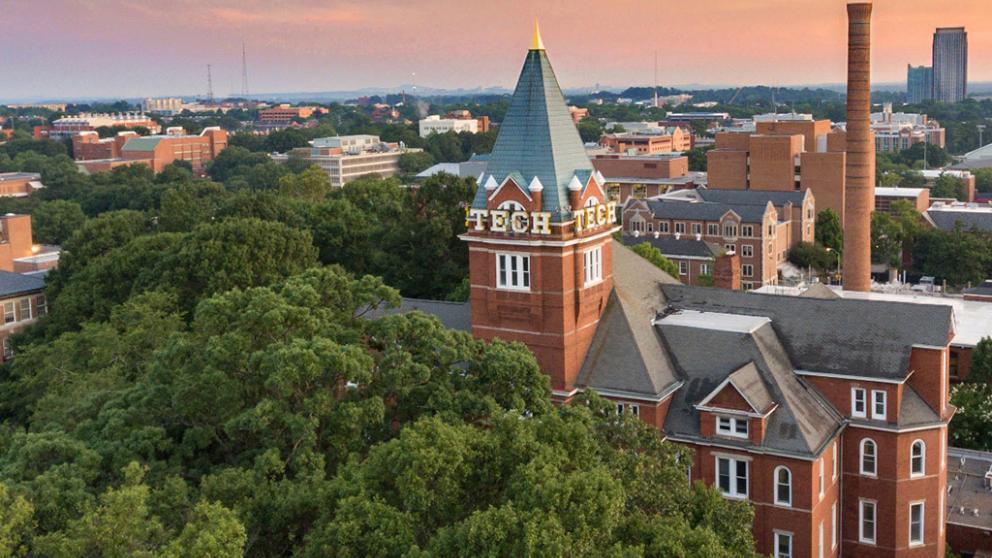
Georgia Tech is a powerhouse of STEM education with a fiercely competitive admissions process and a reputation for producing top-tier engineers and computer scientists. Its Midtown Atlanta campus offers a vibrant urban setting where academic rigor meets a surprisingly active social scene, all at a public-school price that delivers Ivy-caliber outcomes.
Admissions
Getting into Georgia Tech is a high-stakes numbers game. The overall Acceptance rateThe share of applicants a college admits in a given year. A 10% acceptance rate means it admits about 1 in 10 applicants. hovers around 14%, but in-state applicants enjoy a significant advantage with a 33% acceptance rate compared to just 10% for out-of-state students. The academic bar is sky-high: admitted students typically boast weighted GPAs north of 4.0, with fewer than 0.5% of enrollees having GPAs below 3.0. Standardized test scores are equally demanding, with middle 50% ranges of 1370-1530 for the SAT and 30-34 for the ACT. The university received a record number of applications for Fall 2025, continuing a trend of increasing selectivity.
Sources
- Common Data Set - Institutional Research & Planning - Georgia Tech
- 2025–2026 Common Data Set Now Available
- [PDF] Common Data Set 2024-2025 - A. General Information - Georgia Tech
- Georgia Institute of Technology 2026 Common Data Set - GradGPT
- How to Use the Georgia Tech Common Data Set - Admit Report
- Georgia Tech Common Data GPA's are absolutely INSANE. - Reddit
- Georgia Institute Of Technology Admissions - BigFuture
- Admission Snapshot - Undergraduate Admission - Georgia Tech
- Georgia Tech SAT Scores and GPA
- georgia tech is getting less competitive decision wise. - Reddit