Loading…
← All schools
Florida International University
Miami, FLpublicwww.fiu.edu/
- Acceptance rateThe share of applicants a college admits in a given year. A 10% acceptance rate means it admits about 1 in 10 applicants.
- 55%
- SAT 25th-75th percentileThe middle range of SAT scores for admitted students: a quarter scored below the low number and a quarter scored above the high number.
- 1070–1260
- Undergrad enrollment
- 39,508
- Net priceWhat a family actually pays after grants and scholarships are subtracted from the sticker price — usually far less than the published cost.
- $9,288
- In-state tuition
- $6,565
- Out-of-state tuition
- $18,964
- Acceptance Rate
- 54-57%
- Degree Programs
- 190+
- 4-Year Grad Rate
- 59%
- Net Price After Aid
- $9,881
- Avg SAT (Middle 50%)
- 1070-1250
- Financial Aid Recipients
- 63.5%
- Median Earnings (6 Years)
- $47,768
Quick answers
- What is the acceptance rate at Florida International University?
- Florida International University's acceptance rate is approximately 55% (Miami, FL), based on the most recent figures we compiled from public and primary sources.
- What SAT score do you need for Florida International University?
- Admitted students at Florida International University typically score 1070–1260 on the SAT (the middle-50% range). Scores outside this band are still admitted, especially with strong applications.
- How much does Florida International University cost?
- At Florida International University, the average net price (after aid) is about $9,288 per year. Actual cost varies with financial aid and residency.
- How many undergraduates attend Florida International University?
- Florida International University enrolls approximately 39,508 undergraduate students.
- Where is Florida International University located?
- Florida International University is located in Miami, FL.
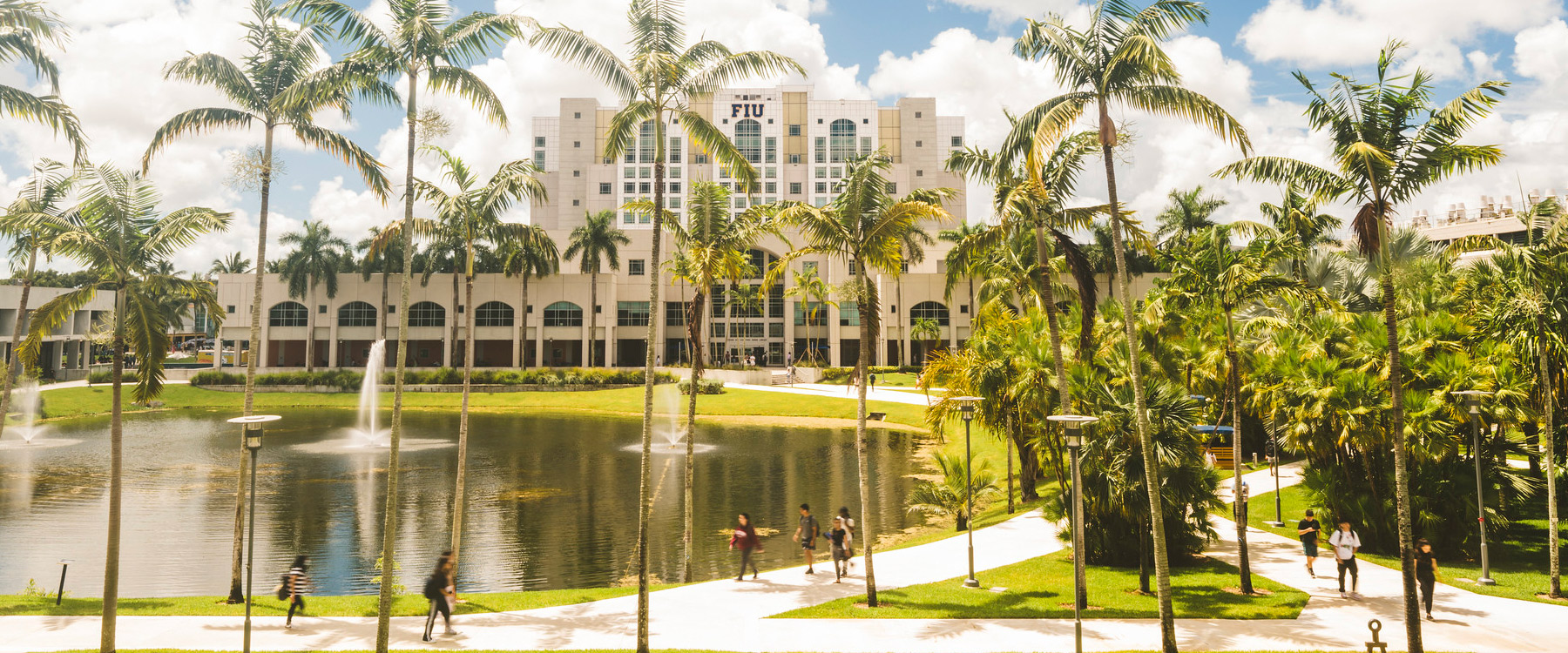
Florida International University (FIU) is Miami's powerhouse public research university, where a no-nonsense approach to career-focused education meets the vibrant energy of one of America's most diverse cities. With a 59% four-year graduation rate that outpaces many peers and a top-10 national ranking for return on investment, FIU delivers pragmatic value—especially for first-gen and working-class students. Its 190+ degree programs, from hospitality management to engineering, thrive in a commuter-school ecosystem where campus life competes with South Beach sunsets.
Admissions
FIU's admissions process walks the line between accessible and selective, with a 54-57% Acceptance rateThe share of applicants a college admits in a given year. A 10% acceptance rate means it admits about 1 in 10 applicants. that reflects its role as Miami's largest public university. The middle 50% of admitted freshmen post SAT scores between 1070-1250 or ACT scores of 21-27, though the university emphasizes Holistic admissionsA review that weighs the whole applicant — grades, essays, activities, and context — rather than relying on test scores and GPA alone. beyond test scores. All first-time-in-college (FTIC) students must take a math placement test, and minimum subscores are enforced across standardized tests. Notably, FIU's 4-year graduation rate for FTIC students (59.4% for the 2017-21 cohort) exceeds its 55% target—a rarity for urban commuter schools.
Sources
- Common Data Set - FIU
- [PDF] Common Data Set 2024-2025 - FIU
- Common Data Set: Home
- [PDF] Common Data Set 2021-2022 - FIU
- Florida International University - IPEDS - Department of Education
- Common Data Set Repository - College Transitions
- Admission Standards
- Florida International University Admissions - BigFuture College Search
- FIU SAT Scores and GPA - PrepScholar
- First Year Pathways - FIU Admissions
- Florida International University Admissions & Acceptance - Niche
- Florida International University (FIU) - AcceptanceRate.com