Loading…
← All schools
Duquesne University
Pittsburgh, PAprivate nonprofitwww.duq.edu/
- Acceptance rateThe share of applicants a college admits in a given year. A 10% acceptance rate means it admits about 1 in 10 applicants.
- 84%
- SAT 25th-75th percentileThe middle range of SAT scores for admitted students: a quarter scored below the low number and a quarter scored above the high number.
- 1180–1340
- Undergrad enrollment
- 5,350
- Net priceWhat a family actually pays after grants and scholarships are subtracted from the sticker price — usually far less than the published cost.
- $37,730
- In-state tuition
- $48,986
- Out-of-state tuition
- $48,986
- Notable Majors
- Nursing (17%), Pharmacy (9%), Management Science (5%)
- Acceptance Rate
- 83.6%
- On-Campus Housing
- 56%
- Avg SAT (middle 50%)
- 1190–1330
- Student-Faculty Ratio
- 13:1
- 6-Year Graduation Rate
- 77%
- Median Debt at Graduation
- $26,244
Quick answers
- What is the acceptance rate at Duquesne University?
- Duquesne University's acceptance rate is approximately 84% (Pittsburgh, PA), based on the most recent figures we compiled from public and primary sources.
- What SAT score do you need for Duquesne University?
- Admitted students at Duquesne University typically score 1180–1340 on the SAT (the middle-50% range). Scores outside this band are still admitted, especially with strong applications.
- How much does Duquesne University cost?
- At Duquesne University, the average net price (after aid) is about $37,730 per year. Actual cost varies with financial aid and residency.
- How many undergraduates attend Duquesne University?
- Duquesne University enrolls approximately 5,350 undergraduate students.
- Where is Duquesne University located?
- Duquesne University is located in Pittsburgh, PA.
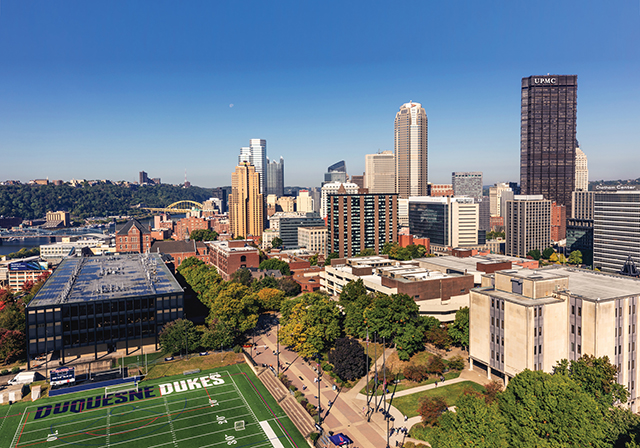
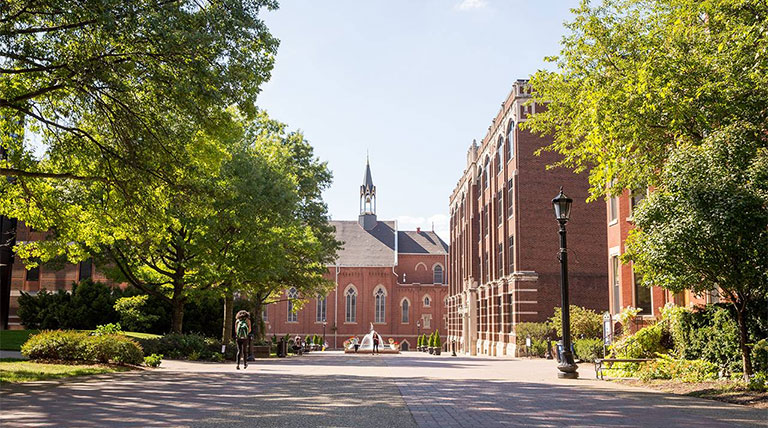
Duquesne University, perched on Pittsburgh's Bluff neighborhood, blends its Catholic, Spiritan identity with a surprisingly pragmatic edge—think nursing and pharmacy powerhouses alongside a business school that punches above its weight. With an 83.6% acceptance rate and a student body where 55% ranked in their high school's top quartile, it's accessible yet academically serious, offering small classes (13:1 ratio) and a 77% six-year graduation rate. The campus vibe? Friendly, Greek-optional, and deeply connected to the city's internship opportunities.
Admissions
Duquesne's admissions process leans inclusive, with an 83.6% acceptance rate (2024 data) that belies its increasingly competitive applicant pool. The middle 50% of admitted students boast SAT scores between 1190–1330 or ACT scores around 28, with 55% coming from their high school's top 25%. While transcripts are mandatory, essays and interviews are merely recommended—a nod to the university's practical approach. Notably, racial diversity in the incoming class surged 70% over two years, reflecting intentional recruitment efforts.
Sources
- Duquesne University Common Data Set
- [PDF] 2024-2025 Common Data Set - Duquesne University
- Common Data Set - GradGPT
- Duquesne University - DFR Report HTML - Department of Education
- [PDF] 2021-2022 Common Data Set - Duquesne University
- Duquesne University | Data USA
- Duquesne University SAT Scores and GPA - PrepScholar
- Duquesne University Admissions - BigFuture College Search
- New Students Signal Strong Start to Academic Year
- Duquesne University - Tuition and Acceptance Rate - Peterson's