Loading…
← All schools
DigiPen Institute of Technology
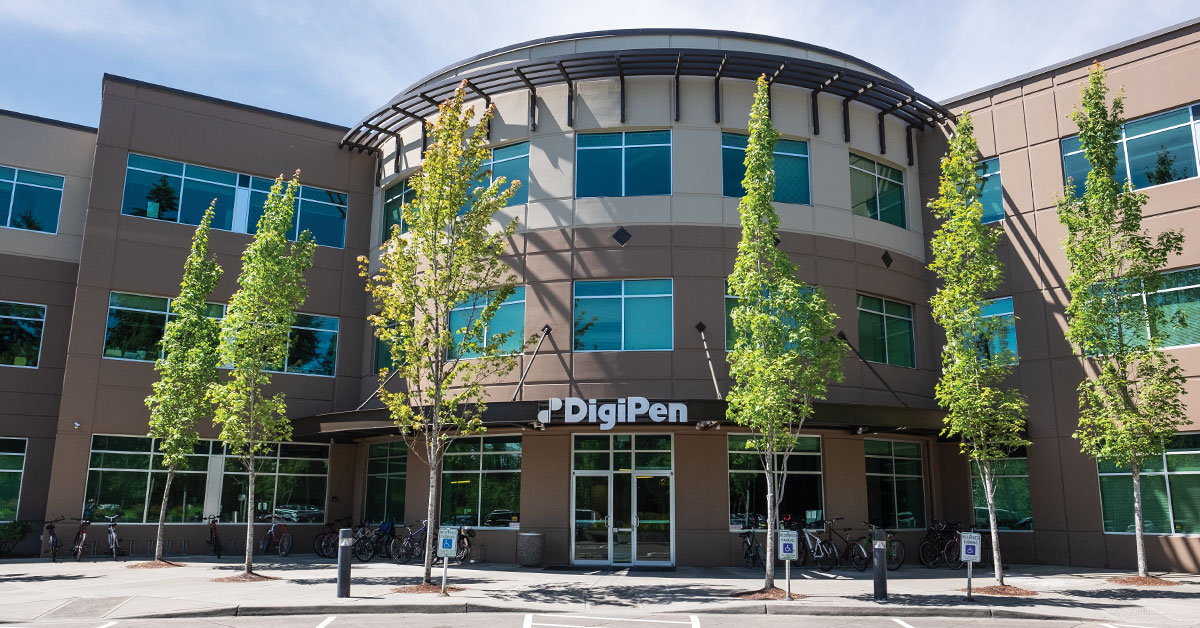
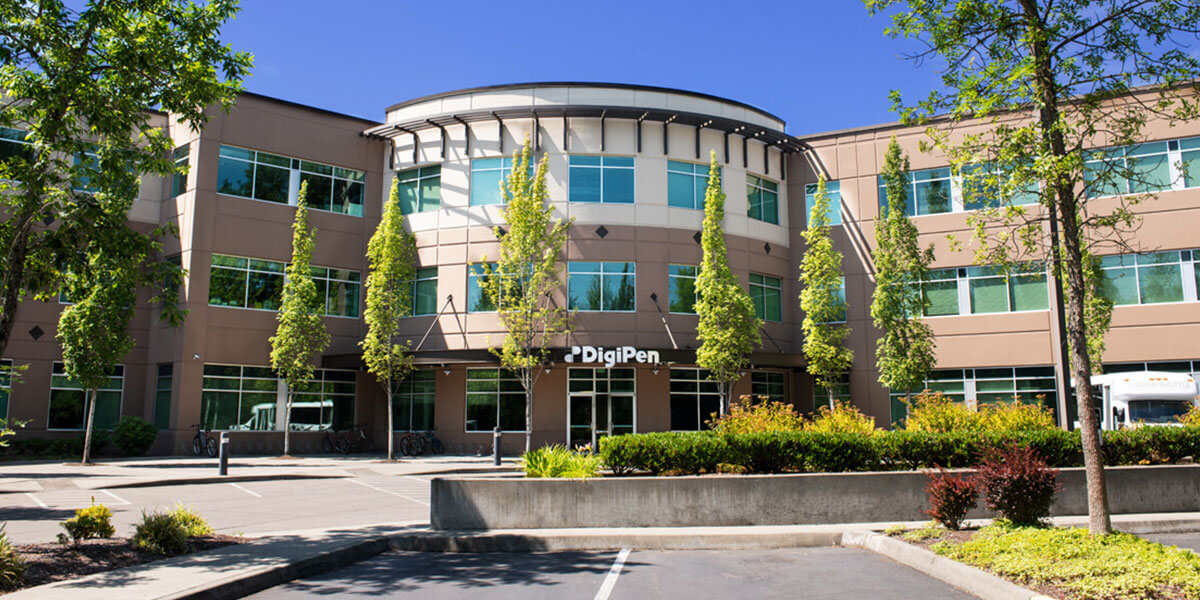
Redmond, WAprivate forprofitdigipen.edu
- Acceptance rateThe share of applicants a college admits in a given year. A 10% acceptance rate means it admits about 1 in 10 applicants.
- 64%
- SAT 25th-75th percentileThe middle range of SAT scores for admitted students: a quarter scored below the low number and a quarter scored above the high number.
- 1150–1400
- Undergrad enrollment
- 995
- Net priceWhat a family actually pays after grants and scholarships are subtracted from the sticker price — usually far less than the published cost.
- $44,446
- In-state tuition
- $38,950
- Out-of-state tuition
- $38,950
- Location
- Redmond, WA (next to Nintendo HQ)
- Net Price
- $40,015
- Top Majors
- Modeling/Simulation (46%), Animation (32%)
- Average ACT
- 28
- Average SAT
- 1275
- Acceptance Rate
- 67%
- Early Career Earnings
- $61,000
- Six-Year Graduation Rate
Quick answers
- What is the acceptance rate at DigiPen Institute of Technology?
- DigiPen Institute of Technology's acceptance rate is approximately 64% (Redmond, WA), based on the most recent figures we compiled from public and primary sources.
- What SAT score do you need for DigiPen Institute of Technology?
- Admitted students at DigiPen Institute of Technology typically score 1150–1400 on the SAT (the middle-50% range). Scores outside this band are still admitted, especially with strong applications.
- How much does DigiPen Institute of Technology cost?
- At DigiPen Institute of Technology, the average net price (after aid) is about $44,446 per year. Actual cost varies with financial aid and residency.
- How many undergraduates attend DigiPen Institute of Technology?
- DigiPen Institute of Technology enrolls approximately 995 undergraduate students.
- Where is DigiPen Institute of Technology located?
- DigiPen Institute of Technology is located in Redmond, WA.
DigiPen Institute of Technology is a niche powerhouse for game design and interactive media, where students endure a grueling but rewarding curriculum to emerge as industry-ready specialists. With a 67% acceptance rate but a rigorous workload that filters out the uncommitted, DigiPen graduates boast exceptional ROI—ranking #1 in Washington for long-term earnings. This isn't a traditional college experience: it's a bootcamp for the next generation of game developers, animators, and real-time simulation engineers.
Admissions
DigiPen maintains a moderately selective admissions process with a 67% acceptance rate (based on 503 applicants), though its academic intensity self-selects for highly motivated students. The gender split leans male (316 male applicants vs. 187 female applicants in recent data), with a 70% Acceptance rateThe share of applicants a college admits in a given year. A 10% acceptance rate means it admits about 1 in 10 applicants. for women. While standardized test scores aren't emphasized, admitted students typically fall in the top 35% nationally on the SAT (average 1275) or ACT (average 28). The baseline requirement is a high school diploma or equivalent, though the institute strongly recommends advanced math and science preparation given the technical demands of its programs.
Sources
- DigiPen Institute of Technology Overview - CollegeData
- DigiPen By the Numbers
- DigiPen Institute of Technology - IPEDS - Department of Education
- [PDF] Common Data Set 2024-2025 - Registrar's Office - Hollins University
- Common Data Set: Home
- Common Data Set | Office of Planning, Assessment, and ... - opair
- DigiPen Institute of Technology Admissions - BigFuture
- DigiPen Institute of Technology Admissions - US News Best Colleges
- DigiPen Institute of Technology - Tuition and Acceptance Rate
- Bachelor of Science Degrees (All) - DigiPen