Loading…
← All schools
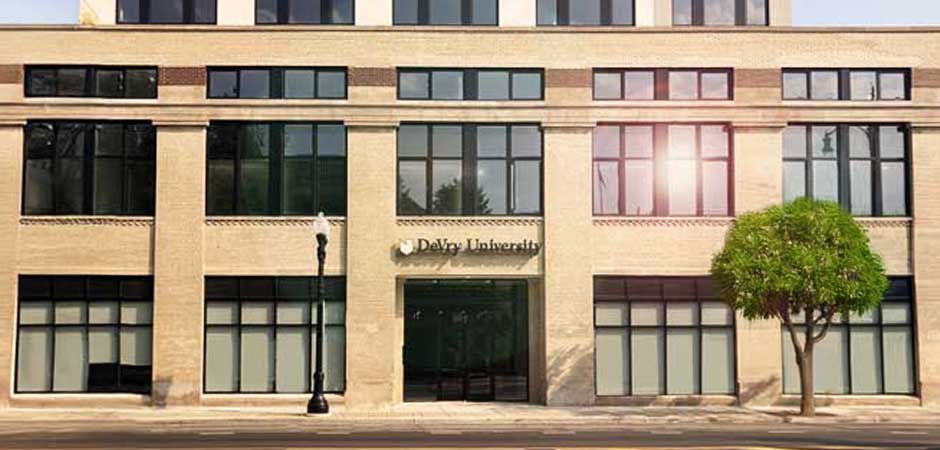
DeVry University-Illinois
Lisle, ILprivate forprofitdevry.edu
- Acceptance rateThe share of applicants a college admits in a given year. A 10% acceptance rate means it admits about 1 in 10 applicants.
- 98%
- SAT 25th-75th percentileThe middle range of SAT scores for admitted students: a quarter scored below the low number and a quarter scored above the high number.
- 700–1030
- Undergrad enrollment
- 27,825
- Net priceWhat a family actually pays after grants and scholarships are subtracted from the sticker price — usually far less than the published cost.
- $30,770
- In-state tuition
- $17,408
- Out-of-state tuition
- $17,408
- Net Price
- $30,889
- Top Majors
- IT, Business, Medical Records
- Avg ACT Range
- 11-19
- Avg SAT Range
- 680-1,020
- Acceptance Rate
- 98%
- Graduation Rate
- 28%
- Student-Faculty Ratio
- 36:1
- Avg Early-Career Salary
Quick answers
- What is the acceptance rate at DeVry University-Illinois?
- DeVry University-Illinois's acceptance rate is approximately 98% (Lisle, IL), based on the most recent figures we compiled from public and primary sources.
- What SAT score do you need for DeVry University-Illinois?
- Admitted students at DeVry University-Illinois typically score 700–1030 on the SAT (the middle-50% range). Scores outside this band are still admitted, especially with strong applications.
- How much does DeVry University-Illinois cost?
- At DeVry University-Illinois, the average net price (after aid) is about $30,770 per year. Actual cost varies with financial aid and residency.
- How many undergraduates attend DeVry University-Illinois?
- DeVry University-Illinois enrolls approximately 27,825 undergraduate students.
- Where is DeVry University-Illinois located?
- DeVry University-Illinois is located in Lisle, IL.
DeVry University-Illinois is a for-profit institution with near-open admissions (98% acceptance rate) and a focus on career-oriented programs in tech, business, and health fields. Known for flexible online and on-campus options, it serves a largely part-time, adult learner population but faces scrutiny over low graduation rates (28%) and high costs relative to outcomes.
Admissions
DeVry-Illinois is among the least selective universities in the U.S., with a 98% acceptance rate and effectively open admissions. The middle 50% of admitted students score between 11-19 on the ACT or 680-1,020 on the SAT, though standardized tests are not required for all applicants. Unlike traditional universities, DeVry emphasizes accessibility over selectivity, with rolling admissions and no early decision policies. Notably, the school enrolled just 172 students in a recent cohort despite high acceptance numbers, suggesting many admitted students choose other options.
Academics
DeVry leans heavily into career-focused programs, with top majors including . The school awards the most degrees in and Engineering Technologies. Classes are offered both online and at its Lisle campus, with a that limits individual attention. While degrees are accredited, the institution has faced skepticism about academic rigor, with Reddit threads and watchdog groups questioning its reputation. DeVry emphasizes "learning methodologies" and faculty development in its academic reports, but graduation rates remain critically low at per Sallie Mae data.
Sources
- Common Data Set - GradGPT
- The Common Data Set: What It Is & How to Use It In College ...
- [PDF] Common Data Set 2022-2023
- [XLS] CDS-A - [email protected]
- DeVry University-Illinois - DFR Report HTML
- Common Data Set: University Enrollment
- DeVry University - Illinois - Niche
- DeVry University-Illinois Acceptance Rate - Admissions Chances ...
- First-Year Class Profile - University of Illinois Admissions
- DeVry University - Chicago - Tuition and Acceptance Rate - Peterson's
- DeVry University-Illinois Data & Information - College Factual