Loading…
← All schools
CUNY Medgar Evers College
Brooklyn, NYpublicmec.cuny.edu
- Acceptance rateThe share of applicants a college admits in a given year. A 10% acceptance rate means it admits about 1 in 10 applicants.
- 86%
- SAT 25th-75th percentileThe middle range of SAT scores for admitted students: a quarter scored below the low number and a quarter scored above the high number.
- 850–1020
- Undergrad enrollment
- 3,233
- Net priceWhat a family actually pays after grants and scholarships are subtracted from the sticker price — usually far less than the published cost.
- $5,718
- In-state tuition
- $7,352
- Out-of-state tuition
- $15,302
- Avg. SAT
- 935 (850–1020 middle 50%)
- Net Price
- $6,207/year
- Top Majors
- Business, Biology, Psychology
- ASAP Grad Rate
- 47%
- Acceptance Rate
- 86%
- 4-Year Grad Rate
- 15%
- Students Receiving Aid
- 89%
- Median Earnings (10-yr)
Quick answers
- What is the acceptance rate at CUNY Medgar Evers College?
- CUNY Medgar Evers College's acceptance rate is approximately 86% (Brooklyn, NY), based on the most recent figures we compiled from public and primary sources.
- What SAT score do you need for CUNY Medgar Evers College?
- Admitted students at CUNY Medgar Evers College typically score 850–1020 on the SAT (the middle-50% range). Scores outside this band are still admitted, especially with strong applications.
- How much does CUNY Medgar Evers College cost?
- At CUNY Medgar Evers College, the average net price (after aid) is about $5,718 per year. Actual cost varies with financial aid and residency.
- How many undergraduates attend CUNY Medgar Evers College?
- CUNY Medgar Evers College enrolls approximately 3,233 undergraduate students.
- Where is CUNY Medgar Evers College located?
- CUNY Medgar Evers College is located in Brooklyn, NY.
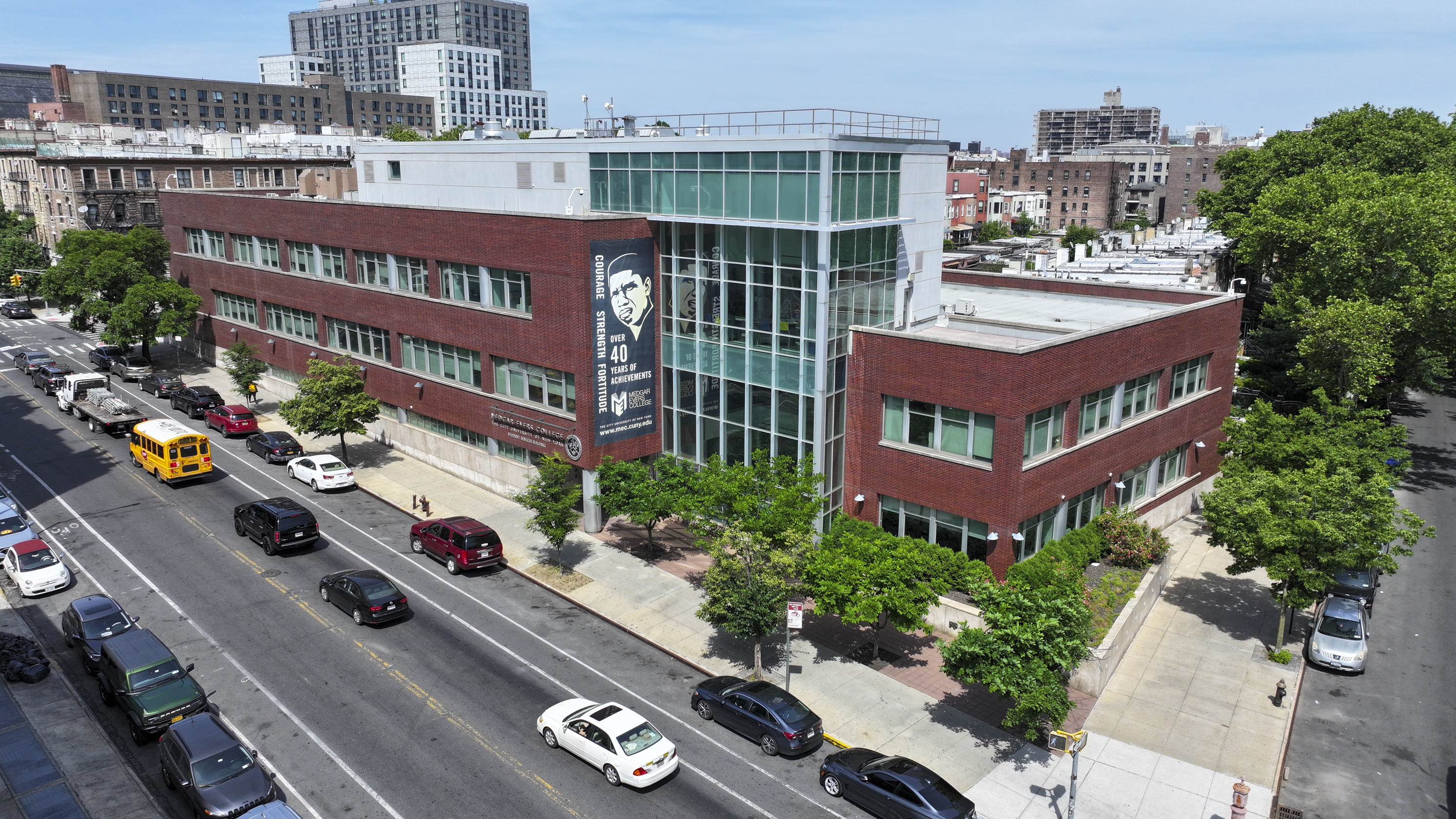
Medgar Evers College, a public institution in Brooklyn’s Crown Heights, is CUNY’s most unapologetically community-anchored campus—a launchpad for first-gen students, particularly Black and Caribbean New Yorkers, with a mission steeped in social justice. Its open-access admissions (86% acceptance rate) and robust ASAP program (47% graduation rate for enrollees) reflect a scrappy, supportive ethos, though overall graduation rates lag (22%). Strengths lie in practical majors like Nursing and Business, with faculty who ‘teach like your life depends on it.’
Admissions
Medgar Evers operates with near-open admissions (86% Acceptance rateThe share of applicants a college admits in a given year. A 10% acceptance rate means it admits about 1 in 10 applicants. per US News), making it one of CUNY’s most accessible four-year colleges. The middle 50% SAT range is 850–1020 (College Raptor), with no ACT requirement. Notably, 89% of students receive financial aid—well above national averages. While the college doesn’t publish a formal GPA cutoff, PrepScholar notes admitted students typically have GPAs around 2.5–3.0. The vibe is ‘come as you are, but come ready to work’: ASAP applicants (a high-support program) must commit to full-time enrollment and meet weekly with advisors.
Academics
The college’s academic identity orbits around workforce-aligned programs and social mobility. Top majors include Business Administration, Biology (with a Pre-Allied Health track), and Psychology (US News). The ASAP program—which boosts graduation rates by 2.5x—focuses on Liberal Arts, Business, and Science majors. Nursing is a sleeper hit, though not ASAP-eligible. Faculty are praised on Niche for ‘door-open policy’ mentoring, especially in Social Work. Don’t expect glossy facilities: this is a no-frills campus where ‘transformative education’ (per their motto) happens through sheer hustle, with a heavy emphasis on remedial support.
Sources
- Common Data Set | The City College of New York
- [PDF] Common Data Set 2024-2025 - CCNY - CUNY
- Common Data Set: Home
- Common Data Set: Your Key to Smarter College Decisions - nextfour
- The Common Data Set: What It Is & How to Use It In College ...
- [PDF] Common Data Set 2019-2020 - Institutional Research - CUNY
- Medgar Evers College--CUNY Admissions - US News Best Colleges
- Medgar Evers College SAT Scores and GPA - PrepScholar
- City University of New York: Medgar Evers College - BigFuture