Loading…
← All schools
Cornell University
Ithaca, NYprivate nonprofitwww.cornell.edu/
- Acceptance rateThe share of applicants a college admits in a given year. A 10% acceptance rate means it admits about 1 in 10 applicants.
- 9%
- SAT 25th-75th percentileThe middle range of SAT scores for admitted students: a quarter scored below the low number and a quarter scored above the high number.
- 1500–1570
- Undergrad enrollment
- 15,995
- Net priceWhat a family actually pays after grants and scholarships are subtracted from the sticker price — usually far less than the published cost.
- $28,690
- In-state tuition
- $69,314
- Out-of-state tuition
- $69,314
- Avg ACT
- 34
- Avg GPA
- 4.18
- Avg SAT
- 1510–1560
- Net Price
- $32,238
- Notable Quirk
- Dragon Day tradition
- Acceptance Rate
- 8.4%
- Graduation Rate
- 95%
- Student Organizations
- 1,000+
- Greek Life Participation
- 30%
- Median Starting Salary (Engineering)
- $110K
Quick answers
- What is the acceptance rate at Cornell University?
- Cornell University's acceptance rate is approximately 9% (Ithaca, NY), based on the most recent figures we compiled from public and primary sources.
- What SAT score do you need for Cornell University?
- Admitted students at Cornell University typically score 1500–1570 on the SAT (the middle-50% range). Scores outside this band are still admitted, especially with strong applications.
- How much does Cornell University cost?
- At Cornell University, the average net price (after aid) is about $28,690 per year. Actual cost varies with financial aid and residency.
- How many undergraduates attend Cornell University?
- Cornell University enrolls approximately 15,995 undergraduate students.
- Where is Cornell University located?
- Cornell University is located in Ithaca, NY.
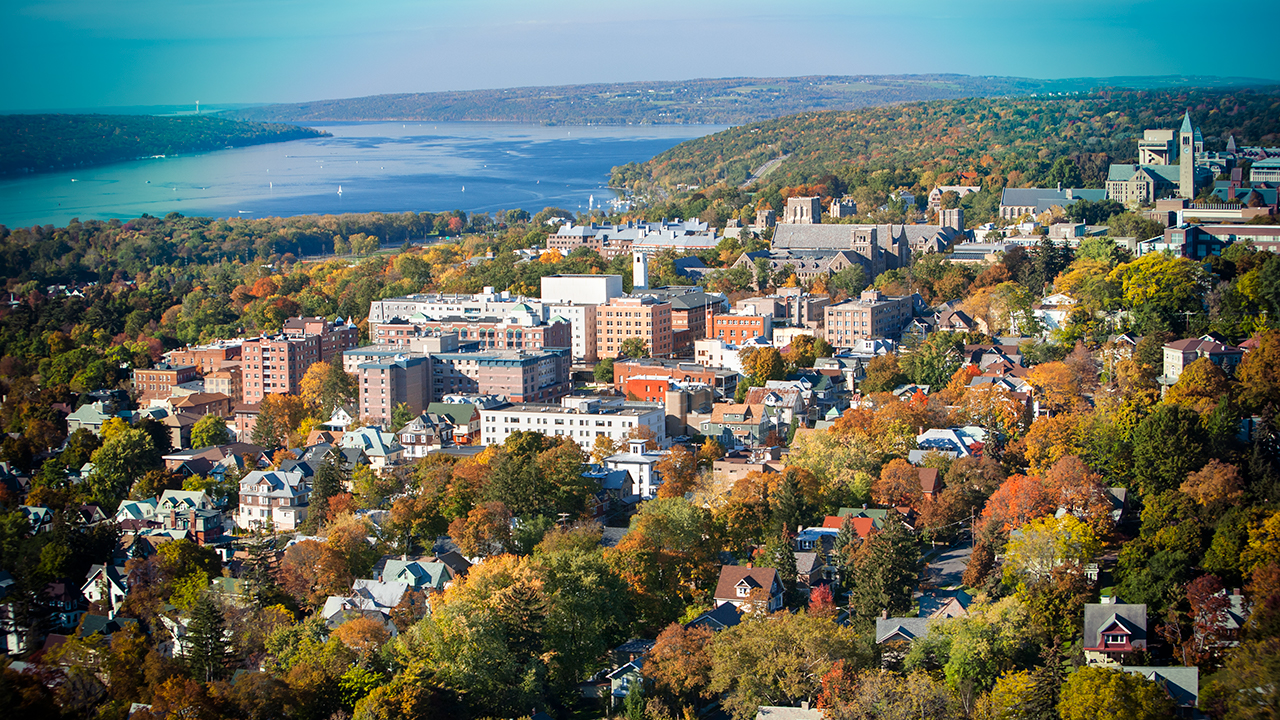
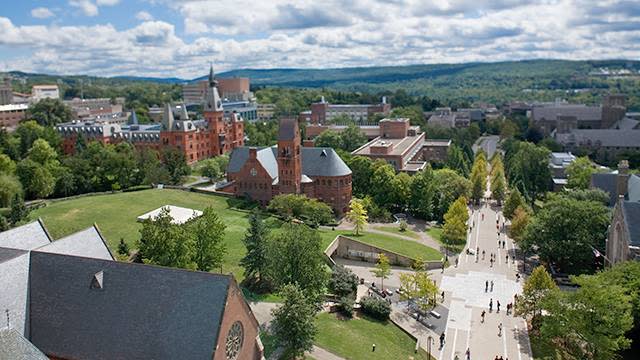
Cornell University blends Ivy League prestige with a scrappy, work-hard-play-hard ethos—its sprawling upstate New York campus houses everything from top-ranked engineering programs to the nation's first hotel school. Students here navigate a rigorous academic culture (95% graduation rate) balanced by quirky traditions like Dragon Day and a surprisingly collaborative vibe for an Ivy.
Admissions
Cornell's admissions process is fiercely competitive, with an 8.4% acceptance rate for recent classes—slightly higher than some Ivy peers but still among the most selective nationally. The middle 50% of admitted students score between 1510–1560 on the SAT or 34 on the ACT, with 95% of admits having SAT scores ≥1400 and 97% scoring ≥30 on the ACT. Notably, the average GPA hovers around 4.18, reflecting a pool of students who dominated their high school curricula. Early decision applicants face slightly better odds, though the university hasn't released precise ED rates in recent years.
Academics
Cornell's span from classics to aerospace engineering, with particular strength in —its three most popular programs. The university's unique structure (including state-funded contract colleges like Agriculture and Life Sciences) allows for rare interdisciplinary combinations, like pairing viticulture with business or robotics with design. Students praise the that encourages exploration beyond core requirements, though STEM majors note intense workloads. Standouts include the (median starting salary: $110K for international grads) and the , which dominates hospitality education globally.
Sources
- Common Data Set - Institutional Research & Planning
- [PDF] Common Data Set 2024-2025 - Institutional Research & Planning
- Common Data Set | Cornell College
- [PDF] CDS_2020-2021_FINAL.pdf - Institutional Research & Planning
- Cornell University Common Dataset : How to get into Cornell?
- Cornell Common Data Set 2024-2025 - Cosmic College Consulting
- Cornell University Admissions - BigFuture College Search
- [PDF] PROFILE: CLASS OF 2022 - Institutional Research & Planning
- This Year's Cornell Admission Requirements - PrepScholar
- Cornell University Acceptance Rate for Class of 2029 - IvyWise