Loading…
← All schools
Cornell College
Mount Vernon, IAprivate nonprofitcornellcollege.edu
- Acceptance rateThe share of applicants a college admits in a given year. A 10% acceptance rate means it admits about 1 in 10 applicants.
- 80%
- SAT 25th-75th percentileThe middle range of SAT scores for admitted students: a quarter scored below the low number and a quarter scored above the high number.
- 1120–1285
- Undergrad enrollment
- 1,086
- Net priceWhat a family actually pays after grants and scholarships are subtracted from the sticker price — usually far less than the published cost.
- $23,634
- In-state tuition
- $52,660
- Out-of-state tuition
- $52,660
- Location
- Mount Vernon, IA (population: 4,500)
- Campus Housing
- Nearly 100% residential
- Unique Feature
- One Course At A Time block plan
- Acceptance Rate
- 80%
- Median ACT Range
- 23–30
- Financial Aid Recipients
- 100% of full-time students
- Six-Year Graduation Rate
- 72%
- Average Early-Career Salary
- $47,000–$49,084
Quick answers
- What is the acceptance rate at Cornell College?
- Cornell College's acceptance rate is approximately 80% (Mount Vernon, IA), based on the most recent figures we compiled from public and primary sources.
- What SAT score do you need for Cornell College?
- Admitted students at Cornell College typically score 1120–1285 on the SAT (the middle-50% range). Scores outside this band are still admitted, especially with strong applications.
- How much does Cornell College cost?
- At Cornell College, the average net price (after aid) is about $23,634 per year. Actual cost varies with financial aid and residency.
- How many undergraduates attend Cornell College?
- Cornell College enrolls approximately 1,086 undergraduate students.
- Where is Cornell College located?
- Cornell College is located in Mount Vernon, IA.
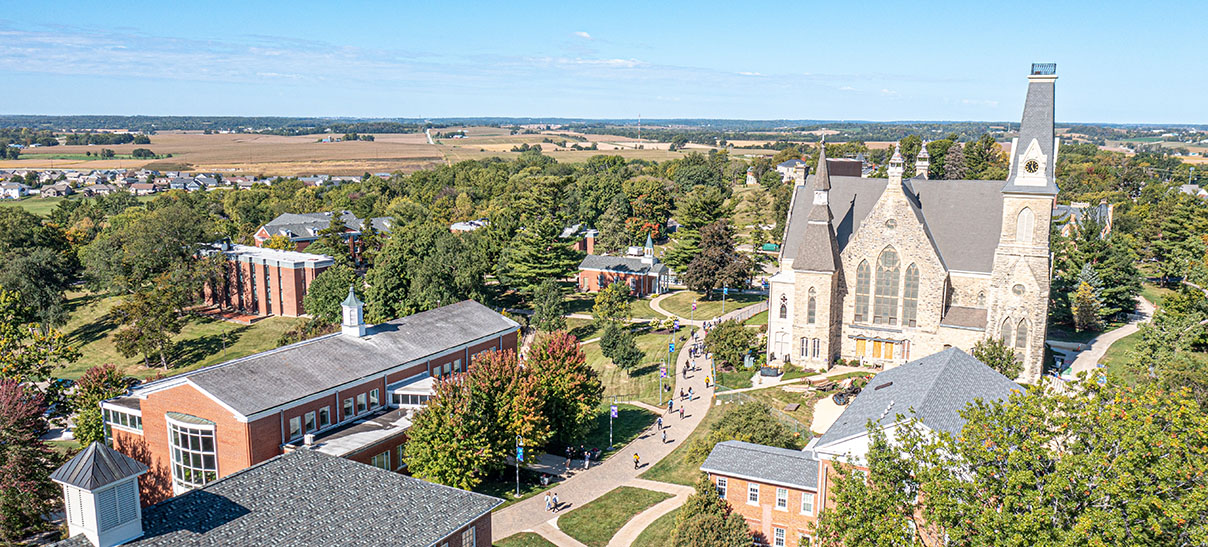
Cornell College in Mount Vernon, Iowa, is a small liberal arts college with a distinctive 'One Course At A Time' academic calendar, where students immerse themselves in a single subject for 18 days before moving on to the next. With an 80% acceptance rate and a strong emphasis on interdisciplinary learning, Cornell offers a tight-knit community where students can explore diverse academic interests without the constraints of a traditional semester system. The college's commitment to affordability—100% of full-time students receive financial aid—makes it an accessible option for those seeking a personalized, intensive educational experience.
Admissions
Cornell College maintains a moderately selective admissions process with an 80% acceptance rate, making it more accessible than many liberal arts colleges. Half of admitted students who submit test scores have ACT scores between 23 and 30, reflecting a broad academic range. The college does not publish major-specific Acceptance rateThe share of applicants a college admits in a given year. A 10% acceptance rate means it admits about 1 in 10 applicants., but it emphasizes Holistic admissionsA review that weighs the whole applicant — grades, essays, activities, and context — rather than relying on test scores and GPA alone., considering course rigor, extracurricular involvement, and personal essays alongside test scores (which are optional). Notably, 100% of full-time students receive financial aid, underscoring Cornell's commitment to affordability.
Academics
Cornell College’s academic model is defined by its block plan, where students focus on a single subject for 18 days before transitioning to the next. This immersive approach allows for deep engagement with material and flexibility for field studies or research. The college offers , with strong programs in . Interdisciplinary study is encouraged, and students can design individualized majors. Popular tracks include pre-professional programs tailored for graduate school preparation, such as pre-med and pre-law.
Sources
- Common Data Set | Cornell College
- [PDF] Common Data Set 2024-2025 - Institutional Research & Planning
- Common Data Set - Institutional Research & Planning
- [PDF] Common Data Set 2022-2023 - Institutional Research & Planning
- Cornell Common Data Set 2024-2025 - Cosmic College Consulting
- Is this # ever published in the common data set? : r/ApplyingToCollege
- Cornell University Admissions - BigFuture College Search
- [PDF] PROFILE: CLASS OF 2024 - Institutional Research & Planning
- Cornell University Acceptance Rate for Class of 2029 - IvyWise