Loading…
← All schools
College of Our Lady of the Elms
Chicopee, MAprivate nonprofitelms.edu
- Acceptance rateThe share of applicants a college admits in a given year. A 10% acceptance rate means it admits about 1 in 10 applicants.
- 85%
- Undergrad enrollment
- 949
- Net priceWhat a family actually pays after grants and scholarships are subtracted from the sticker price — usually far less than the published cost.
- $17,545
- In-state tuition
- $43,325
- Out-of-state tuition
- $43,325
- Top Majors
- Nursing, Social Work, Speech Pathology
- Avg. Net Price
- $23,498
- Acceptance Rate
- 85-89%
- Graduation Rate
- 73%
- Student Housing
- 20% on-campus
- Undergrad Enrollment
- 1,002
- Avg. ACT (middle 50%)
- 18-28
- Avg. SAT (middle 50%)
- 970-1320
Quick answers
- What is the acceptance rate at College of Our Lady of the Elms?
- College of Our Lady of the Elms's acceptance rate is approximately 85% (Chicopee, MA), based on the most recent figures we compiled from public and primary sources.
- How much does College of Our Lady of the Elms cost?
- At College of Our Lady of the Elms, the average net price (after aid) is about $17,545 per year. Actual cost varies with financial aid and residency.
- How many undergraduates attend College of Our Lady of the Elms?
- College of Our Lady of the Elms enrolls approximately 949 undergraduate students.
- Where is College of Our Lady of the Elms located?
- College of Our Lady of the Elms is located in Chicopee, MA.
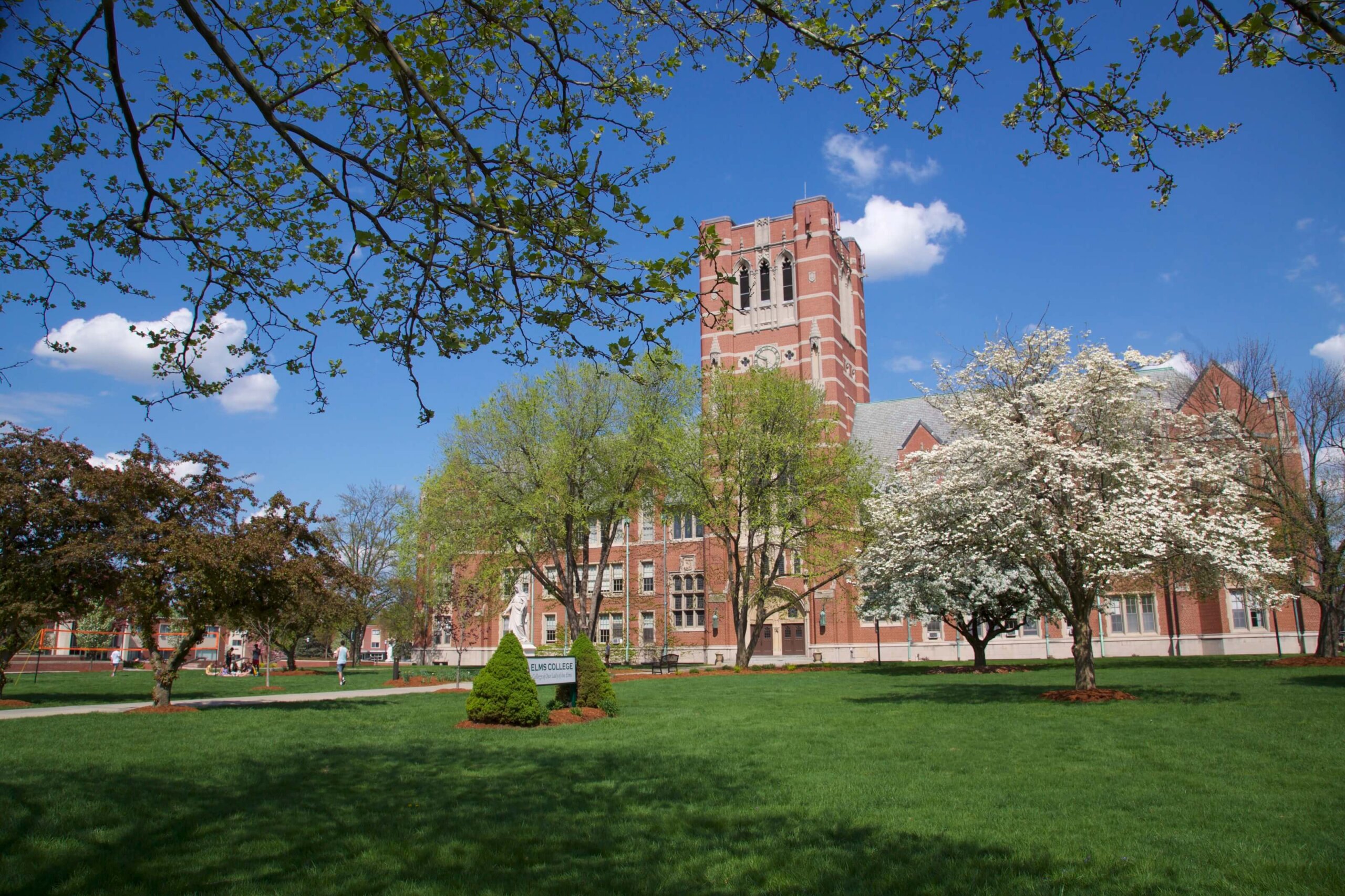
Elms College, a small Catholic liberal arts school in Chicopee, Massachusetts, punches above its weight with a surprisingly robust nursing program and a tight-knit community. With an acceptance rate hovering around 85-89%, it's accessible yet maintains solid outcomes—73% graduation rate—for a student body where nearly all receive financial aid. The vibe is supportive, faith-inflected, and heavy on practical majors like health sciences.
Admissions
Elms College is decidedly not a reach school, with Acceptance rateThe share of applicants a college admits in a given year. A 10% acceptance rate means it admits about 1 in 10 applicants. consistently between 85-89% ([7], [9], [11], [12]). Test-optionalA policy where you choose whether to submit SAT or ACT scores. If you don't, the rest of your application carries more weight. since at least 2022, middle-50% SAT scores for admitted students range from 970-1130 (older data) to 1150-1320 (more recent reports), while ACT scores typically fall between 18-28 ([8], [10], [12]). Notably, gender gaps in acceptance rates have been documented historically—one source cites a 9% admit rate for men vs. 20% for women in 2016-2017 ([4]). The college appears to prioritize accessibility over selectivity, with rolling admissions and no binding early decision ([3], [15]).
Sources
- Institutional Assessment and Research - Elms College
- Common Data Set: Home
- [PDF] 2024-2025 Common Data Set - Sarah Lawrence College
- How To Use a Common Data Set - The College Solution
- Decoding the Common Data Set What You Need to Know for Your ...
- The Common Data Set: What It Is & How to Use It In College ...
- College of Our Lady of the Elms - Sallie
- College of Our Lady of the Elms Acceptance Rate - Admissions ...
- Elms College SAT Scores and GPA - PrepScholar
- Elms College Acceptance Rate & Average GPA | AcceptanceRate.com