Loading…
← All schools
Charles R Drew University of Medicine and Science
Los Angeles, CAprivate nonprofitwww.cdrewu.edu/
- Acceptance rateThe share of applicants a college admits in a given year. A 10% acceptance rate means it admits about 1 in 10 applicants.
- 39%
- Undergrad enrollment
- 282
- Net priceWhat a family actually pays after grants and scholarships are subtracted from the sticker price — usually far less than the published cost.
- $35,558
- In-state tuition
- $23,000
- Out-of-state tuition
- $23,000
- Type
- Private, HBCU
- Location
- Los Angeles, CA
- Notable Fact
- One of only 4 historically Black medical schools in the U.S.
- Total Programs
- 18
- Acceptance Rate
- 38.7-90% (varies by program)
- Graduation Rate
- 78%
- Average Net Price
- $27,637
- Most Popular Majors
- Nursing, Radiologic Technology, Biomedical Sciences
- Undergrad Enrollment
- 313 (2024)
- Median Graduate Earnings
- $112,516
Quick answers
- What is the acceptance rate at Charles R Drew University of Medicine and Science?
- Charles R Drew University of Medicine and Science's acceptance rate is approximately 39% (Los Angeles, CA), based on the most recent figures we compiled from public and primary sources.
- How much does Charles R Drew University of Medicine and Science cost?
- At Charles R Drew University of Medicine and Science, the average net price (after aid) is about $35,558 per year. Actual cost varies with financial aid and residency.
- How many undergraduates attend Charles R Drew University of Medicine and Science?
- Charles R Drew University of Medicine and Science enrolls approximately 282 undergraduate students.
- Where is Charles R Drew University of Medicine and Science located?
- Charles R Drew University of Medicine and Science is located in Los Angeles, CA.
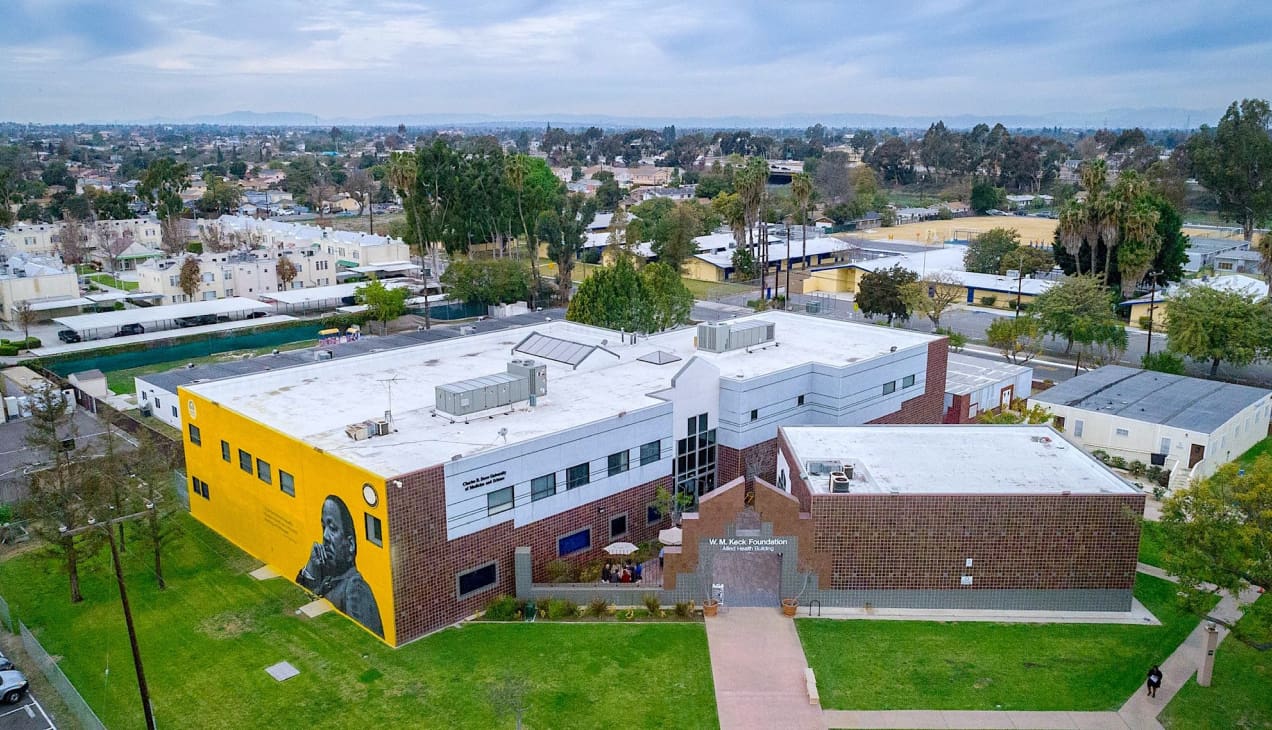
Charles R. Drew University of Medicine and Science is a historically Black institution in Los Angeles laser-focused on health equity and producing clinicians who serve underserved communities. With a scrappy, mission-driven culture and graduates who out-earn peers nationally, CDU punches above its weight—despite modest resources—by combining rigorous health sciences training with deep community engagement.
Admissions
CDU's admissions process reflects its mission-driven ethos: moderately selective (Acceptance rateThe share of applicants a college admits in a given year. A 10% acceptance rate means it admits about 1 in 10 applicants. range from 38.7% to 90% across sources, likely varying by program), with a clear preference for applicants committed to health equity. The $50 application fee is standard, but what stands out is the university's focus on cultivating practitioners who'll serve in underserved areas—a theme that permeates every stage of the admissions process. Notably, CDU is one of only four historically Black medical schools in the U.S., giving it outsized influence in diversifying the healthcare workforce.
Sources
- Charles R. Drew University of Medicine and Science Graduation ...
- [PDF] University Catalog 2025-2026
- [PDF] Common Data Set 2021-2022 - Colorado Department of Education
- Common Data Set: Home
- Common Data Set | Office of Planning, Assessment, and ... - opair
- Common Data Set Ultimate Guide: Use It to Find the Right College
- Charles R Drew University of Medicine and Science - BigFuture
- Charles R. Drew University of Medicine and Science Admissions
- Admissions Process | Charles R. Drew University of Medicine and ...
- Charles R Drew University of Medicine and Science | Data USA